RBA stands pat, still not ruling anything in or out

    RBA maintained its cash rate at 4.35% today, as expected, while underscoring that inflation risks remain a concern. In its statement, RBA noted that although headline inflation has declined and is projected to stay lower in the short term, it considers underlying inflation as “more indicative” of inflation trends, and this measure remains “too high.”

    In line with this cautious approach, the emphasized the need to remain “vigilant to upside risks to inflation,” signaling flexibility by reiterating that it is “not ruling anything in or out.” The ’s latest economic projections offer a more tempered outlook, with slight downward adjustments to growth and inflation forecasts, pointing to persistent caution amid moderated expectations.

    Key revisions in the RBA’s projections include:

    • Year-average GDP growth: 2024 unchanged at 1.2%, but lowered for 2025 from 2.5% to 2.2% and for 2026 from 2.4% to 2.3%.
    • Year-ended CPI: Forecast for December 2024 is revised down from 3.0% to 2.6%, with December 2025 held steady at 3.7%, and December 2026 slightly reduced from 2.6% to 2.5%.
    • Trimmed mean inflation: Forecast for December 2024 lowered from 3.5% to 3.4%, with additional downgrade for December 2025 from 2.9% to 2.8%, and December 2026 from 2.6% to 2.5%.

    These adjustments reflect an outlook of moderated economic growth and slightly eased inflation pressures. However, RBA’s flexible stance indicates it is prepared to act if inflation risks become more pronounced, balancing economic stability with its inflation objectives.

    Full RBA statement here.

    Full RBA SoMP here.

    China’s Caixin PMI composite rises to 51.9, policy impact begins to show

      China’s Caixin Services PMI rose to 52.0 in October, surpassing expectations of 50.5 and marking the highest rate of growth in three months. The services sector continues its expansionary streak that began in January 2023. PMI Composite also increased from 50.3 to 51.9, its highest level in four months, maintaining expansion for the 12th consecutive month, driven largely by service-sector resilience.

      Wang Zhe, Senior Economist at Caixin Insight Group noted that challenges noted that a range of supportive policies has since been introduced by the Politburo since September. The recent Caixin PMI readings for both manufacturing and services suggest that “market demand stabilized and optimism improved,” signaling early effects of the new policies.

      Full China Caixin PMI services release here.

      Eurozone Sentix investor confidence rises slightly to -12.8, inflation fears resurface

        Eurozone Sentix Investor Confidence index showed modest improvement, rising from -13.8 to -12.8 in November, though it fell just short of the anticipated -12.7. Current Situation index also moved up slightly from -23.3 to -21.5, while the Expectations index held steady at -3.8.

        Sentix noted that Germany continues to be the “problem child” of the Eurozone, with ongoing economic struggles that have drawn widespread media attention. However, investors remain largely unfazed by these issues, showing limited reaction to the concerns surrounding Germany’s economic policy.

        Meanwhile, inflationary concerns have re-emerged, with Sentix highlighting a significant drop in its “Inflation” theme barometer from +11 to -12.25—the lowest reading since July 2023.

        This slump underscores a difficult situation for ECB. A struggling economy would typically benefit from more accommodative monetary policy, but inflationary pressures could restrict the ECB’s ability to cut rates further.

        Full Eurozone Sentix release here.

        Eurozone PMI manufacturing finalized at 46 in Oct, intense competition pressures margins

          Eurozone manufacturing showed mild signs of stabilization in October, with PMI Manufacturing index finalizing at 46.0, up from September’s 45.0. This marks a slight improvement, but activity remains firmly in contraction.

          By country, Spain led the group with a PMI Manufacturing of 54.5, a 32-month high, followed by Ireland at 51.5 and Greece at 51.2. In contrast, the Netherlands and Austria reported significant declines, with PMIs at 47.0 and 42.0 respectively. Germany saw a modest rise to 43.0, marking a three-month high but still in contraction territory, while France’s index held steady at 44.5, a two-month low.

          Cyrus de la Rubia, Chief Economist at Hamburg Commercial Bank, commented that while the manufacturing recession “did not deepen further” in October, challenges persist. Production and new orders both declined at a slower rate, leading to a Q4 GDP nowcast indicating a -0.1% contraction in industrial output.

          The environment remains “deflationary,” benefiting purchasing departments with lower input costs but intensifying competitive pressures, particularly with firms passing on price reductions to customers. De la Rubia noted that this “fierce competition,” likely amplified by competition from China, is squeezing profit margins across the sector.

          Full Eurozone PMI manufacturing final release here.

          Oil prices edge up as OPEC+ delays output increase

            Oil prices saw a modest uptick during the Asian session following OPEC+’s announcement to delay a planned increase in oil production of 2.2 million barrels per day by one month. On Sunday, the group also reiterated the members’ “collective commitment to achieve full conformity” with the established output targets.

            This adjustment comes as part of OPEC+’s broader strategy, which agreed in June, to gradually restore output in controlled monthly increments after significant cuts over the past two years. Before Sunday’s decision, the plan was to start unwinding the 2.2 million bpd cut beginning December 2024, with further increases scheduled into the next year.

            Technically, for the near term, considering bullish convergence condition in 4H MACD, WTI could have formed a short term bottom at 67.14. Break of 72.85 resistance will support this case and bring stronger rally back towards 78.87 resistance, as part of the sideway pattern from 65.63 low.

            Nevertheless, there is no clear sign that the down trend from 87.84 has completed. As long as 78.87 resistance holds, another fall through 65.63 is still in favor after the consolidation pattern from there completes.

            RBNZ flags geopolitical risks as key threat to New Zealand’s financial stability

              RBNZ highlighted significant geopolitical risks as a major concern for New Zealand’s financial stability in a pre-release of findings from its upcoming Financial Stability Report. Key threats stem from global tensions involving Russia, China, and the Middle East, which RBNZ may incorporate into next year’s solvency stress test.

              RBNZ noted that in some scenarios, “global supply chains were disrupted,” triggering renewed inflationary pressures and elevated interest rates. The report mentions a “more extreme scenario” involving a conflict in the Asia-Pacific region with one or more of New Zealand’s key trading partners. This may allude to risks of a major disruption if China attempts to assert territorial claims in the South China Sea or to use force in the Taiwan Strait.

              Kerry Watt, RBNZ’s Director of Financial Stability Assessment & Strategy, commented on the increased “concern about geopolitical tension,” emphasizing that “as a small open economy, dependent on international trade and investment, geopolitical risks are clearly relevant to our financial system. Their potential impacts cannot be underestimated.”

              Full RBNZ release here.

              US ISM manufacturing falls to 46.5, prices surge

                US ISM Manufacturing PMI declined from 47.2 to 46.5 in October, falling short of the expected 47.6 and marking its lowest level since July 2023. This contraction is the index’s 23rd in the past 24 months.

                Key components showed mixed results: new orders ticked up slightly from 46.1 to 47.1, but production dropped sharply from 49.8 to 46.2. Employment remained subdued, inching up only marginally from 43.9 to 44.4, while the prices index saw a notable increase from 48.3 to 54.8, suggesting upward cost pressures.

                According to ISM, “demand remains subdued,” as firms remain hesitant to invest in capital and inventory, largely due to uncertainties surrounding Fed’s monetary policy and concerns about inflation resurgence driven by fiscal policies from both major parties. October’s reading aligns with a modest 1.1% annualized growth in real GDP.

                Full US ISM manufacturing release here.

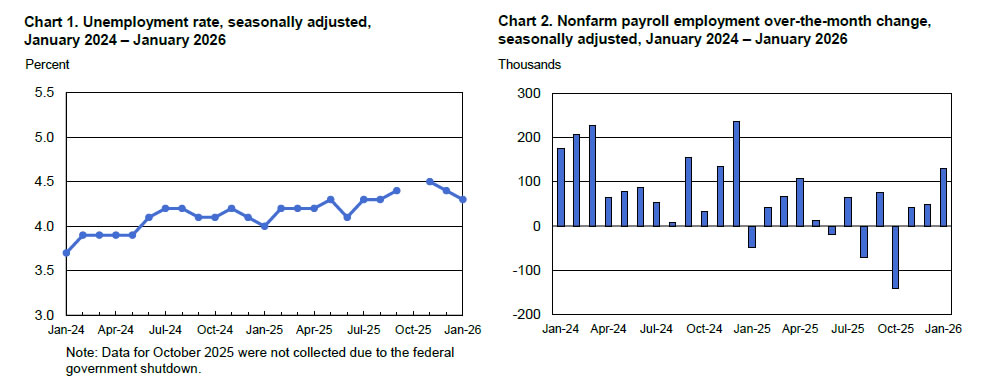
                US NFP grows only 12k in Oct, unemployment rate steady at 4.1%

                  US non-farm payroll employment grew only 12k in October, well below expectation of 106k. That compares to average monthly gain of 194k over the prior 12 months.

                  Nevertheless, unemployment rate was unchanged at 4.1%, matched expectations. number of unemployed people was little changed at 7.0m. Participation rate ticked down from 62.7% to 62.6%.

                  Average hourly earnings rose 0.4% mom, above expectation of 0.3% mom. Annual growth of average hourly earnings ticked up from 3.9% yoy to 4.0% yoy.

                  Full US NFP release here.

                  UK PMI manufacturing finalized at 49.9, wait-and-see ahead of budget

                    UK’s PMI Manufacturing was finalized at 49.9 for October, down from September’s 51.5, marking the first contraction since April.

                    Rob Dobson, Director at S&P Global Market Intelligence, noted that the sector has entered Q4 on an “uncertain footing,” as businesses adopt a wait-and-see approach amid policy speculation leading up to the recent Budget. This cautious stance has weighed on investment and spending, with business optimism hovering just above September’s nine-month low.

                    However, there was positive news on inflation. Input costs dropped to a 10-month low, with inflation easing significantly—one of the largest declines in the survey’s 33-year history. Selling price inflation also moderated, giving BoE additional flexibility to support growth should demand weaken further.

                    Looking forward, Dobson noted that November’s PMI release will be closely watched for signs of how the Budget impacts business conditions and confidence level.

                    Full UK PMI manufacturing final release here.

                    Swiss CPI down further to 0.6% yoy in Oct

                      Switzerland’s CPI decreased by -0.1% mom in October, missing expectations of flat growth. Core CPI, which excludes fresh and seasonal products, energy, and fuel, edged up by 0.1% mom. Prices for both domestic and imported products each declined by -0.1% month-over-month.

                      On an annual basis, headline CPI dropped to 0.6% yoy from 0.8% yoy, falling short of the anticipated 0.8% yoy increase. Core CPI similarly softened, slipping from 1.0% yoy to 0.8% yoy. Domestic product prices grew at a slower pace, declining from 2.0% yoy to 1.8% yoy, while imported product prices saw a deeper contraction, from -2.7% yoy to -3.1% yoy.

                      Full Swiss CPI release here.

                      Distorted NFP data to challenge Dollar’s strength

                        US non-farm payrolls report takes center stage in global financial markets today. Expectations are for an increase of 106k jobs in October, which would mark the lowest monthly gain in nearly four years. Unemployment rate is projected to remain unchanged at 4.1%, and average hourly earnings are anticipated to rise by 0.3% mom. However, given one-off factors like recent strikes and storms impacting the numbers, markets may largely discount the report’s implications for the broader employment trend.

                        Recent economic indicators offer a mixed picture. ADP Employment report showed a robust gain of 233k net new jobs in October, up from the previous month’s upwardly revised 159k. Conversely, the four-week moving average of initial unemployment claims increased to 236k from 224k, suggesting some softening in the labor market. The employment components of the ISM manufacturing and services reports are yet to be released.

                        Regarding the Fed’s policy outlook, two additional 25 basis point rate cuts are expected by year-end, one this month and another in December. Under the Fed’s dual mandate, resurgence in inflation—not strong employment data—is more likely to prompt a slowdown or pause in the rate-cutting cycle. Even a significant downside surprise in today’s NFP report is unlikely to bring a 50bps cut back into consideration at the next meeting. However, it would factor into Fed’s deliberations in December, alongside upcoming inflation and employment data.

                        Technically, Dollar Index could have formed a short term top at 104.63 already. Nevertheless, consolidations should be relatively brief as long as 23.6% retracement of 100.15 to 104.63 at 103.57 holds. Break of 104.63 will resume the rally from 100.15 towards 106.13 resistance next.

                        However, firm break of 103.57 will open up deeper correction to 38.2% retracement at 102.91, which is close to 55 D EMA (now at 102.86).

                        Sterling drops as market questions growth impact of Reeves’ budget

                          Sterling fell sharply overnight, alongside with 10-year government bond and FTSE, as markets reacted to Chancellor Rachel Reeves’ new budget. Critics argue the budget is being heavy on spending, tax hikes, and borrowing but light on measures to stimulate economic growth. Beside, the higher short-term borrowing plans outlined in the budget are casting doubts on whether BoE can proceed with a robust rate-cutting cycle.

                          The Office for Budget Responsibility revised its economic outlook, forecasting GDP growth of 2.0% in 2025, only a slight improvement over the previous 1.9% projection. Additionally, the OBR raised its inflation forecast for next year to an average of 2.6%, up sharply from the previous estimate of 1.5%.

                          Although BoE is still expected to implement a 25 bps rate cut next week, taking the rate to 4.75%, the budget’s spending and borrowing plans may limit the central bank’s ability to lower rates further. Market pricing now reflects fewer anticipated rate cuts, with expectations that the BoE’s base rate will only fall to around 4% by the end of 2025, higher than previously projected.

                          While a slower pace of monetary policy easing could be supportive of the Pound, traders are increasingly worried about the UK’s growth prospects under the new fiscal strategy.

                          Technically, EUR/GBP’s break of 0.8433 resistance should confirm short term bottoming at 0.8294, on bullish convergence condition in D MACD. Stronger rally should be seen to 55 W EMA (now at 0.8502) Decisive break there will be the first sign of medium term bullish trend reversal, and target 0.8624 resistance for confirmation.


                          China’s Caixin PMI manufacturing rises to 50.3, domestic demand recovery amid weak exports

                            China’s Caixin Manufacturing PMI improved to 50.3 in October, up from 49.3 and surpassing expectations of 49.5.

                            According to Wang Zhe, Senior Economist at Caixin Insight Group, October brought a mix of positive developments, including “growth in manufacturing supply and demand, increases in prices, proactive inventory replenishment by companies, and logistics delays.”

                            However, challenges persist as external demand remains soft; new export orders contracted for the third consecutive month. Wang added that declining employment levels and weak foreign demand continue to weigh on the sector.

                            Full China Caixin PMI manufacturing release here.

                            Japan’s PMI manufacturing finalized at 49.2, weak domestic and global demand

                              Japan’s PMI Manufacturing was finalized at 49.2 in October, a decline from September’s 49.7, signaling continued contraction in the sector.

                              Usamah Bhatti at S&P Global Market Intelligence noted that while output fell only slightly, it was at the sharpest rate since April, with new orders contracting at their fastest pace in three months. Companies cited “weakness in domestic and global demand” as weighing heavily on sales and output, particularly in the semiconductor and auto industries.

                              Bhatti added that “near-term outlook is clouded” as firms worked through backlogs, suggesting that incoming orders are insufficient to support ongoing production. Business confidence also remained subdued, hovering near a two-year low, with firms expressing concerns about the timeline for recovery from the current “economic malaise.”

                              Full Japan’s PMI manufacturing final release here.

                              Canada’s August GDP stalls as goods production declines

                                Canada’s GDP growth was flat month-over-month in August, missing the anticipated 0.1% mom growth.

                                Services sector provided some support, increasing by 0.1% mom, with notable gains in finance, insurance, and public administration.

                                However, the goods-producing sector contracted by -0.4% mom, marking its lowest point since December 2021, driven by declines in manufacturing and utilities.

                                Despite the overall stagnation, 12 out of 20 sectors showed growth, indicating resilience across much of the economy.

                                Early estimates for September indicate a modest recovery, with real GDP expected to rise by 0.3% mom.

                                Full Canada GDP release here.

                                US initial jobless claims falls to 216k, vs exp 231k

                                  US initial jobless claims fell -12k to 216k in the week ending October 26, below expectation of 231k. Four-week moving average of initial claims fell -2k to 237k.

                                  Continuing claims fell -26k to 1862k in the week ending October 19. Four-week moving average of continuing claims rose 11k to 1869k., highest level since November 27, 2021.

                                  Full US jobless claims release here.

                                  US core PCE price index unchanged at 2.7% yoy in Sep

                                    In September, US personal income rose by 0.3% mom, or USD 71.6B, slightly below the expected 0.4% mom increase. Meanwhile, personal spending grew by 0.5% mom or USD 105.8B, exceeding forecasts of a 0.4% mom rise.

                                    PCE price index rose 0.2% mom, while core PCE price index, which excludes food and energy, increased by 0.3% mom, both aligning with expectations. Breaking down price components, goods prices decreased by -0.1% mom, and services prices increased by 0.3% mom. Food prices rose by 0.4% mom, while energy prices saw a significant -2.0% mom decline.

                                    On a year-over-year basis, the headline PCE price index edged down from 2.2% yoy to 2.1% yoy, meeting forecasts. However, core PCE price index remained unchanged at 2.7% yoy, slightly above the anticipated 2.6% yoy. Goods prices dropped by -1.2% yoy, while services prices rose by 3.7% yoy. Food prices increased by 1.2% yoy, and energy prices saw a sharp decline of -8.1% yoy.

                                    Full US personal income and outlay release here.

                                    ECB’s Panetta calls for easing as inflation declines and economic weakness persists

                                      Italian ECB Governing Council member Fabio Panetta emphasized the need for further easing of restrictive monetary conditions in the Eurozone, citing concerns about economic softness amid declining inflation.

                                      Panetta highlighted in a speech today that as inflation moderates, it’s essential to consider “the weakness of the real economy” and avoid deepening the downturn.

                                      “In the absence of a firm recovery we would run the risk of pushing inflation well below target, a situation that monetary policy would struggle to counter, and which must be avoided,” he added.

                                      Eurozone CPI rises to 2% in Oct, core unchanged at 2.7%

                                        Eurozone CPI rose from 1.7% yoy to 2.0% yoy in October, above expectation of 1.9% yoy. CPI core (energy, food, alcohol & tobacco) was unchanged at 2.7% yoy, above expectation of 2.6% yoy.

                                        Looking at the main components, services is expected to have the highest annual rate in October (3.9%, stable compared with September), followed by food, alcohol & tobacco (2.9%, compared with 2.4% in September), non-energy industrial goods (0.5%, compared with 0.4% in September) and energy (-4.6%, compared with -6.1% in September).

                                        Full Eurozone CPI release here.

                                        BoJ’s Ueda has no preset idea on the timing of next hike

                                          Following BoJ’s decision to maintain its current interest rate, Governor Kazuo Ueda said at the press conference that the central bank has “no preset idea” on the timing of its next rate increase. He added that each policy decision will be based on a thorough assessment of the latest economic data and outlook revisions.

                                          Ueda highlighted promising signs from the latest Tokyo CPI data, observing that the “pass-through of rising wages on services prices is broadening.” He added that BoJ will closely monitor whether this trend spreads across the nation.

                                          Domestically, wages and prices are generally moving in line with BoJ forecasts, and recent changes in companies’ wage- and price-setting behaviors over the past two years point to a potential structural shift. However, Ueda acknowledged that it’s uncertain whether this shift will gain momentum or fade over time.

                                          Ueda also pointed out the importance of currency volatility and commodity prices, as these factors significantly impact domestic import prices.

                                          While recent political developments in Japan are unlikely to alter BoJ’s price forecasts, Ueda noted that substantial policy changes could prompt revisions as needed.