


- The Bank of England kept rates unchanged at 3.75%, choosing a wait-and-see approach as uncertainty around inflation and growth increases.
- War in the Middle East and higher energy prices have worsened the inflation outlook, raising the risk that inflation could stay elevated for longer than previously expected.
- The UK economy remains weak, which leaves the Bank facing a difficult trade-off between containing inflation and avoiding further damage to growth.
The Bank of England unanimously decided to keep interest rates on hold at 3.75%, judging that the best course of action for now is to wait and gather more evidence. The decision highlights just how difficult the current environment has become for the UK central bank. On the one hand, inflation risks are starting to build again. On the other, the economy remains fragile, and weak growth prospects do not justify further monetary tightening.
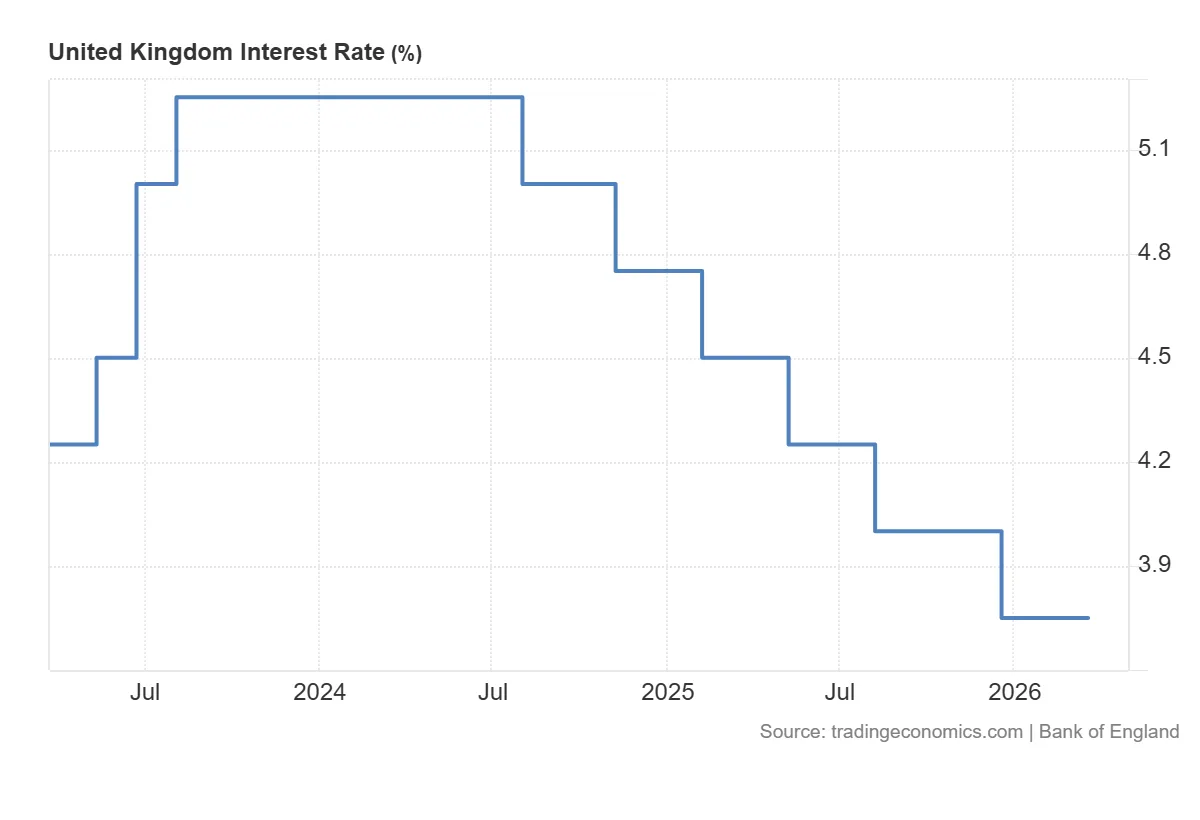
United Kingdom interest rate, source: Trading Economics
War in the Middle East reshapes the inflation outlook
The key factor behind the Bank’s decision is a fresh energy shock triggered by the war in the Middle East. Higher oil and gas prices are feeding into inflation both directly, through fuel costs and household energy bills, and indirectly, through rising operating costs for businesses. The Bank has made clear that it cannot influence global commodity prices, but it can try to prevent this shock from becoming embedded in domestic inflation.
Inflation is becoming a bigger concern again
Even before the conflict escalated, the UK inflation picture had been gradually improving. That trend has now clearly deteriorated. The Bank of England estimates that inflation could reach around 3.5% in March, remain close to 3% in the second quarter, and then climb back to as high as 3.5% in the third quarter if energy prices stay elevated. That marks a notable shift from earlier projections, which had pointed to inflation closer to 2.1%. In other words, the disinflation process has been disrupted by external factors that monetary policy can only partially offset.
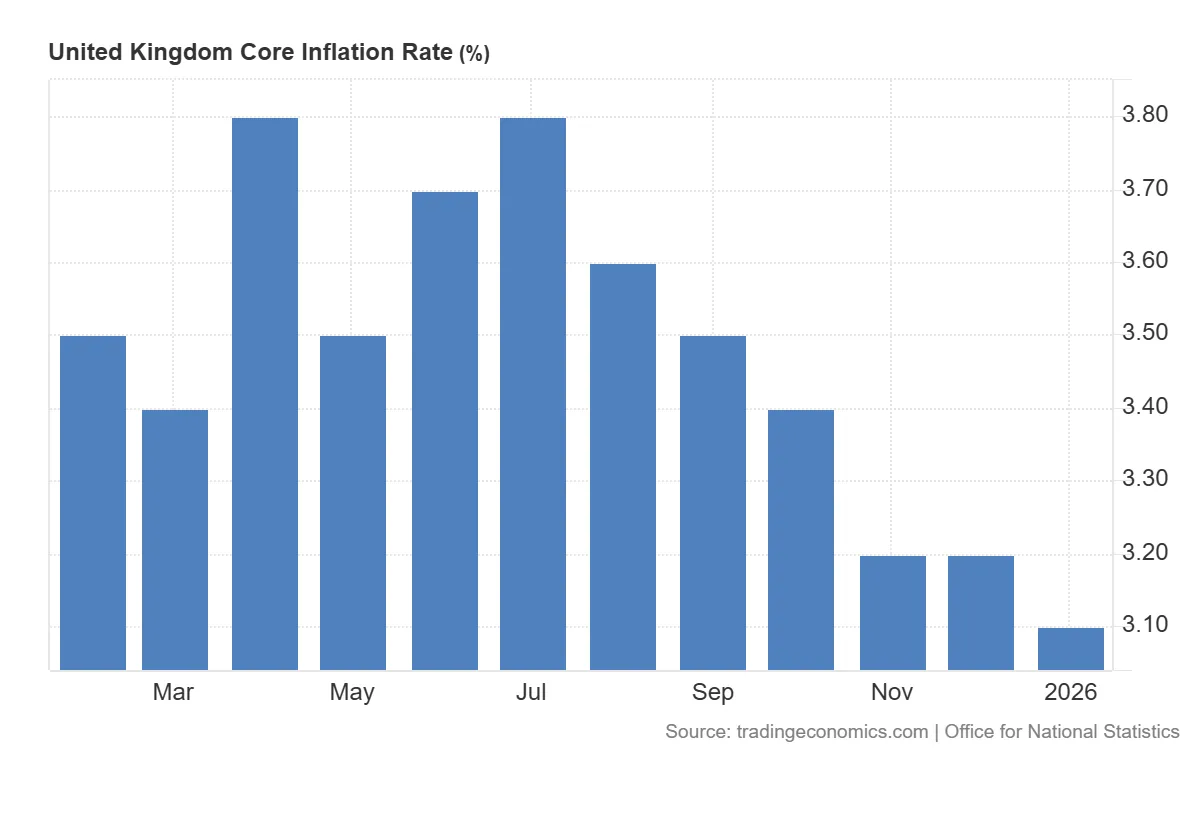
United Kingdom core inflation rate, source: Trading Economics
A weak economy makes the policy choice harder
The problem is that higher inflation is not being accompanied by stronger economic momentum. Quite the opposite: UK activity remains subdued, GDP growth is sluggish, and labour demand has softened. Higher energy costs could make matters worse by squeezing household real incomes and weighing further on consumption. In effect, the Bank of England is facing a familiar but difficult trade-off: how to contain inflation without worsening the slowdown in growth.
The biggest risk: inflation becoming entrenched
The Monetary Policy Committee sees risks on both sides, but for now it appears more concerned about upside inflation risks. Of particular concern are so-called second-round effects — the possibility that higher energy prices begin to feed into wage demands and broader domestic price pressures. That would be especially problematic, as it could keep inflation elevated for longer than markets currently expect. The longer energy prices remain high, the greater that risk becomes.
What happens next with interest rates
The Bank of England is not offering any strong guidance on its next move. Its message suggests that if the energy shock proves temporary and the economy stays weak, monetary policy could gradually become less restrictive over time. But if higher energy prices turn out to be more persistent and start to drive inflation expectations higher, the Bank could be forced to take a more hawkish stance. That means a rate hike is not the base case, but it has not been ruled out entirely.
Unanimity today does not mean certainty tomorrow
The unanimous vote to leave rates unchanged should not be mistaken for full agreement on the future path of policy. Comments from Committee members suggest that even before the outbreak of the conflict, some had been close to backing a rate cut. For now, however, caution is dominating the discussion. Policymakers first need to assess the scale and persistence of the energy shock before deciding whether the next step should be a cut, a prolonged hold, or even renewed tightening.
The Bank of England opts for a wait-and-see approach
The latest decision shows that the Bank of England has moved firmly into wait-and-see mode. Faced with war, higher energy prices and rising uncertainty, it is unwilling to move too quickly in either direction. For now, the priority is to determine whether this shock will prove temporary or evolve into a more persistent inflation problem. That assessment will shape the next phase of UK monetary policy. GBPUSD is currently trading near key support around 1.3225. Holding this level could be the first sign that the downward correction is coming to an end.
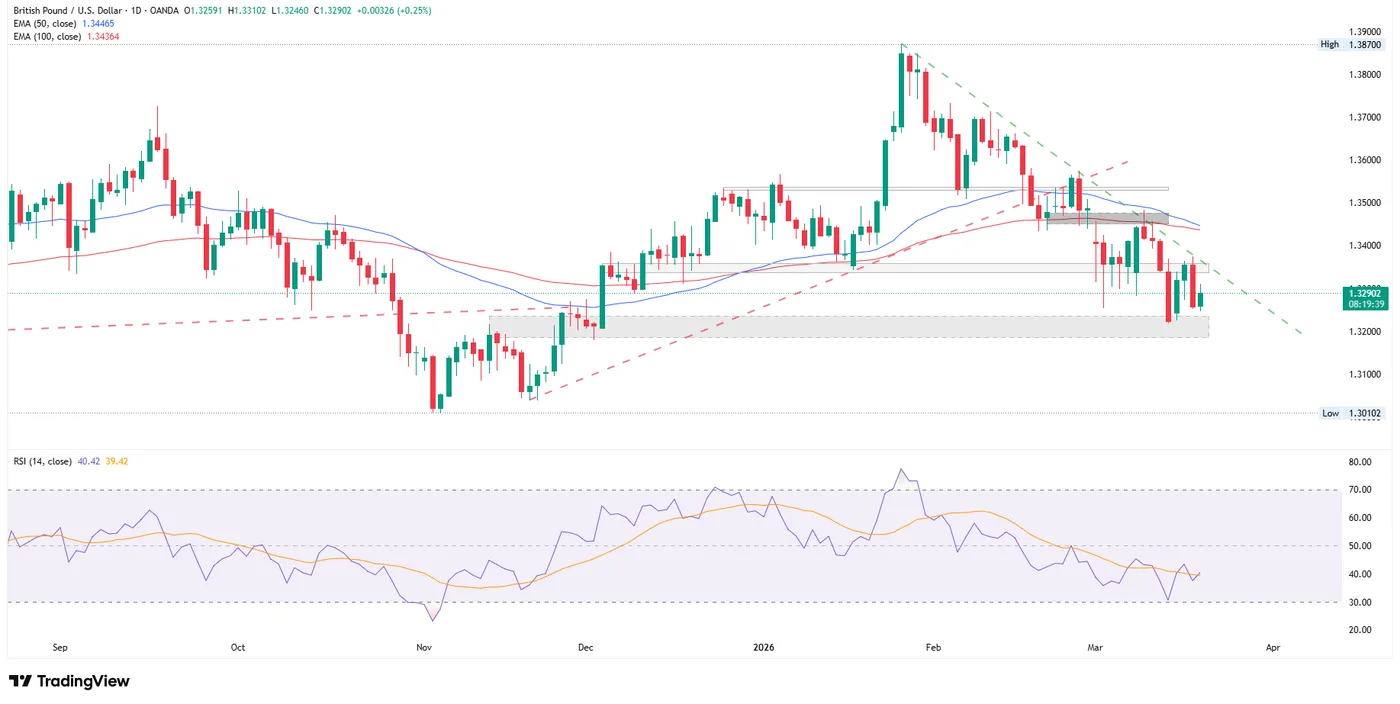
Daily GBPUSD chart, source: TradingView





