


- Currencies of oil-exporting nations are becoming market favourites.
- USDJPY retreats as Bank of Japan hawks re-emerge.
The US dollar strengthened amid rising oil prices and doubts that the ‘hawkish’ rhetoric from the Fed’s rivals would lead to widespread monetary policy tightening. The ECB and other regulators are expected to keep rates on hold at the end of April, while signalling potential hikes soon. However, in the context of slowing economies, it will not be easy to implement monetary restrictions.
Brent and WTI continued their rally as the US rejected Iran’s proposal to reopen the Strait of Hormuz. According to the White House, Tehran will continue to control the planet’s key oil artery, which is unacceptable. Citi forecasts Brent crude will average $130 per barrel in the second quarter if supply disruptions persist through the end of June.
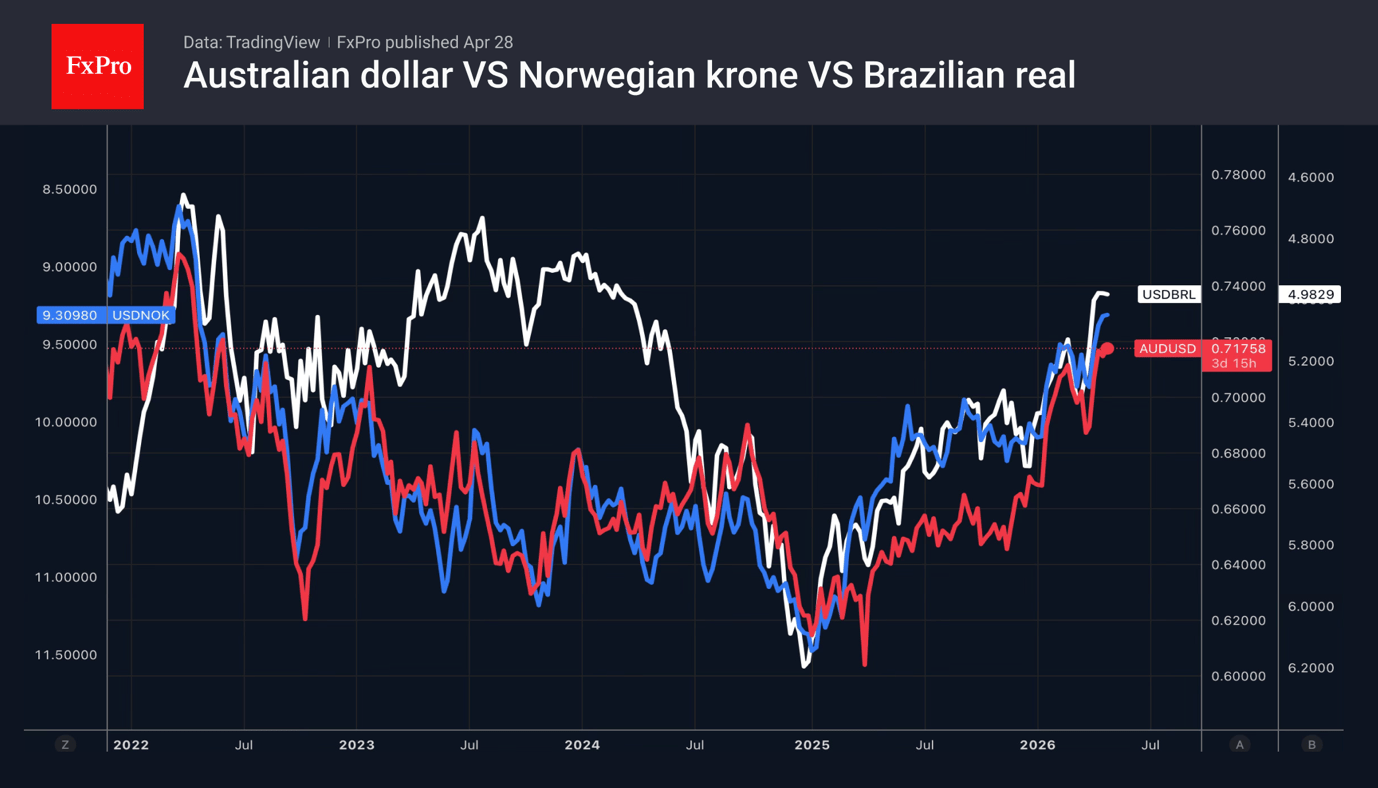
In such circumstances, it makes sense to turn attention to the currencies of oil-exporting nations. JP Morgan and Deutsche Bank recommend buying the Norwegian krone and the Australian dollar, primarily against the Japanese yen and the Swiss franc. Pioneer advises purchasing the currencies of Kazakhstan, Brazil and Nigeria against a basket comprising the US dollar and the euro. Amundi describes the Canadian dollar, Australian dollar, and Norwegian krone as significantly undervalued.
The ECB should not rush into raising rates, but it will certainly prefer to demonstrate its resolve in combating high inflation. Credit Agricole describes its rhetoric as a ‘hawkish’ bluff. It is by no means certain that the deposit rate will rise in 2026, given that the eurozone economy is losing momentum.
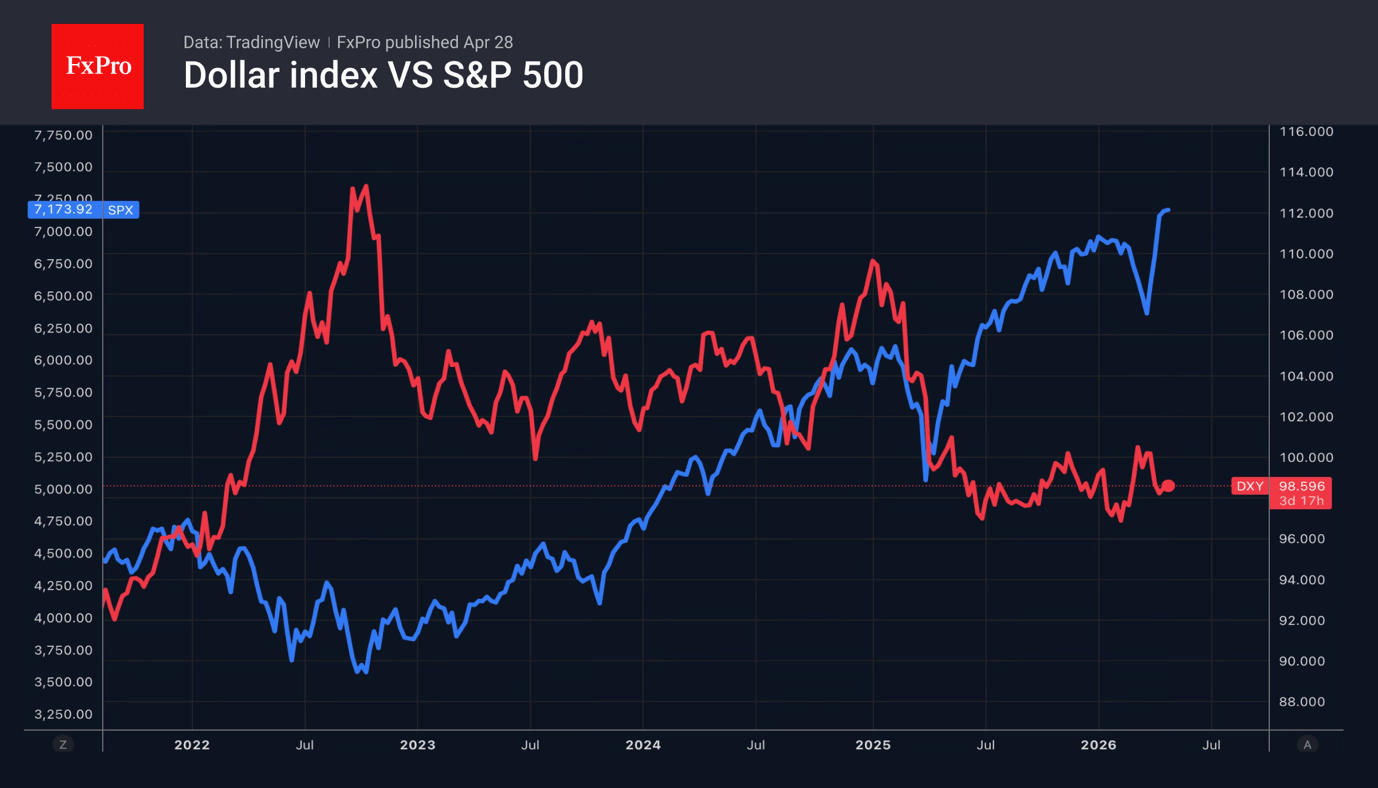
Overall, the combination of central banks’ passivity at the end of April and the oil rally could work in favour of the US dollar. Pressure on it as a safe-haven asset is being exerted by stock indices that keep hitting record highs.
The Bank of Japan’s upward revision of its inflation forecast to 2.6% and a split within the Policy Board have allowed USDJPY bears to continue their counterattack. Three of the nine members voted to raise the overnight rate from 0.75% to 1%, compared with just one in March. The number of hawks is growing, providing medium-term support for the yen alongside the short-term support provided by the government’s ongoing verbal interventions.





