- The US employment figures for August could send the US dollar on a rollercoaster ride.
- The strengthening of the yen is leading to a fall in yields on Japanese and US bonds alike.
The US dollar failed to find support from the rise in ISM services sector business activity to a six-month high. The USD index continued to fall against a backdrop of Christopher Waller’s neutral rhetoric, a drop in the probability of a Fed rate hike in September to 50%, and a peak in US Treasury yields. The FOMC official, who had previously been a ‘hawk’, has now adopted a data-dependent stance.
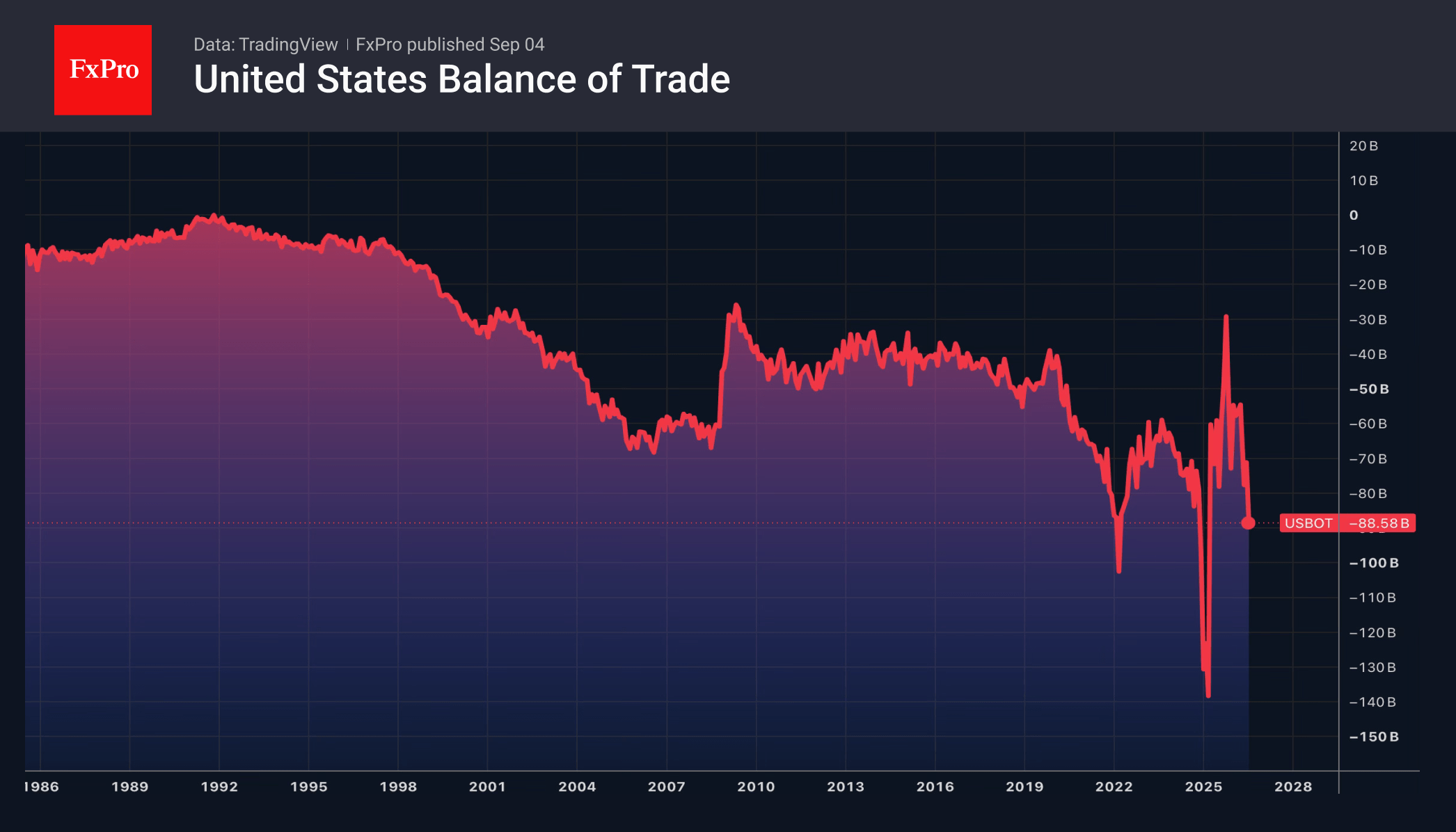
Pressure on the US dollar came from the widening of the trade deficit to its highest level since the start of 2025 and the continued strengthening of the yen. An analysis of the Bank of Japan’s accounts shows that there is no question of any currency intervention. Speculators were spooked by rumours of an overnight rate hike of 50bp in September. However, a Bloomberg insider suggests that the Governing Board will raise it by only 25bp.
Hedge funds, which have been actively building up short positions in the Japanese currency over the past two weeks, are now offloading them just as aggressively. According to JPMorgan, if USDJPY manages to consolidate below 155, there will be an increased risk of speculators further reducing their net short positions in the yen, currently standing at ¥16–17 trillion, which would push the pair down to the 146–149 range.
Nomura Securities is unfazed by talk that the market has got ahead of itself in anticipating a double rate hike in September. The firm believes that an alternative could be a tightening of monetary policy at three consecutive meetings of the Board of Governors, bringing the key rate to 1.75% by the end of 2026.
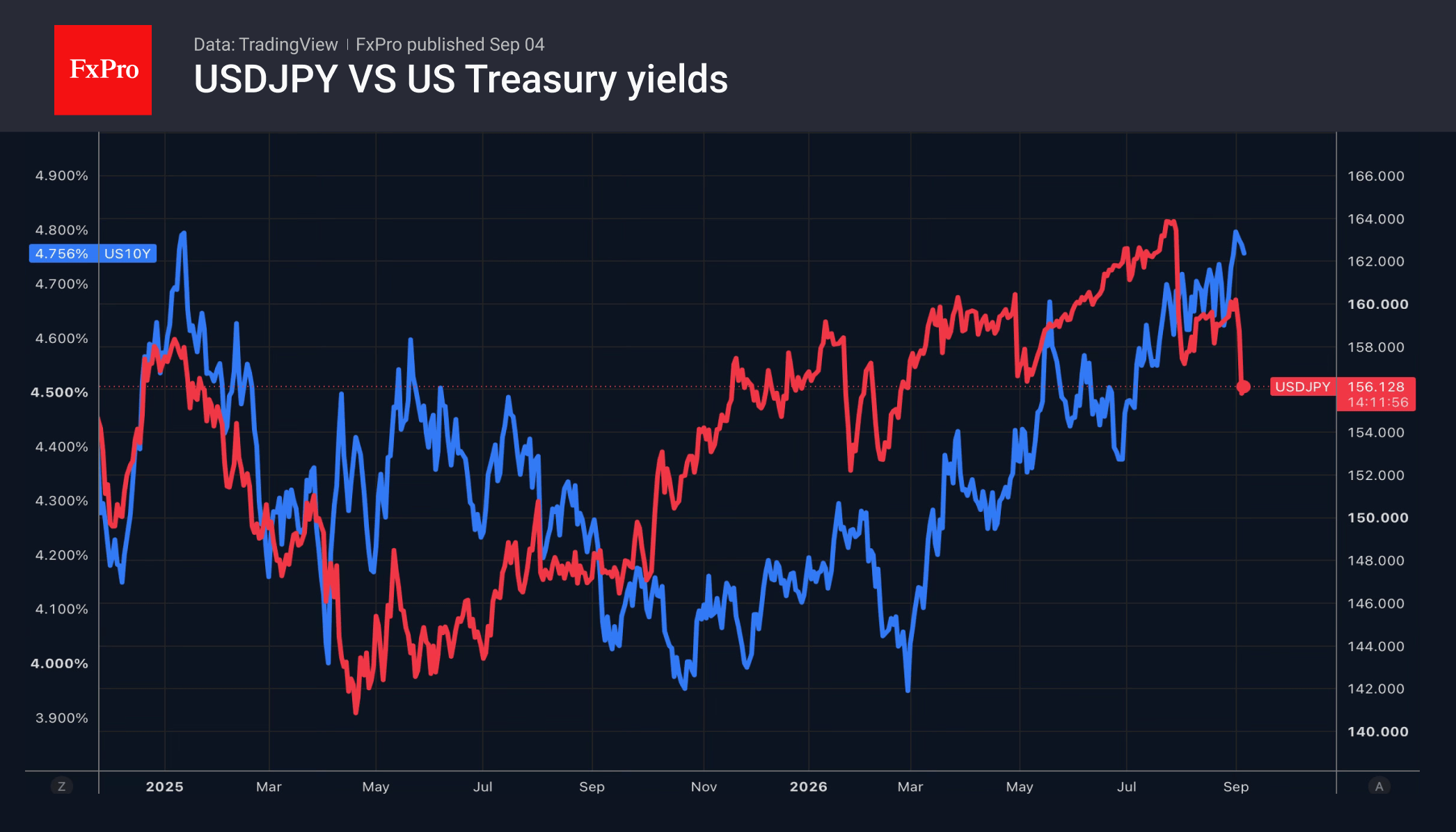
The strengthening of the yen is leading to a fall in Japanese bond yields, which is having a positive impact on the global debt market. The fall in Treasury yields is putting pressure on the US dollar, but its future trajectory will depend on US employment and inflation figures. Non-farm payrolls are expected to rise by 55K in August, while the unemployment rate is forecast to stabilise at 4.1%. However, the range of forecasts from Bloomberg experts is wide, increasing the risk of significant deviations between the actual figure and the forecast, as well as of wide fluctuations in the USD index.
The FxPro Analyst Team