


- Verbal interventions by the ECB and promises from Donald Trump have put the brakes on the greenback.
- Falling Treasury yields and oil prices have pushed the USD index down from its recent highs.
The US dollar retreated from recent highs against a backdrop of falling Treasury yields and oil prices. The return of funds to the secondary debt market following the Treasury’s successful auction of $22 billion worth of 30-year Treasuries, coupled with Donald Trump’s pledges not to attack Iran until after the primaries, has somewhat dampened the favourable environment for the USD index. However, the greenback’s position remains strong.
The US dollar’s retreat from its highest levels since April 2025 was partly driven by falling stock indices and a statement by Fed Governor Christopher Waller that the Fed does not necessarily have to raise rates at every meeting. The S&P 500’s retreat is a blow to American exceptionalism. Previously, the greenback and equities had been moving in the same direction, as the growing attractiveness of assets encouraged capital inflows into the United States.
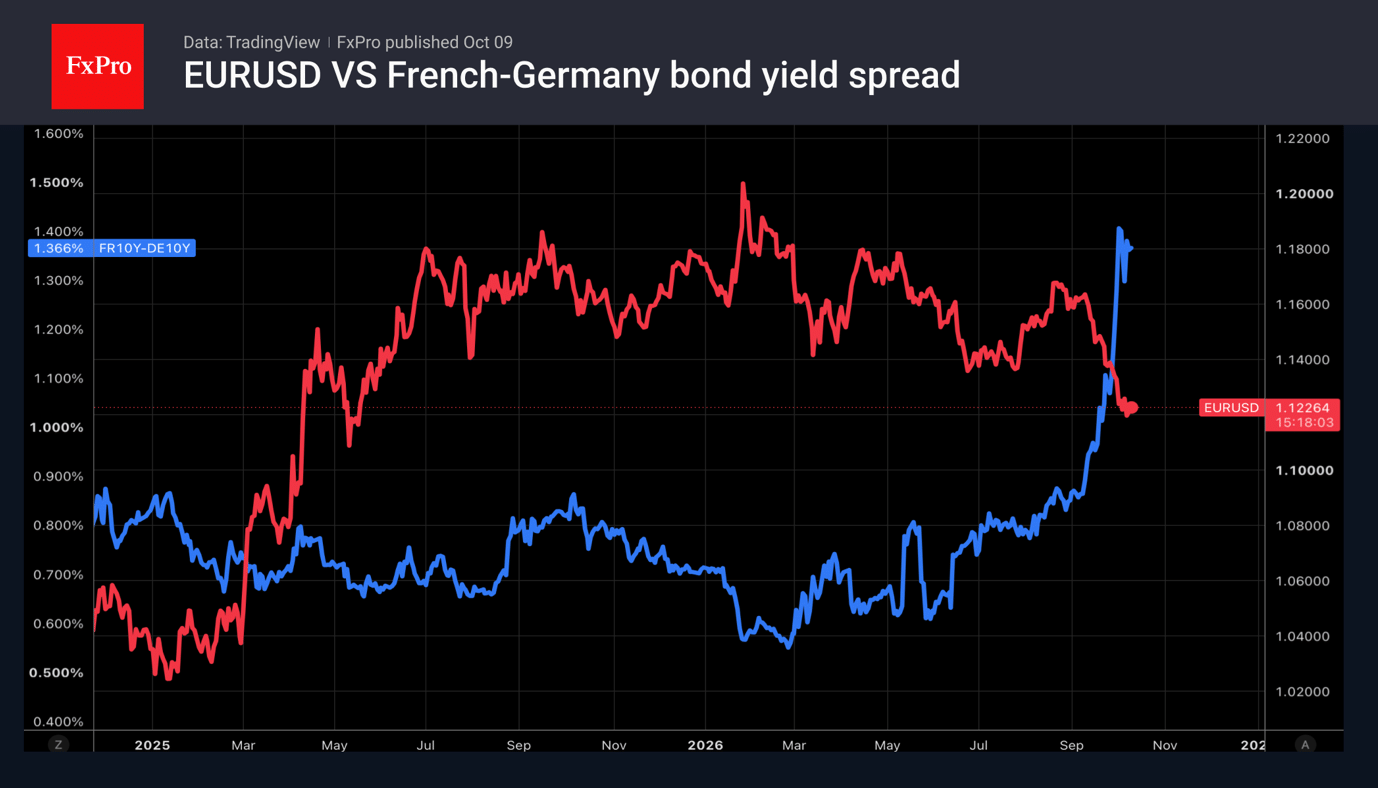
Christine Lagarde attempted to slow this process down. The ECB President noted that the central bank has the tools to counter disorderly and unwarranted market movements, should such movements threaten the smooth transmission of monetary policy to the eurozone economy. Verbal interventions helped narrow the yield spread between French and German bonds and provided a lifeline for the EURUSD pair.
Nevertheless, the euro’s position appears precarious. It is doubtful that the government’s draft budget will pass easily through the French parliament. At the same time, the presidential candidates’ proposals for reducing the deficit are far removed from reality. With its back against the wall, Iran has no choice but to escalate the conflict in the Middle East, sending Brent prices higher again and heightening fears that high prices will become entrenched in the US economy.
All the more so as the US inflation report for September is due to be released as early as next week. A rise in inflation provides a reason to buy the US dollar on expectations that the Fed will resume a hawkish stance.
The ECB will be unable to launch its asset purchase programme, as this requires the issuing country to comply with EU requirements, which is not currently the case for France. Consequently, the rhetoric from Donald Trump and Christine Lagarde is having a rather market-calming effect. It will slow down, but not halt, the US dollar.
The technical picture is also interesting: the DXY surged upwards from its 50-week moving average about a month ago, after more than a year of fluctuating near a long-term trend support line. The dollar is now taking a breather after failing to break through the 200-week MA straight away. A previous consolidation above this line almost five years ago triggered a 20 per cent rise in the following year. The situation on the charts resembles that of the 1990s, when consolidation at the 200-week MA triggered a 9% rally over the following two quarters, followed by a further year and a half of more measured gains. If this bullish scenario plays out, it will take the dollar back to its highest levels in the last 25 years, but we should not expect a rapid climb to those levels.
The FxPro Analyst Team





