- Capital outflows from France are weighing on the euro.
- Safe-haven demand strengthens the yen and franc.
The US dollar is attempting to resume its upward trend against the backdrop of a sharp fall in Treasury bond yields. The DXY is being supported by the relentless rise in oil prices and the weakness of the euro, which accounts for the largest share of the basket of major currencies. Capital outflows fuelled by a sell-off in French assets and rumours that the ECB may intervene in the debt markets are keeping EURUSD under pressure.
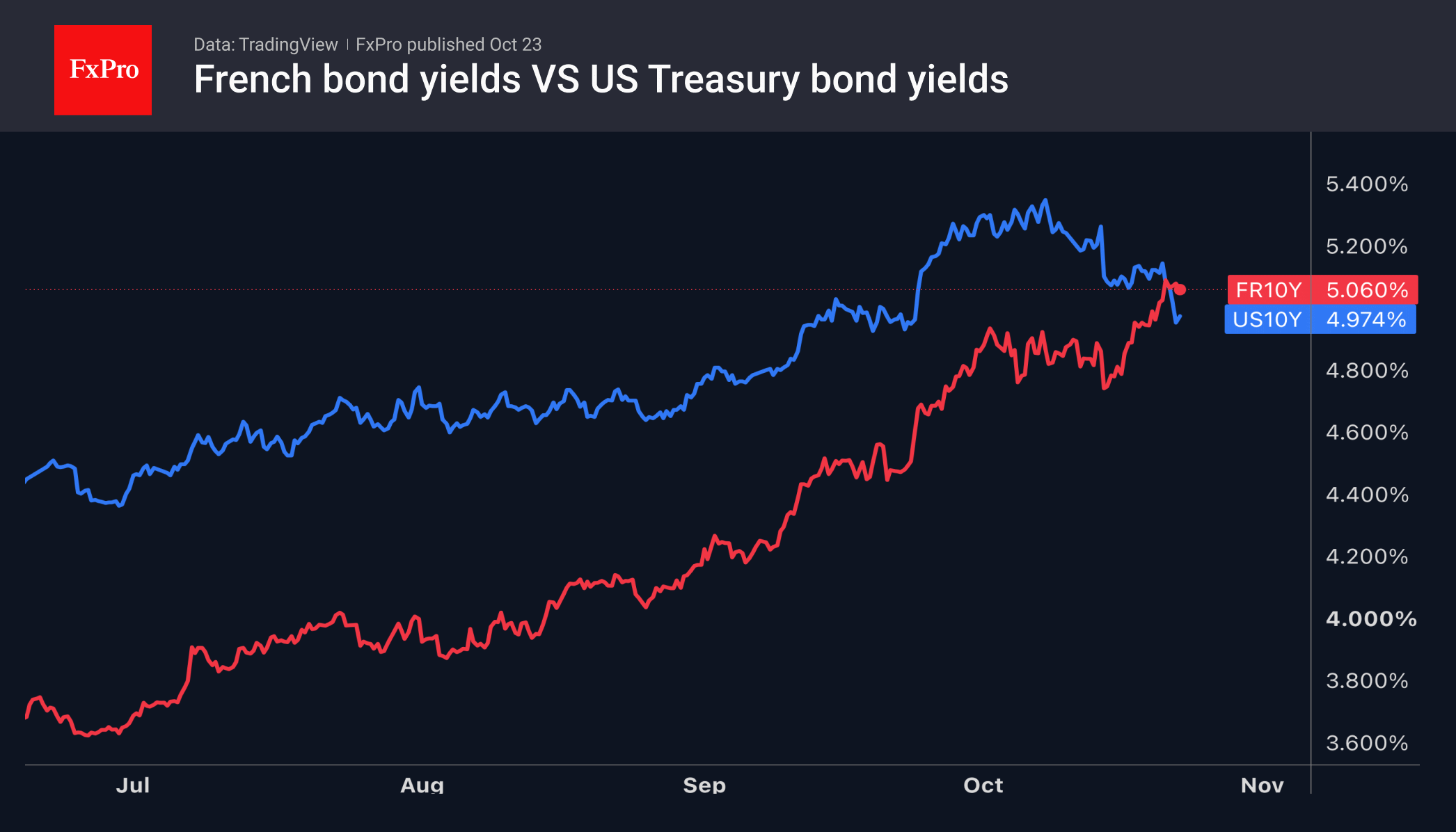
The share of non-residents in the French bond market stands at 55%, whilst in the US it is a more modest 30-33%, not to mention Japan with its 13%. According to Barclays estimates, around 31% of French debt is held by non-European investors. The sell-off in French assets directly leads to capital outflows and contributes to the weakening of the euro against major global currencies. Furthermore, market participants are increasingly discussing options for ECB intervention to quell the panic in the debt market.
Initially, the European Central Bank may resort to verbal interventions, followed by a reduction in the volume of bond sales, thereby constituting a policy easing. Finally, the TPI, a programme for buying the government bonds of stressed countries, appears to be a last resort. The latter two measures are, in a sense, monetary stimuli that increase the supply of euros, which, amid Fed tightening, is likely to put pressure on EURUSD.
Meanwhile, the Swiss franc and the Japanese yen have reverted to their roles as safe-haven assets amid the French budget crisis, sell-offs in technology stocks, fears of an escalation of the conflict in the Middle East and uncertainty surrounding the US midterm elections. The return of 10-year Treasury yields to below 5% pushed USDJPY down to five-week lows, but the pair rebounded from those levels on the back of rising Brent prices.
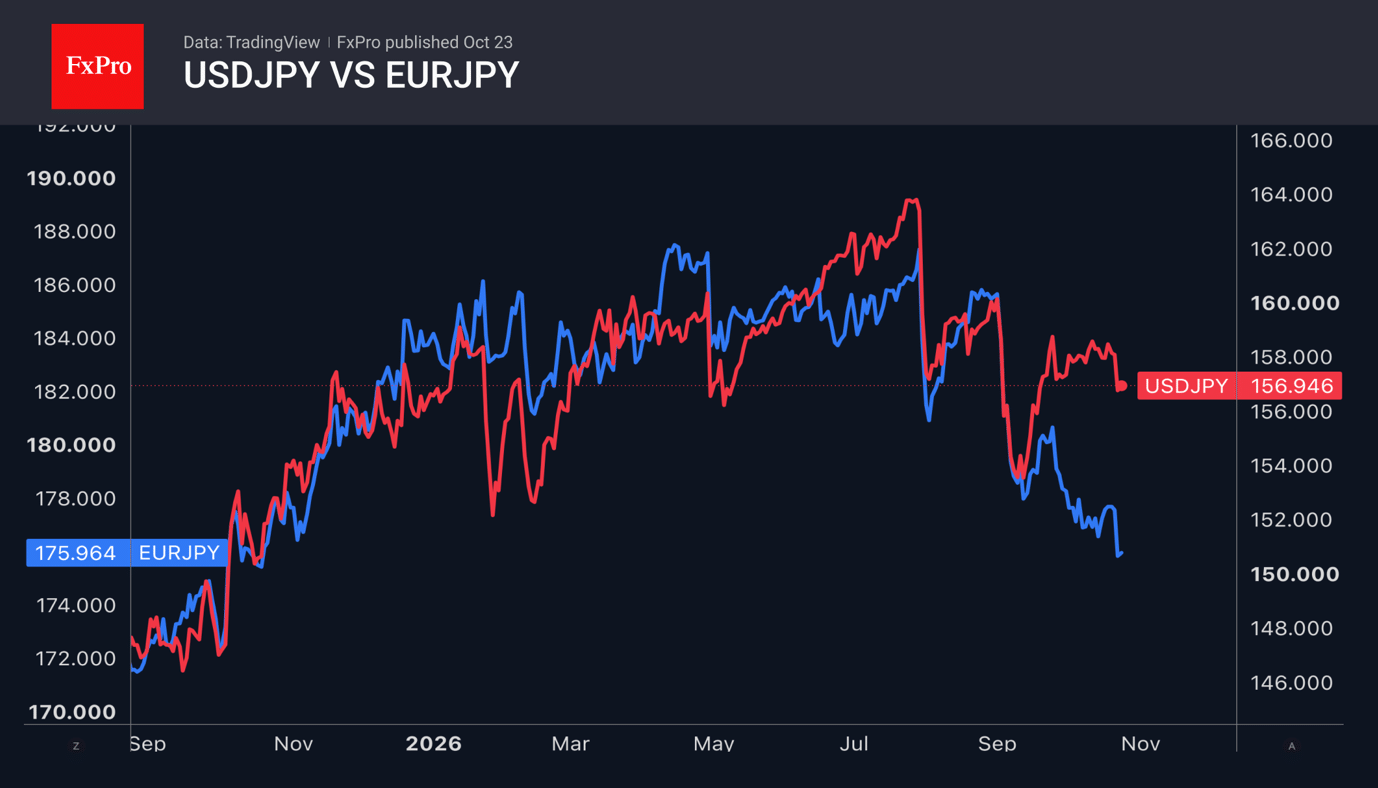
According to Claus Vistesen of Pantheon Macroeconomics, between 10% and 15% of French debt is held by Japanese investors, who are increasingly turning their attention to Japanese bonds following the Bank of Japan’s monetary tightening and rising demand for safe havens. The natural consequence was a weakening of EURJPY to 12-month lows, a 5.7% decline since the end of August. A peak has formed near 188, echoing the 1990 high area. At that time, it marked a global reversal, followed by a 14% decline over eight weeks, a drop of more than 20% over the following year, and a fall of nearly 50% over the next 10 years.
However, with a series of meetings by key central banks scheduled for the final week of October, the likelihood of consolidation and a wait-and-see approach in the Forex market is increasing.
The FxPro Analyst Team