- The combination of high oil prices and a slowdown in GDP offers an uneasy choice for central banks.
- The US is benefiting from differences in oil prices across various regions.
The US dollar has risen for the third day running, while the dollar index has returned to the highs reached earlier this month, despite falling Treasury yields and Brent retreating from nearly six-month highs. Investors expect the Fed to hold rates on Wednesday and signal a hike in December. This encourages buying the greenback in anticipation. According to the dollar smile theory, the dollar rises when the US economy is either doing very well or very badly. And the combination of high oil prices and falling bond yields could be a harbinger of stagflation.
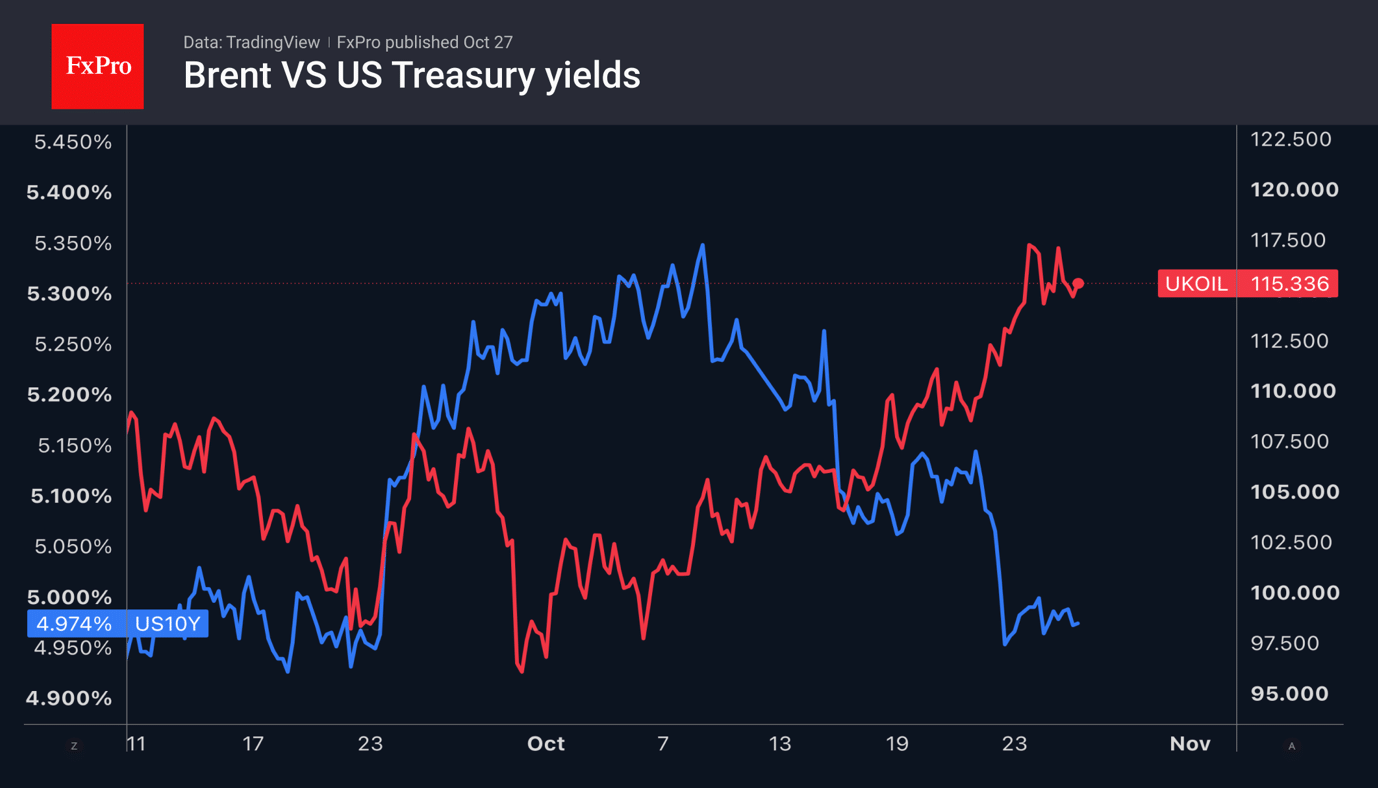
The lowest yield on US 10-year bonds was recorded the day before the US and Israel began attacking Iran. In early October, yields exceeded 5.35%, reaching their highest level since 2002, amid fears that high energy prices would fuel US inflation and force the Fed to tighten monetary policy. Since then, however, Brent crude and Treasury yields have diverged.
Brent crude soared towards $117 per barrel on fears of an escalation of the conflict in the Middle East and a reduction in export volumes from the region. According to Kpler’s estimates, 12.65 million barrels per day are currently passing through the Strait of Hormuz, or 74% of pre-war levels. ANZ Research cites a 60% figure and highlights a decline in flows for the fourth consecutive week.
By contrast, Treasury bond yields are falling. The main reasons given are the unwinding of the AI trade, the expected Democratic victory in the midterm elections, and the economic slowdown. A so-called stagflationary environment may emerge, in which GDP slows or falls while inflation remains high, putting the Fed in an awkward position.
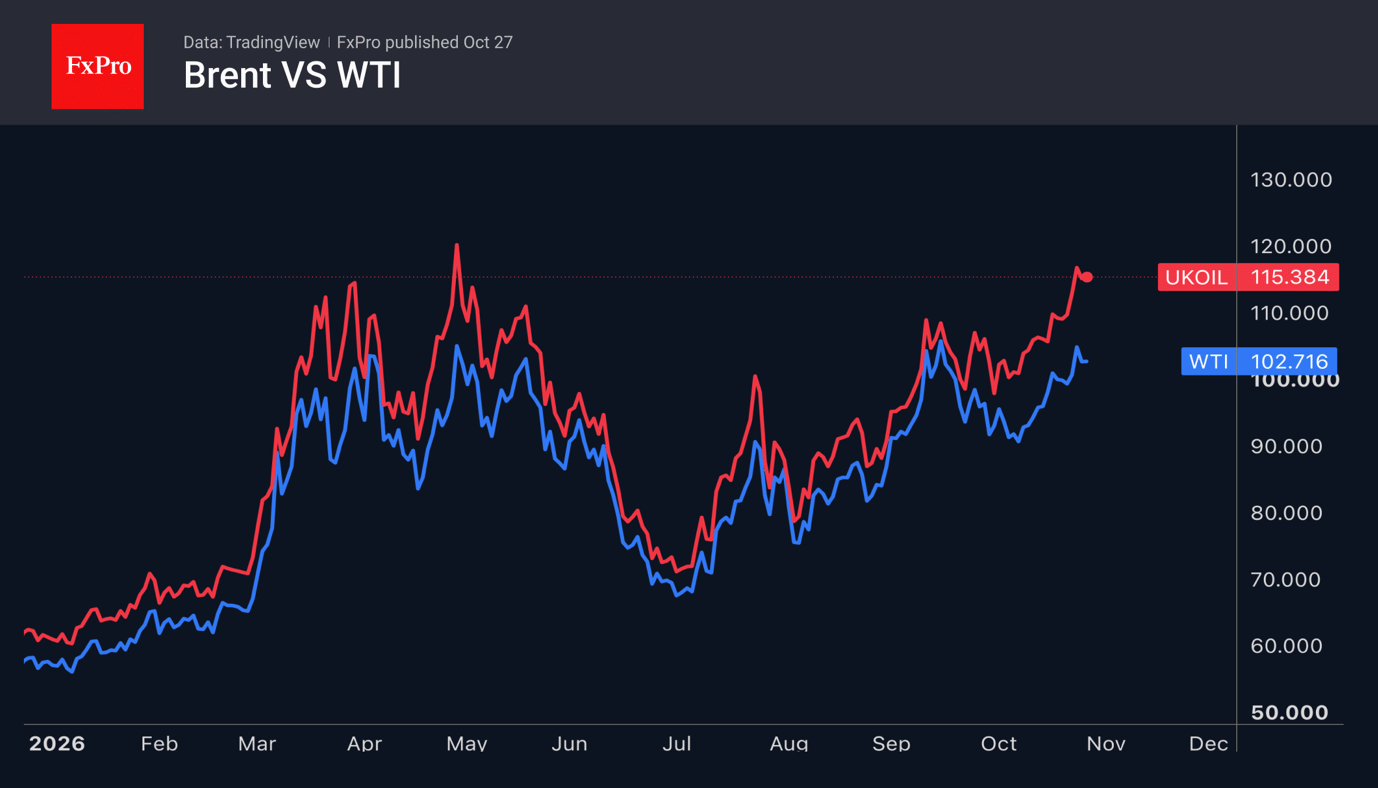
The strengthening of the US dollar is not solely due to fears of stagflation. The US is benefiting from the differential in oil prices. Three-quarters of its oil imports come from Venezuela, Canada and Mexico, where the cost of black gold is significantly lower. Transport costs have risen from $3 per barrel at the start of the year to $20–25, according to Bloomberg’s calculations. Europe and Japan, which import large amounts of energy, are the losers, which puts pressure on the EUR and JPY as their central banks are forced to walk a fine line between Scylla (inflation) and Charybdis (economic downturn).
The FxPro Analyst Team