


Canadian Highlights
- October inflation came in softer than expected, with core inflation remaining contained despite elevated energy costs.
- Softer growth and easing oil prices strengthen the case for BoC patience, even as markets price further near-term tightening.
- Housing activity remained subdued in October, while softer retail sales volumes point to less consumer momentum heading into Q4.
U.S. Highlights
- Tech stocks led the week’s sell-off, but markets are still fully pricing in a December Fed hike.
- Underlying retail sales held up in October, even as headline growth slowed. Falling permits cast doubt on the rebound in housing starts.
- The Fed minutes showed that nearly all officials expected more hikes. The question is how fast to move.
Canada – Softer Data Give the BoC Room to Wait
Canadian inflation took centre stage this week. Higher gasoline prices kept headline inflation steady at 3.1% year-on-year (y/y), a tick below market expectations, while accelerating grocery and clothing prices were partly offset by cooler shelter inflation. Importantly, the Bank of Canada’s (BoC) preferred core measures surprised to the downside, with CPI-median and CPI-trim averaging below 2% (Chart 1). For now, this report provided only lukewarm evidence of the price pressures the BoC sought to pre-empt with last month’s rate hike.
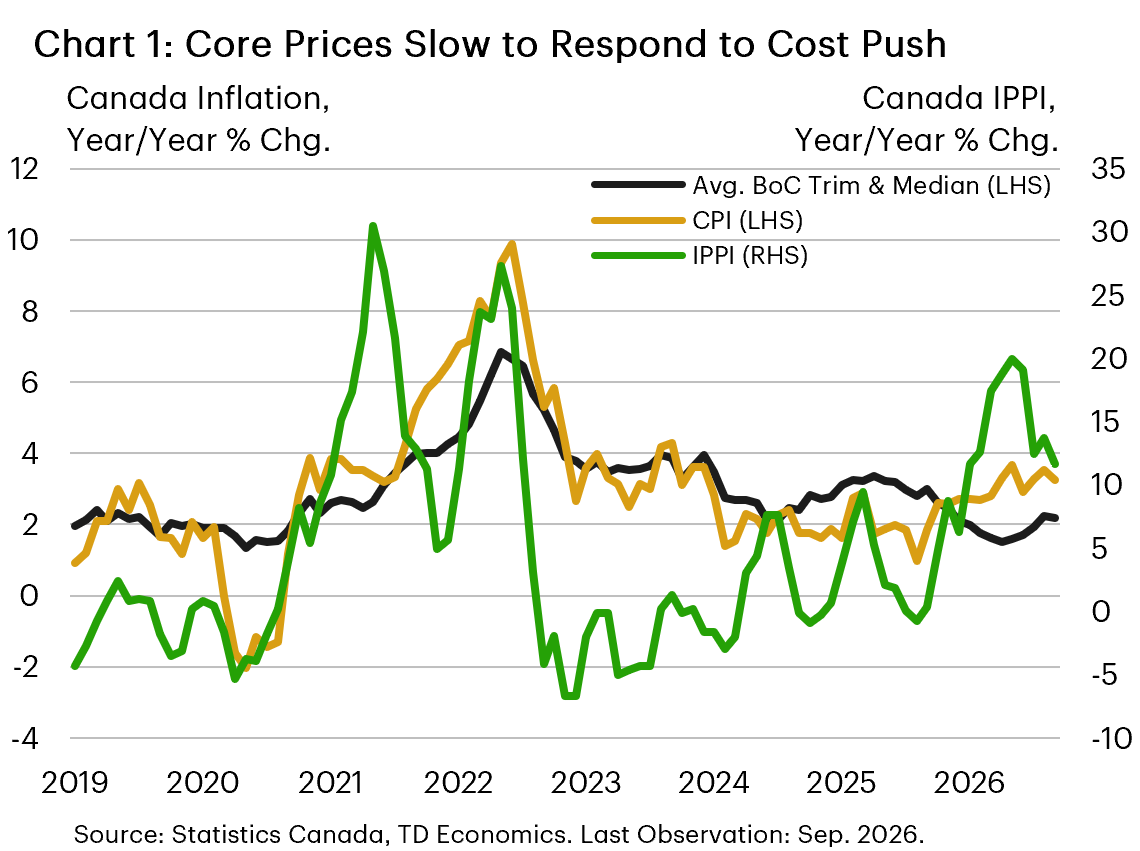
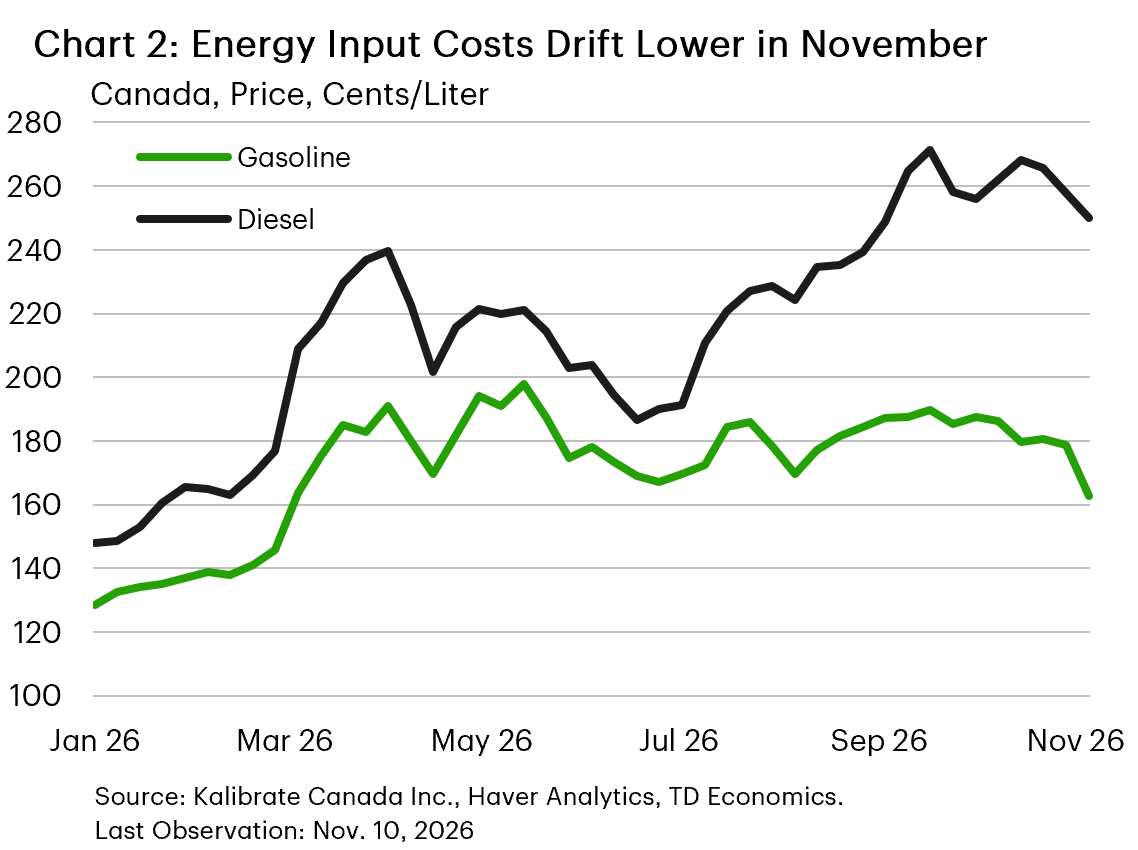
In the months ahead, we expect core inflation to firm slightly into the 2.5%-to-3% range, but the extent to which those pressures become sufficiently persistent and broad-based will inform the timing of the Bank’s next move. Oil and gasoline prices have pulled back meaningfully since the BoC’s October meeting, which should take some pressure off of headline inflation and lessen the scope for second-round effects over the near-term for now.
Markets initially took the CPI report as a reason to dial back expectations for near-term tightening, with the implied odds of a December hike falling below 50%. Those odds subsequently climbed again through the week, after markets interpreted a BoC speech which highlighted how its “high oil price scenario” from the April MPR was effectively materializing at the time of the October rate decision, which would require “consecutive policy rate increases.” However, broader financial market moves were somewhat less hawkish, with two- and 10-year Canadian bond yields both falling roughly 12 basis points (bps) on the week amid a broader risk-off move. The loonie lost seven-tenths of a cent against the U.S. dollar, slipping below US$0.70, while the TSX slid 6% alongside a sharp global equity sell-off.
Meanwhile, economic growth indicators are landing softer than the Bank’s expectations. Canadian home sales edged only slightly higher in October but remain subdued, while housing starts continued to trend lower. Nominal retail sales rose a solid 0.8% m/m in September, but most of this was price effects, with volumes rising by only 0.1% m/m. Household spending in the third quarter remained an important source of support for the economy, but an expected sharp pullback in spending in October suggests consumers are entering the final quarter with somewhat less momentum (Chart 2). These readings follow a string of monthly employment declines and weaker-than-expected monthly GDP prints. The economy isn’t necessarily rolling over, but momentum looks less convincing than the Bank’s relatively upbeat assessment last month. We’re tracking Q3 real GDP growth at just over 1%, roughly half the BoC’s 2% forecast from the October MPR.
We think that softer growth, cooling energy prices and limited inflation pass-through give the Bank room to proceed cautiously. Against this backdrop, our call is for policymakers to hold the policy rate at 2.50% in December before delivering one additional hike in January, followed by an extended pause through 2027.
U.S. – Tech Stocks Slide, but December Hike Bets Hold
Investors cooled on tech stocks this week, but they didn’t budge much on the Fed. Anthropic’s market debut failed to rekindle enthusiasm for AI stocks on Thursday, and the tech-heavy Nasdaq fell more sharply than the S&P 500, which extended its losing streak. Long-term Treasury yields dipped alongside stocks, but markets still overwhelmingly priced in a quarter-point hike in December (Chart 1).
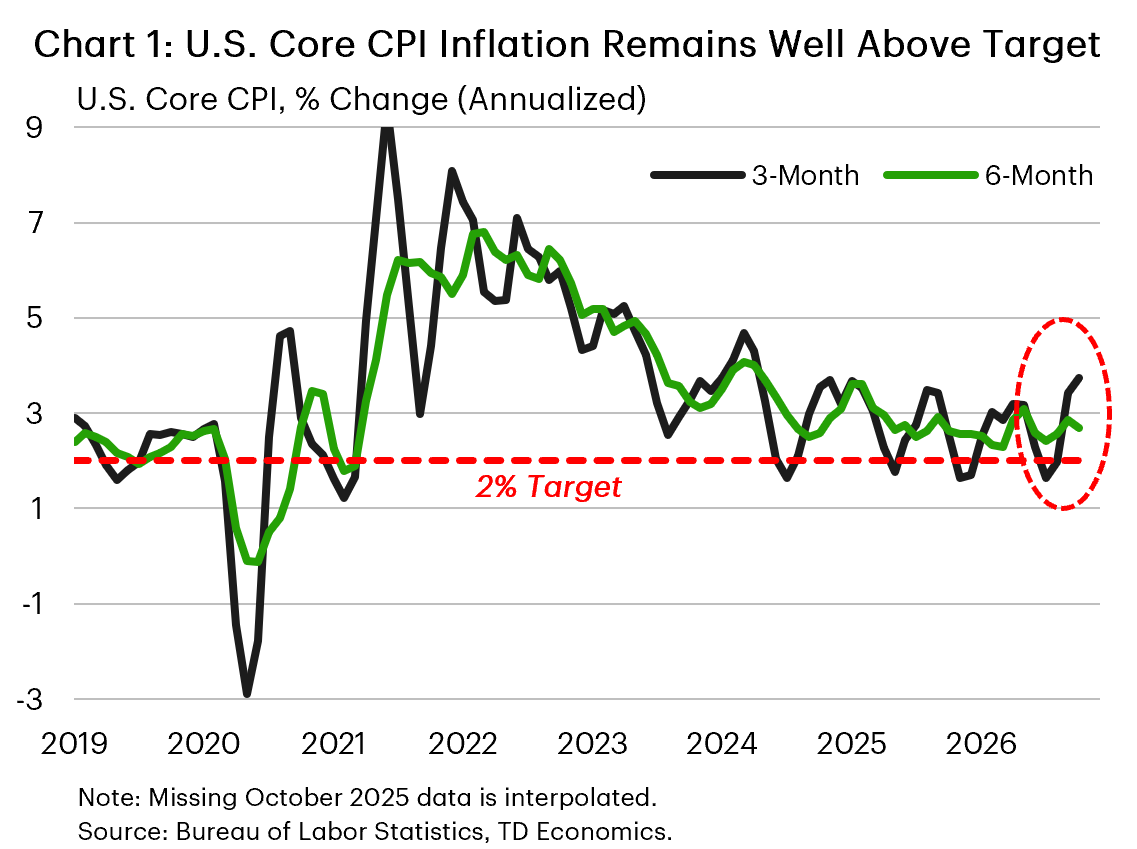
The October FOMC minutes help explain why a December hike looks to be a lock. The two votes for an immediate quarter-point hike at the prior meeting were already public. The minutes went further than the press conference: many officials wanted time to see how September’s hike was working, but nearly all expected to raise rates again under their baseline outlooks. A couple were open to a bigger move in December if inflation came in hotter than expected.
This week’s Fed speakers put that difference in plain terms. Governor Christopher Waller favored a half-point hike in December unless the Fed clearly signals another move in January, while New York Fed President John Williams saw no need for dramatic action. Vice Chair Philip Jefferson pointed to another reason not to count on quick inflation relief: the AI buildout is adding to demand and inflation now, while any relief from higher productivity would come later. A quarter-point hike still looks like the better fit for a committee that largely agrees on direction but not on pace.
One clue to how quickly the Fed might need to move is how well spending is holding up. October’s retail report gave a mixed answer. Overall sales edged up before adjusting for inflation and slipped afterward. Weaker auto sales dragged on the headline, while higher pump prices boosted gas station receipts. The control group, which excludes autos, gasoline, building materials and food services and helps estimate goods spending, matched September’s solid gain, with online retailers among the stronger categories. Holiday spending looks to be on firmer footing than the headline alone suggests (Chart 2).
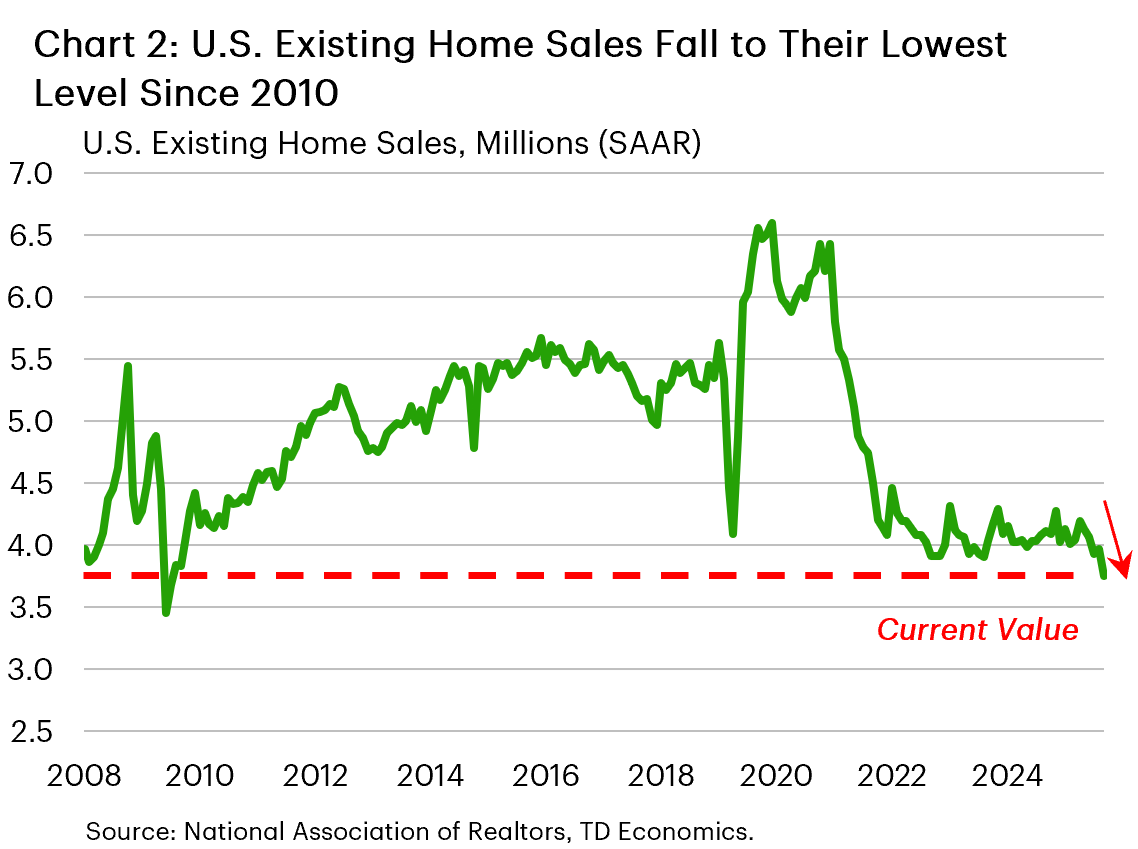
With goods spending holding up and the Fed still leaning toward more hikes, homebuilders aren’t likely to get much relief from high borrowing costs soon. Housing starts bounced in October, led by multifamily construction, though single-family starts rose too. Permits fell in both segments, pointing to fewer projects ahead. That makes October look more like a bounce than the start of a lasting recovery.
Could next week’s data change the rate outlook? On Wednesday, the second estimate of third-quarter GDP will show whether the initial 3.4% annualized gain holds up and whether domestic demand was stronger or weaker than first reported. October’s Personal Income and Outlays report will give a fresher read on whether real consumer spending held up despite the dip in inflation-adjusted retail sales. For the Fed, core PCE inflation is the one to watch: a cooler reading would support a quarter-point hike in December, while a hotter one could put a larger move back in play.





.)