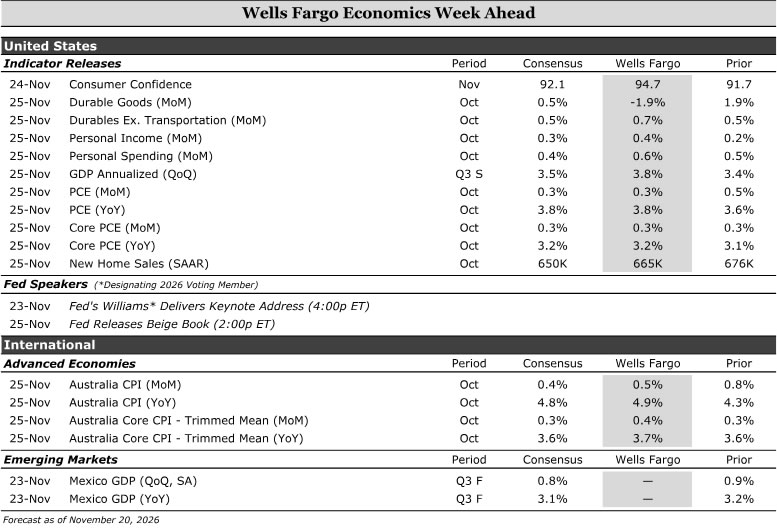
Next week’s U.S. data should highlight continued strength in consumer spending. While the consumer should remain a source of support for growth, the mid-year surge in spending is unlikely to persist. Housing activity, meanwhile, remains constrained by elevated mortgage rates, and we expect new home sales to decline in October.
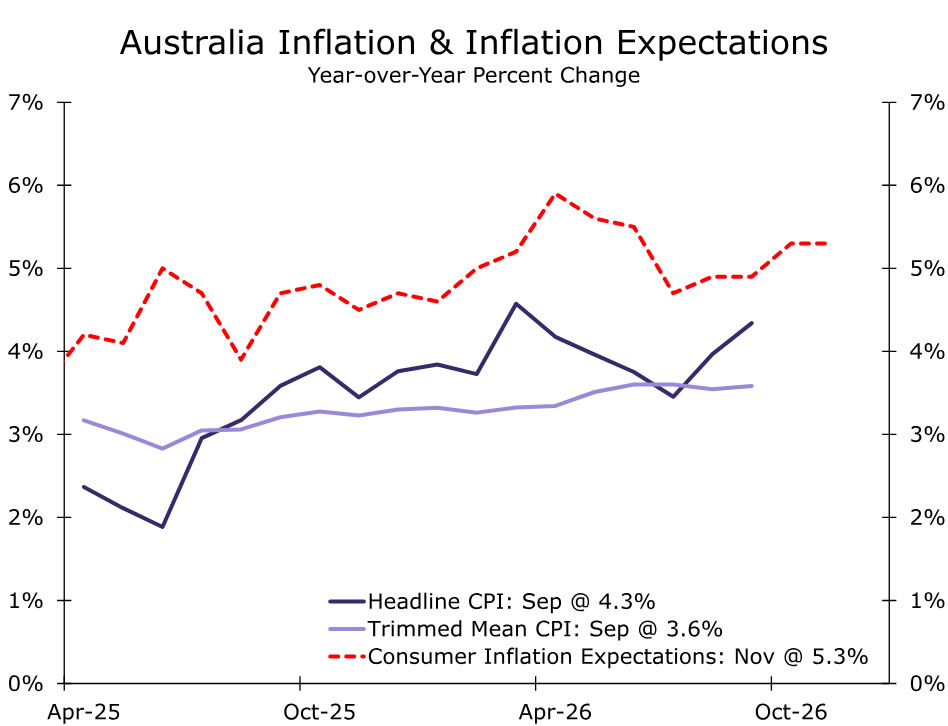
Abroad, Australia’s October inflation report will be in focus, with headline CPI expected to rise to 4.9% on a year-over-year basis. We expect the RBA to remain on hold through next year, though persistent domestic inflation would tilt risks toward further tightening.
United States:
- Personal Income & Spending (Wed.), New Home Sales (Wed.)
Advanced Economies:
- Australia CPI (Wed.)
U.S. Week Ahead
Personal Income & Spending • Wednesday
The consumer keeps spending, but the midyear surge is unlikely to last. We forecast personal spending rose 0.6% in October, though higher prices likely accounted for part of the gain. Retail sales continue to point to robust goods consumption: control-group sales climbed 0.6% with upward revisions to prior months, while a ninth consecutive increase in food-services spending suggests demand remained healthy on the services side as well. We expect personal income rose 0.4% last month.
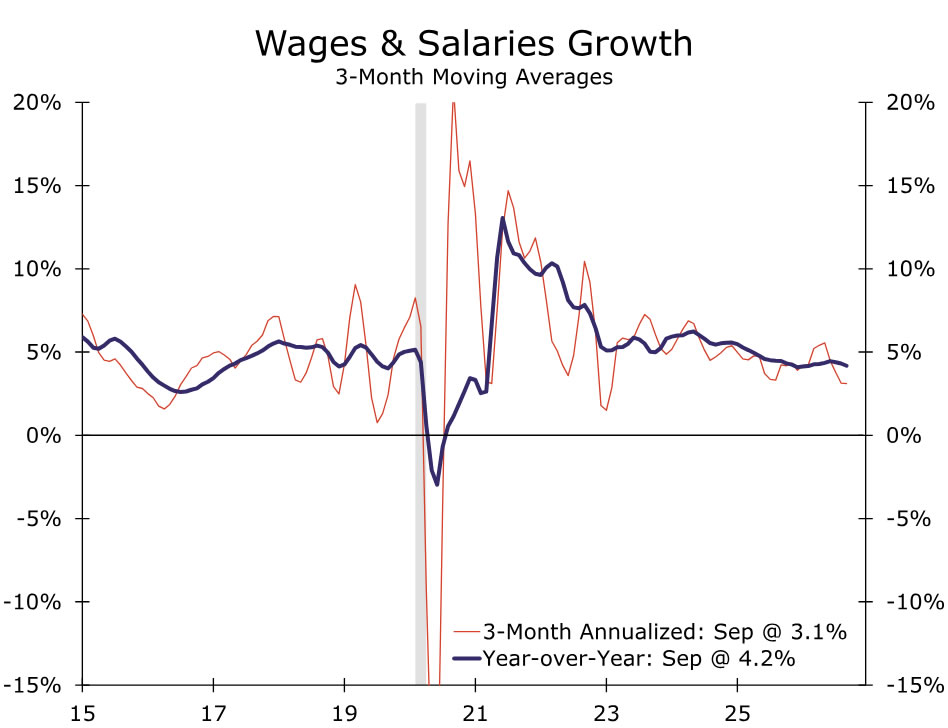
That resilience should also be evident in Wednesday’s second estimate of Q3 GDP. Real consumer spending grew at a 3.8% annualized pace across the second and third quarters, and stronger retail sales alongside solid services revenue suggest third-quarter consumption could be revised even higher, perhaps to around 4.2%. But that pace was never likely to be sustained. The boost from larger-than-usual tax refunds has faded, wage growth has softened somewhat, and recent equity-market weakness should provide less of a tailwind to spending through the wealth effect.
We therefore expect consumer spending to remain a source of support for growth into year-end, but at a more moderate pace than over the middle of the year. Looking into early next year, however, easing inflation should allow real disposable income growth to improve, providing a more durable source of support for household spending.
New Home Sales • Wednesday
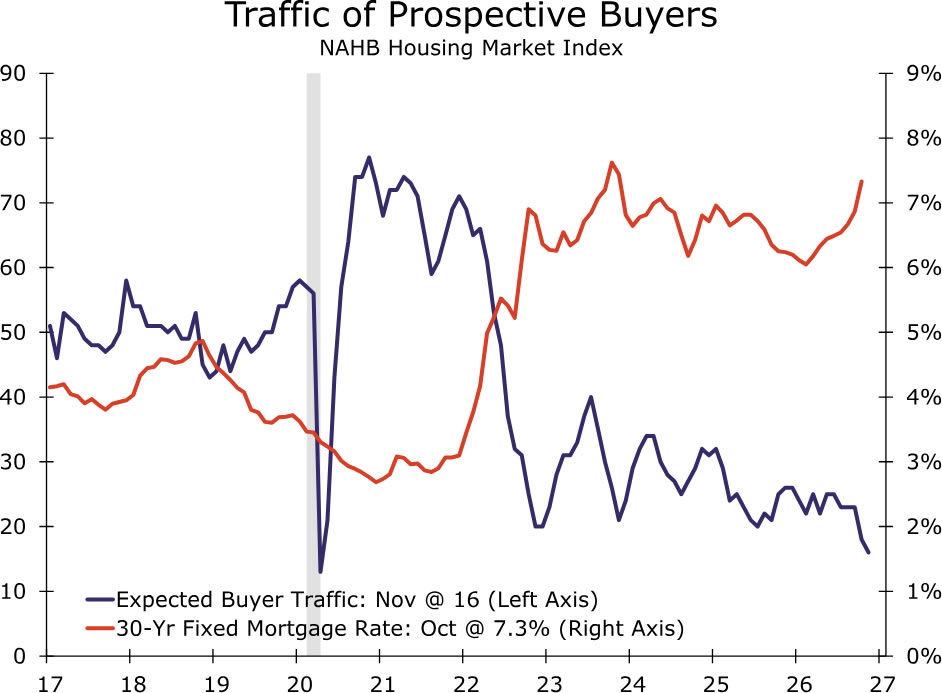
Amid intense affordability pressures, new home sales have generally outperformed the broader housing market on account of builder incentives like price cuts and mortgage rate buy-downs. But they are not immune to macro headwinds, with sales declining roughly 3% year-to-date through September. We expect that sales weakened further in October amid a roughly 40-bps rise in the average 30-year fixed mortgage rate.
According to daily measures, mortgage rates climbed as high as 7.6% in early October and ended the month squarely above 7.0%. Mortgage purchase applications pulled back sharply, and builder surveys show buyer traffic falling to its weakest level since the pandemic. Mortgage purchase applications have since stabilized, but builder sentiment has sunk even lower as growing rate hike expectations reignite mortgage rate pressure. For October, we estimate that new home sales fell 1.6% to a 665K annual pace.
Advanced Economies Week Ahead
Australia CPI • Wednesday
Australia’s October CPI should rise further. We forecast headline inflation at 4.9% year-over-year, with trimmed mean inflation at 3.7% year-over-year. Higher retail fuel prices and base effects from last year’s household subsidies should lift headline inflation, though our main focus will be on whether market services (ex. volatile items) firmed again in October given its sensitivity to domestic conditions. Recent business surveys provide a mixed signal, with services PMIs pointing to continued cost pressures but the latest NAB survey suggesting firms have limited scope to pass these on.
As stated in its November monetary policy meeting minutes, the Reserve Bank of Australia (RBA) views the recent strength in underlying inflation as evidence of greater domestic capacity pressures than previously assessed. Even so, the five rate hikes delivered this year are still working through the economy. We expect the RBA to remain on hold through next year, though further strength in inflation categories most sensitive to domestic conditions would skew the risks toward additional tightening.