


USD/JPY consolidated near 160.25 on Wednesday, hovering close to its highest level since late July. Pressure on the yen has intensified amid a global bond sell-off, with the yield on 10-year Japanese government bonds rising to 3% for the first time since 1996 – increasing the cost of servicing Japan’s massive national debt and heightening concerns about fiscal sustainability.
Prime Minister Sanae Takaichi’s plans for large-scale investment add another layer of uncertainty. Markets fear that aggressive fiscal policy could further complicate the debt situation, limiting support for the yen even as expectations of a Bank of Japan rate hike continue to rise.
Pressure on the BoJ is also increasing from the US. Treasury Secretary Scott Bessent backed the idea of taking stronger steps to address yen weakness, effectively reinforcing expectations of a rate hike as early as September. However, even tighter BoJ policy has yet to change the broader picture. Borrowing costs in Japan remain significantly lower than in the US and other major economies, meaning the carry trade continues to weigh on the yen.
The dollar, in turn, is drawing support from safe-haven demand amid escalating US–Iran tensions, and growing expectations of a Fed rate hike driven by inflation risks from higher oil prices. This keeps the fundamental backdrop for USD/JPY moderately positive.
At the same time, ahead of Friday’s Nonfarm Payrolls report, market participants may avoid making more aggressive bets on further gains.
Technical Analysis
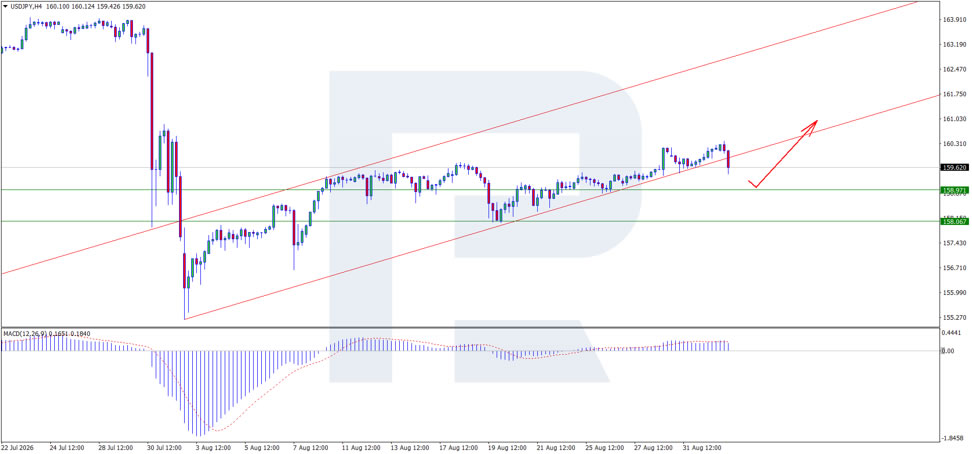
On the H4 USD/JPY chart, the pair is undergoing a correction. A further pullback towards 158.97 is possible today, followed by a potential rebound from support and a return to the ascending channel. The first upside target is 160.27, followed by 160.67. The MACD indicator supports this scenario, with its histogram above zero but beginning to decline and the signal line potentially crossing above the histogram before turning downward.
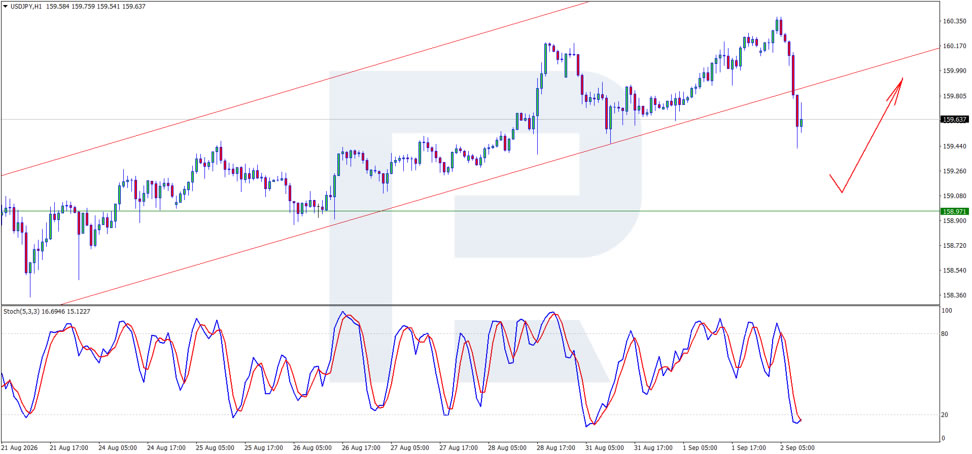
On the H1 chart, USD/JPY is testing 159.65 as the correction develops. A test of 158.97, followed by a rebound, could open the way for a move higher, with the first target at the 160.27 resistance level. The Stochastic oscillator supports this scenario, with its signal lines below 20.0. A break above 20.0 from below would signal the potential start of an upward move.
Conclusion
USD/JPY is trading near its highest level since late July as the yen remains under pressure from a combination of factors: rising JGB yields, concerns about fiscal sustainability under Prime Minister Takaichi’s spending plans, and the persistent appeal of the carry trade. While markets are pricing in a potential BoJ rate hike as early as September, borrowing costs in Japan remain significantly below those in the US and other major economies, keeping the yen vulnerable. The dollar continues to benefit from safe-haven demand amid US–Iran tensions and Fed rate hike expectations driven by inflation risks from higher oil prices. Technically, USD/JPY may see a near-term pullback towards 158.97 before resuming its move higher towards 160.27 and potentially 160.67, with Friday’s US jobs data likely to shape the next directional move.





