


The pound is heading into the new week of November under pressure, with GBP/USD trading at 1.3080 and updating at least a 12-month low after declining in eight of the past nine sessions. The main reason was softer data on inflation and wages in the UK, which reduced expectations of an imminent rate increase by the Bank of England.
Wage growth excluding bonuses slowed to 3.5% in the three months to September against a forecast of 3.6% and 3.7% previously. The number of applications for unemployment benefits increased by 33,200 with expectations of 28,100, although the unemployment rate unexpectedly fell to 4.6% against a forecast of 4.7%. Inflation was also slightly below expectations: CPI stood at 3.6% year-on-year against a forecast of 3.7%, while the core measure remained at 2.8%.
For the economy, this combination looks relatively favourable, but for the pound it makes the case for rapid policy tightening even weaker. After the CPI was published, the chance of a BoE rate hike in December dropped to 80% from 90%. At the same time, retail sales in October unexpectedly increased by 0.7% month-on-month instead of the expected zero growth, but this was not enough for a sustainable recovery of GBP/USD.
The difference in monetary policy also remains an important factor. The Bank of England rate is 4%, while the Fed rate range is 3.75–4.00%, so formally the pound retains a slight percentage advantage. However, the Fed’s October minutes showed a majority of participants allowing further hikes, with Christopher Waller earlier arguing for the possibility of a larger move. The Bank of England, by contrast, appears more cautious, despite some representatives of the regulator not ruling out further tightening.
Early this week, attention shifts to the UK’s November PMI and BoE Chief Economist Huw Pill’s speech. A more important external benchmark will be the US core PCE index on Wednesday, with a 0.3% month-on-month rise (3.2% year-on-year) expected. Strong inflation could again widen expectations of a December Fed rate hike and bring GBP/USD to 1.3000, while softer data will give the pound an opportunity to win back some of its losses.
Technical Analysis
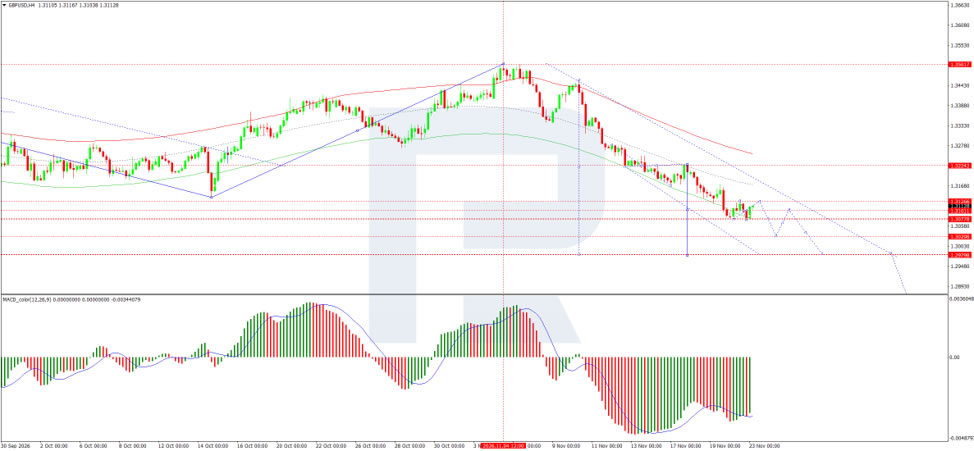
The four-hour GBP/USD chart continues to show a steady downtrend after reaching a high of 1.3502. The market continues to develop a decline wave structure with a consistent updating of local lows. Quotes are currently consolidating around 1.3113. Today, a corrective recovery towards resistance at 1.3122 is expected, followed by a resumption of the downward movement towards 1.3078 and further to 1.3030. A breakdown of the latter level would open the prospect of a decline towards the local target of 1.2980. At the same time, this movement is viewed as an intermediate stage of a longer downward wave. The MACD indicator confirms the sellers’ advantage: its values remain below zero, despite signs of a short-term weakening of negative momentum.
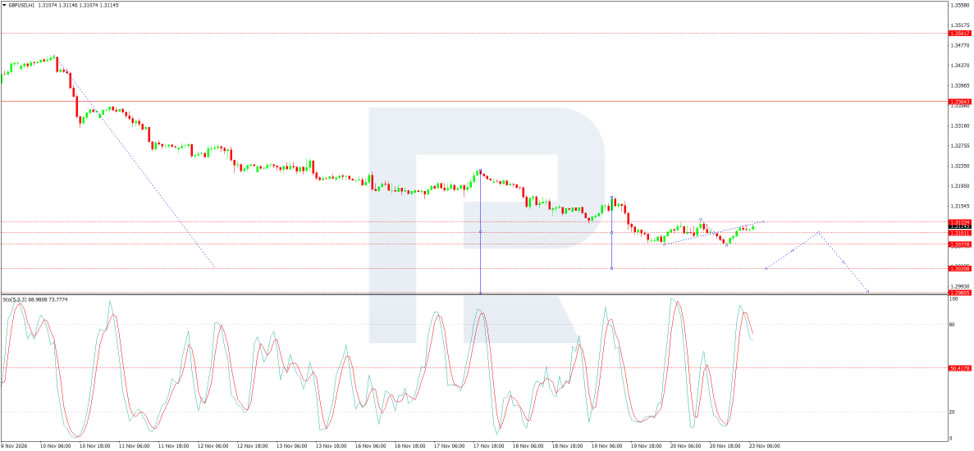
The hourly GBP/USD chart shows a consolidation range forming between support at 1.3078 and resistance at 1.3122. After reaching a local low, the market recovered above 1.3101, but the upward movement remains corrective for now. Today, the most likely scenario is a test of resistance at 1.3122 from below and then a turn towards 1.3078. A close below this support would set the stage for continued declines towards 1.3030 and 1.2980. The Stochastic oscillator is below the 80 level, showing signs of its short-term upward momentum ending. A downward turn in its signal lines would increase the likelihood of a move towards 20. As long as quotes remain below 1.3122, the priority remains with selling towards the main downtrend targets. A possible recovery above resistance would require a revision of the short-term scenario but would not change the underlying downward structure of the four-hour chart.
Conclusion
GBP/USD has entered the new week under pressure at 12-month lows, weighed down by softer UK inflation and wage data that have reduced expectations of a December BoE rate hike from 90% to 80%. While the pound retains a slight rate advantage over the dollar, the Fed’s hawkish minutes and the prospect of further tightening continue to favour the US currency. Attention now shifts to UK PMI data and BoE Chief Economist Huw Pill’s speech, with Wednesday’s US core PCE index likely to be the key catalyst. Technically, the downtrend remains firmly intact, with resistance at 1.3122 and support at 1.3078, 1.3030, and 1.2980. A break below support would reinforce the bearish outlook, while a recovery above resistance would only temporarily delay the decline. Strong US inflation data could push the pair towards 1.3000, while softer figures may offer the pound some respite.