US private-sector growth accelerated sharply in August, with PMI Composite Output rising from 54.5 to 56.0, its highest in 52 months. PMI Services Business Activity climbed from 54.6 to 56.8, a 20-month high, becoming main driver of expansion. PMI Manufacturing eased from 53.9 to 53.2, while PMI Manufacturing Output dropped from 53.9 to 51.9, a 13-month low.
S&P Global said Q3 survey data are now consistent with annualized growth approaching 3.0%, up from 1.5% in Q2. Employment also strengthened as business confidence improved. Manufacturing, however, lost momentum as precautionary inventory building faded and supply delays constrained production. Those delays remained among most severe seen over past four years, with Middle East disruption and energy prices still key concerns.
Inflation pressure eased somewhat but remained elevated, leaving Fed with a mixed but still firm backdrop. Stronger services activity and renewed hiring point to resilient demand, while weaker factory output shows expansion is becoming more dependent on consumers and financial services. With price pressures still vulnerable to another energy shock, August PMI does little to strengthen case for an easier policy stance.
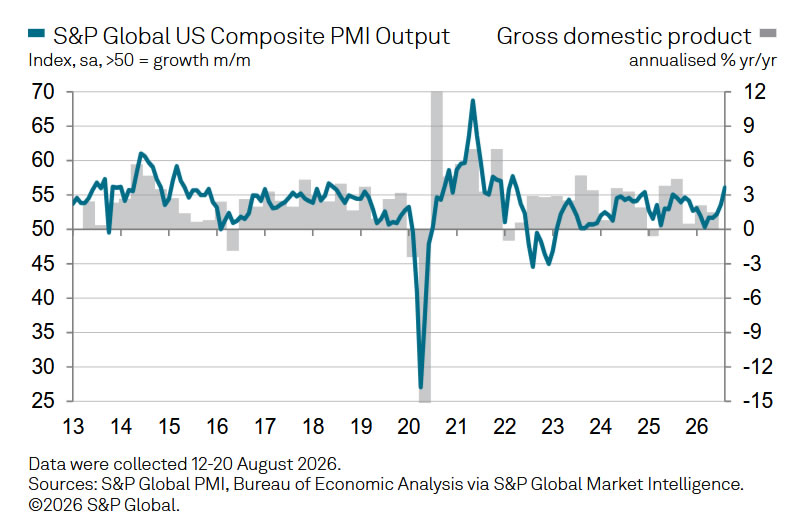
Data Summary
| Component | Current | Previous | Trend |
|---|---|---|---|
| PMI Composite Output | 56.0 | 54.5 | 52-month high |
| PMI Services Business Activity | 56.8 | 54.6 | 20-month high |
| PMI Manufacturing | 53.2 | 53.9 | 5-month low |
| PMI Manufacturing Output | 51.9 | 53.9 | 13-month low |
| Q3 GDP Signal | ~3.0% annualized | 1.5% Q2 | Stronger |
| Employment | — | — | Growth revived |
| Business Confidence | — | — | Improved |
| Input / Price Pressures | — | — | Easing but still elevated |
| Supply Delays | — | — | Among worst in four years |
Key Takeaways
- US PMI Composite Output rose from 54.5 to 56.0 in August, reaching its strongest level in more than four years.
- PMI Services Business Activity accelerated from 54.6 to 56.8, a 20-month high and clear driver of overall growth.
- PMI Manufacturing eased from 53.9 to 53.2, while PMI Manufacturing Output fell more sharply from 53.9 to 51.9.
- S&P Global said Q3 survey data point to annualized GDP growth approaching 3.0%, up from 1.5% in Q2.
- Employment growth revived as business confidence improved.
- Manufacturing lost momentum as precautionary stock building faded and supply delays constrained production.
- Supply-chain disruption remained severe, with Middle East conflict and energy prices still key risks.
- Price pressures eased but stayed elevated, leaving inflation vulnerable to another energy shock.
- For Fed, data point to resilient demand and stronger services activity, limiting scope for a rapid shift toward easier policy.