


- Kevin Warsh to make his Jackson Hole debut amid confusing messaging.
- But a major hawkish surprise unlikely after bond market intervention.
- Nvidia earnings to also determine market direction as stock rally cools.
- US PCE inflation and Tokyo CPI data may spur additional volatility.
All eyes on the Fed
The new Fed chair, Kevin Warsh, has made few public appearances since taking the central bank helm in May, yet he’s found it difficult to steer off controversy. Question marks about his relations with the President, Donald Trump, continue to swirl, while markets are still trying to make sense of his approach to monetary policy.
As investors await the outcome of the reviews of his task forces on how the Fed operates, which isn’t expected before the end of the year, those hoping that Warsh will offer any significant policy clues at next week’s Jackson Hole Economic Policy Symposium will likely be disappointed. The topic for this year’s event – Financial Innovation: Implications for Payments and Policy – is conveniently a non-economic one.
This may allow Warsh to avoid focusing greatly on the outlook for inflation and interest rates, risking the ire of the markets, as Jackson Hole has traditionally been used by Fed chairs to signal major policy pivots.
However, even if Warsh sidesteps giving any direct policy signals when he delivers his key address on Friday, the three-day gathering of central bankers could still prove market moving, but probably for the wrong reasons. Warsh’s first Jackson Hole as Fed Chair could be quite awkward for two reasons. Other Fed officials speaking at the event will likely voice support for rate hikes if inflation doesn’t hit the 2% target soon, highlighting a growing dissent even as Warsh attempts to portray a unified front.
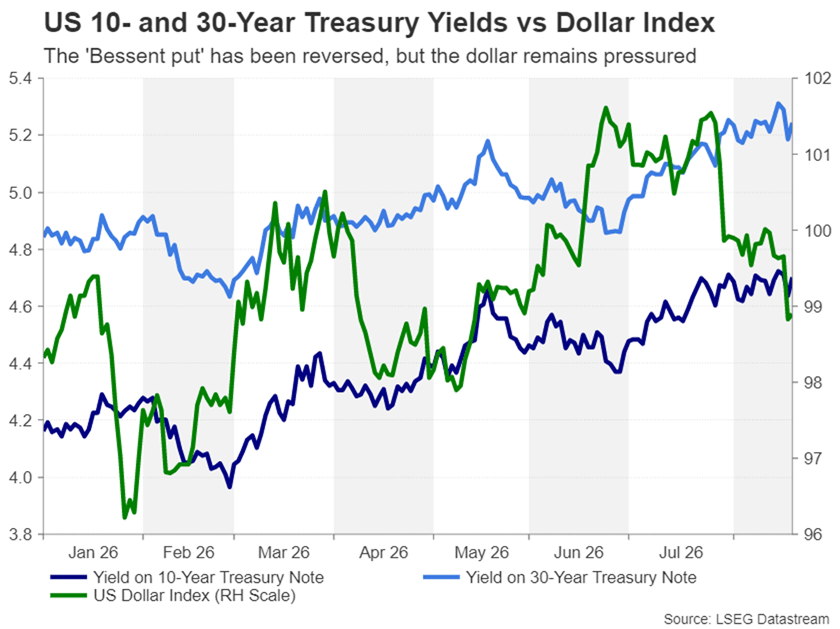
Moreover, this week’s intervention in the bond markets by the Treasury Department signals alarm by the Trump administration at the recent spike in long-dated Treasury yields. However, Warsh has in fact been encouraging markets to drive yields higher as a means to tighten financial conditions without lifting the Fed funds rate. Failure to address the volatility in bond markets could spur renewed selling pressure on Treasuries.
Will PCE inflation match recent soft data?
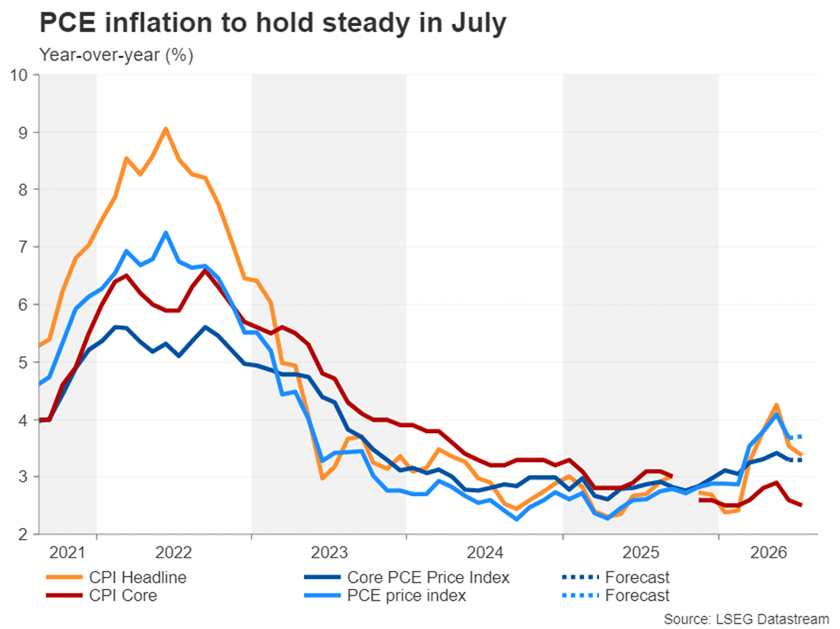
Setting the tone prior to the event will be the July PCE inflation figures, which will be released on Wednesday, a day before policymakers head to the mountain retreat in Wyoming. The core PCE price index is expected to have stayed unchanged at 3.3% y/y in July. Headline PCE is also projected to hold steady at 3.7%, which would suggest the impact of the rebound in oil prices remains limited. Although this still leaves inflation some distance from 2.0%, the recent weak jobs report does make the Fed more prone to be patient.
The personal income and consumption numbers will also be watched following the shock drop in retail sales in July, while the second estimate of Q2 GDP due the same day will be important too, especially if there are any sharp revisions.
Also comprising Wednesday’s barrage of data are durable goods orders for July. Other releases include the consumer confidence index for August on Tuesday, along with new home sales.
Wall Street might ignore Warsh, look to Nvidia instead
The US dollar took the brunt of the ‘Bessent put’ that drove 10- and 30-year yields sharply lower. The lack of any convincing hawkish signals from Jackson Hole could deepen the dollar’s wounds. However, equity markets have been relatively subdued during the bond market turbulence, so it’s unclear how much of a boost a dovish sounding Warsh would provide as the inflation outlook remains highly uncertain amid the ongoing conflict in the Middle East.
Potentially a more crucial catalyst for Wall Street is Nvidia’s earnings on Wednesday. The chip giant is expected to report year-on-year growth close to 100% for both revenue and earnings per share. Nvidia has an impeccable record of beating its earnings estimates. Nevertheless, the stock’s reaction will depend on multiple factors, such as the guidance for Q3, whether the enviable gross margin of 75% is being maintained, if sales to China are recovering, and any updates on its newest platform – Vera Rubin – as well as any issues with supply chains or ramping up production of its Blackwell processors.
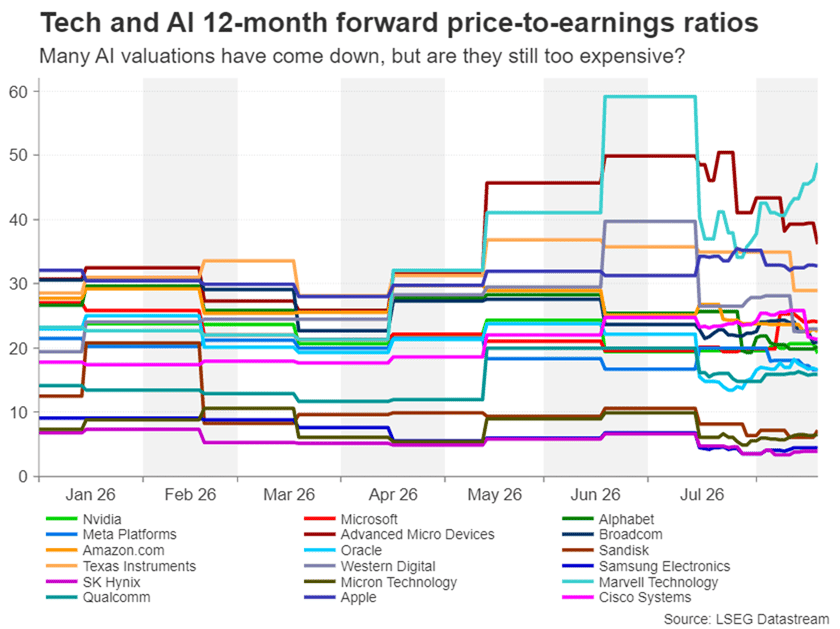
A strong positive surprise could propel the stock, which is trading about 8% below its record, to new highs, lifting the broader tech sector. With the Q2 season drawing to a close, earnings growth for the S&P 500 stands at an incredible 51.6% y/y – the highest since 2021. Subsequently, surging revenues combined with the latest pullback in some AI-related stocks has pushed PE values lower, making them more attractive despite the valuation concerns. Hence, upbeat earnings by Nvidia have the capacity to spark a fresh rally.
Any progress over the coming week in talks between the US and Iran on renewing the 60-day ceasefire would also be positive for stocks and risk assets in general.
Yen hoping to stretch rebound
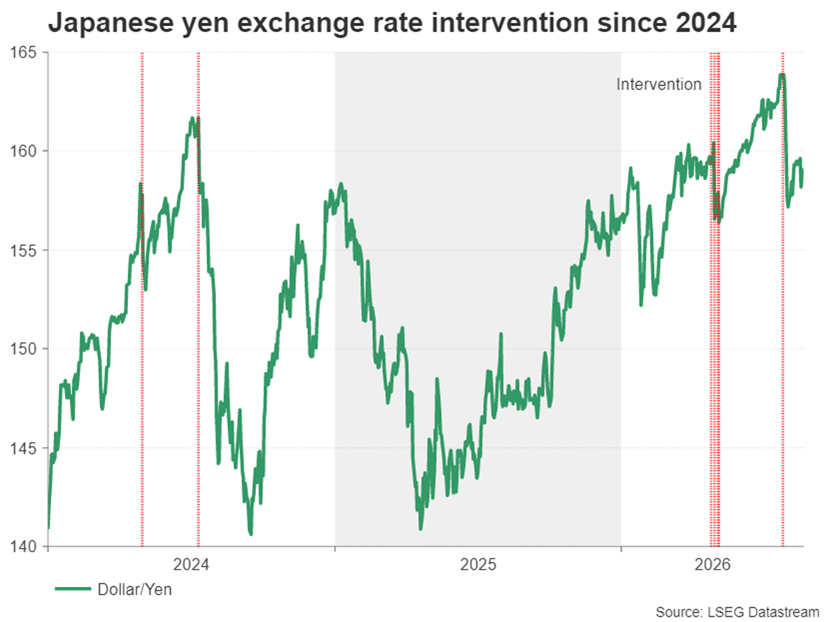
The dollar’s tumble was good news for Japanese authorities that were probably becoming annoyed by the yen’s post-intervention reversal as it re-approached the 160 level. Not that the yen is completely out of the woods as this is likely a temporary relief and the dollar has already recouped some of its losses after dipping to 158.00 yen. Warsh’s Jackson Hole speech will undoubtedly be vital for the next direction of travel. The lack of fresh hawkish signals could rekindle selling pressure for the dollar. But inflation data for the Tokyo region will also be key.
Tokyo’s core CPI rate ticked up in July to 1.9%, having fallen for much of the year. Investors will be looking for further signs that the inflation trend is at a turning point when August’s preliminary reading comes out on Friday. Weaker-than-expected numbers could lead to expectations for a September rate hike by the Bank of Japan being pared back from the current odds of 67%.
Does the Aussie rally have more legs?
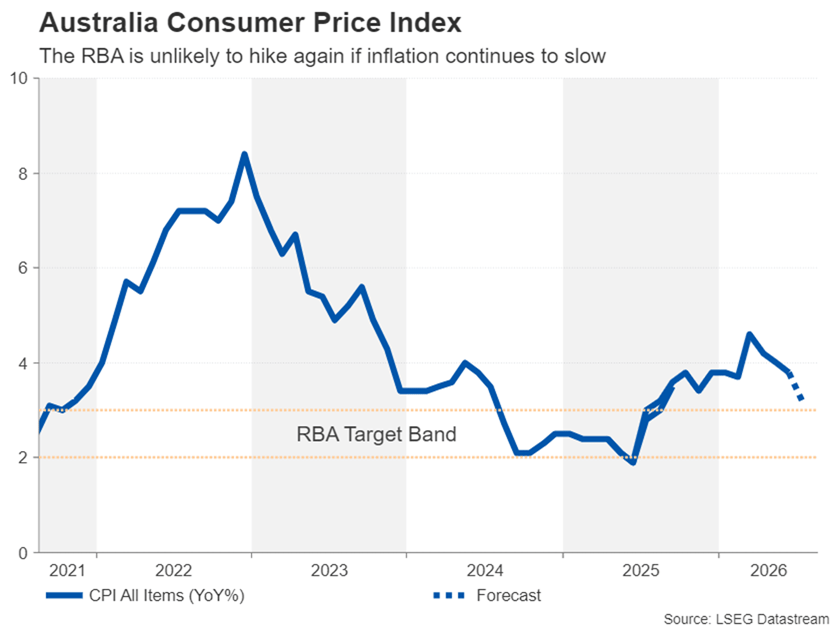
Inflation figures will also be released in Australia, due on Wednesday, where recent data have been less supportive of a rate hike. Headline CPI moderated to 3.8% in June, falling below 4.0% for the first time since February, while employment declined in July, pushing the jobless rate up to 4.5%.
A further slowdown in inflation in July would cast doubt on additional rate hikes by the Reserve Bank of Australia; a 25-bps increase in the cash rate is currently only about 75% priced in by March 2027. However, this hasn’t stopped the Australian dollar from staging an impressive uptrend against the US dollar since late July. Any upside surprises in the CPI numbers, particularly in the trimmed and weighted measures, could further fuel the aussie’s engines.
Aussie traders will also keep an eye on second quarter capital expenditure data out on Thursday.
Loonie shines as US and Canada close in on deal
Amid the greenback’s pullback, the best performing currency this month has been the Canadian dollar. The loonie has been steadily gaining against the dollar on hopes that trade relations between the two North American neighbours have begun to thaw. A slight divergence in monetary policy after Canada’s latest CPI print was a touch hotter while America’s was soft has also been supportive for the loonie.
Canada’s economy was one of the worst hit from Trump’s tariffs as the trade uncertainty and higher levies on some exports were damaging for many Canadian businesses. GDP contracted at the end of 2025 and was flat in Q1. But the Q2 estimate out on Friday will likely show a solid bounce back in growth.
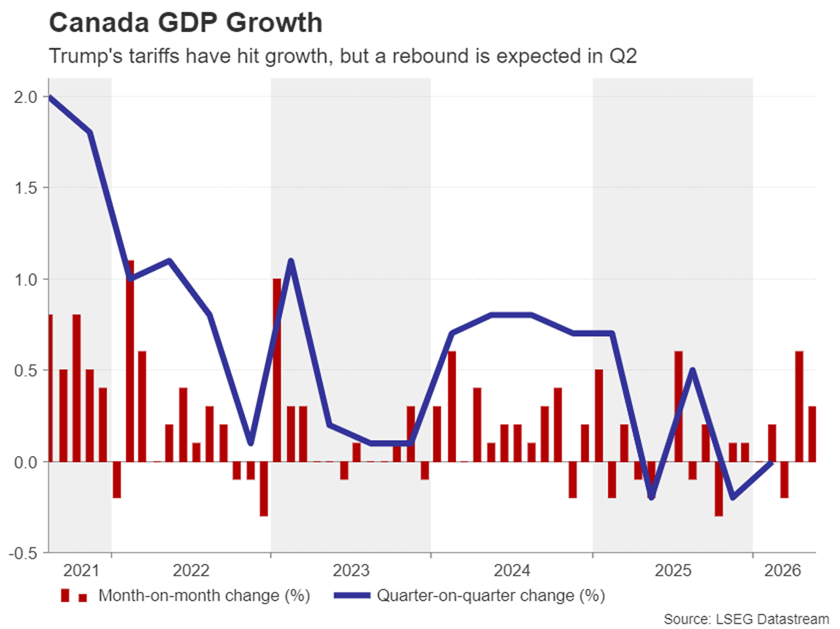
If confirmed, and in addition, US and Canadian negotiators manage to finalize the trade deal over the coming days that would avert 50% tariffs on about 5% of Canadian exports, the loonie could surge past the 1.37 per dollar level, which it last reached in May.





