North American trade data on Thursday will be closely monitored for further insight into the effects of tariffs. Trade flows between Canada and the United States have been exceptionally volatile. Canadian exports plunged 10.8% in April, caught up in an almost 20% broader decline in U.S. imports as a surge in pre-tariff purchases to boost inventories in Q1 unwound.
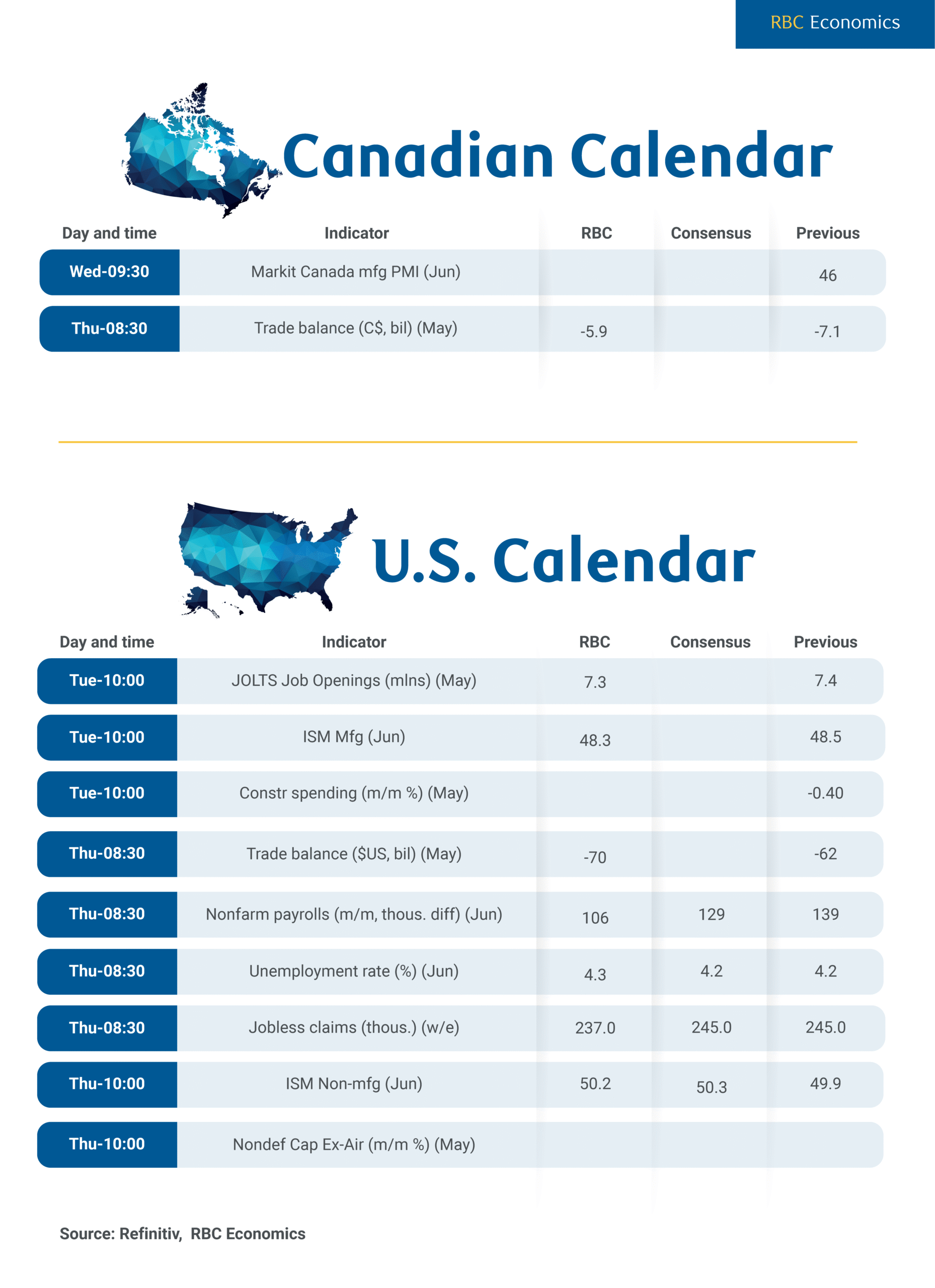
The U.S. trade deficit widened in May, according to advance estimates, and we expect the Canadian trade deficit narrowed from the record $7.1 billion shortfall in April, supported by a 1.4% increase in exports and 0.6% reduction in imports. Lower oil prices likely weighed on the Canadian energy trade balance in May, but a bounce-back in U.S. auto imports is consistent with higher Canadian exports during the month.
International trade data is likely to remain volatile with tariff threats from the U.S. administration still looming—including the end of the 90-day pause on the most extreme reciprocal tariffs from April expiring in early July.
Looking beyond the boom-bust inventory stocking cycle around trade announcements, Canada’s international trade outlook continues to depend critically on the extent to which the CUSMA/USMCA free trade agreement safeguards duty-free access to the U.S. market. Early results have been encouraging. Nearly 90% of U.S. imports from Canada entered the country duty-free in April, according to U.S. census bureau data, and the average effective tariff rate on U.S. imports from Canada was only 2.3%.
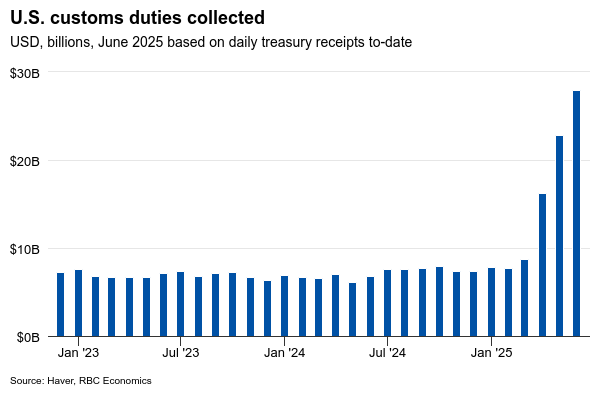
We expect U.S. tariff costs will continue to rise in May with a lag. U.S. custom duty revenues (from all countries) increased another 40% in May and are tracking 20% higher in June. However, we continue to expect the bulk of Canadian exports to the U.S. (86% by our count) should maintain duty-free under current tariff rules. We think Canada will maintain one of the lowest effective tariff rates among all major U.S. trade partners.
Nevertheless, Canada’s close economic ties to the U.S. mean it will be negatively impacted if broader trade disruptions weaken U.S. growth. Thursday’s U.S. payroll report will provide an updated gauge on the health of its labour markets. There have already been signs of a slowdown in employment in trade-sensitive sectors of the U.S. economy. About 95,000 worth of downward revisions to employment counts in March and April took the shine off of the 139,000 increase in May. For June, we expect the U.S. labour market added 106,000 jobs with the unemployment rate ticking up to 4.3%.
As we move further into the year, we anticipate lingering trade uncertainty will lead to additional job losses. This could drive the unemployment rate higher, which we project will reach 4.5% by year end.