Eurozone inflation has given EUR/CAD a reason to stay bid, but perhaps not yet a reason to break much higher. The stronger-than-expected rise in core CPI to 2.5% yoy and the acceleration in services inflation to 3.5% yoy have effectively cemented expectations for a 25 basis point ECB rate hike next week. For now, that policy outlook is helping to underpin the Euro against its Canadian counterpart.
The logic behind the move is straightforward. The ECB faces growing concerns that higher energy costs could spread into broader wage and price-setting behavior. Raising the deposit rate from 2.00% to 2.25% next week would serve as an insurance policy against those risks, particularly as policymakers become increasingly uncomfortable with persistent services inflation. As long as markets remain confident that the June hike is coming, EUR/CAD should find buyers on pullbacks.
However, the story becomes far less certain once June is out of the way. Financial markets are already pricing one additional hike after next week’s move, while some economists believe the ECB may struggle to justify tightening much further given weak domestic demand and slowing growth. That leaves the Euro needing fresh evidence of rising underlying inflation if it is to sustain a broader rally.
At the same time, EUR/CAD cannot escape the influence of oil. The Canadian Dollar remains highly sensitive to developments in crude markets, particularly with uncertainty surrounding US-Iran negotiations and the Strait of Hormuz. Any sharp rebound in oil prices would likely strengthen CAD and offset support coming from ECB policy. In that sense, oil arguably has greater influence over EUR/CAD’s medium-term direction than next week’s ECB decision.
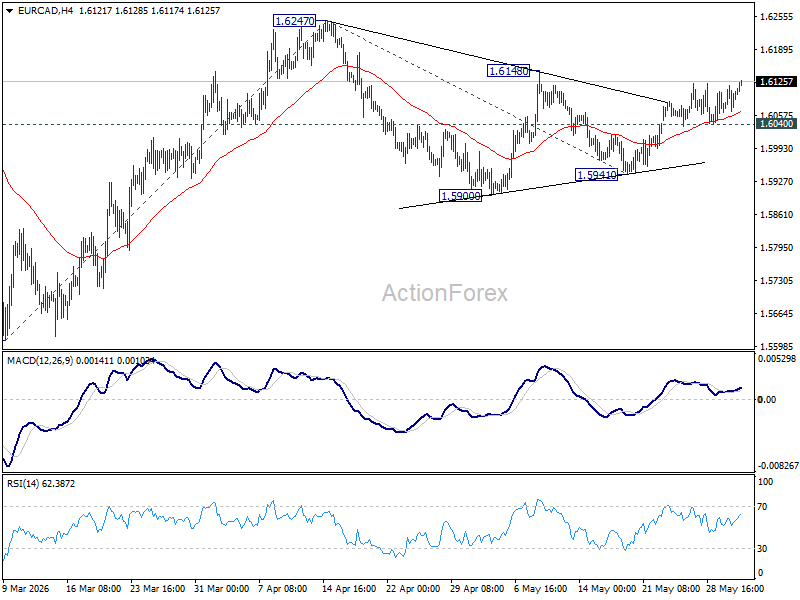
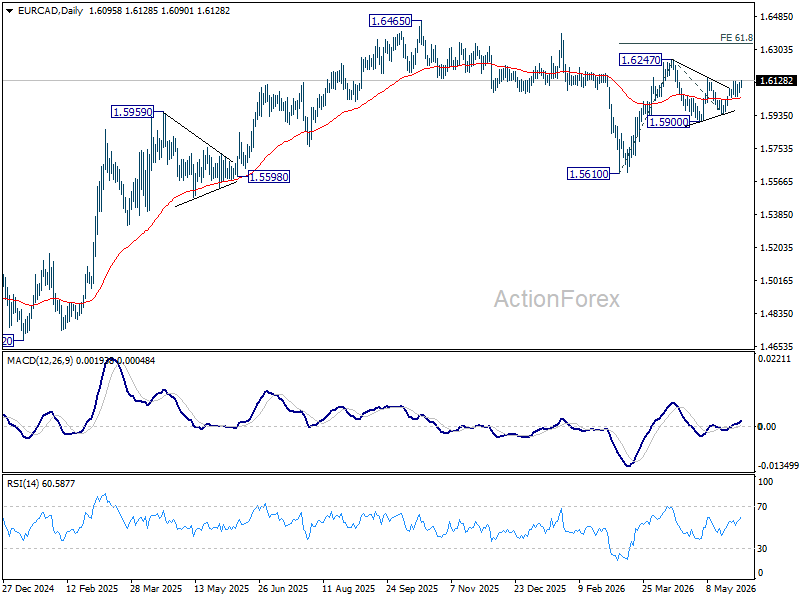
Technically, further rise is expected in EUR/CAD as long as 1.6040 support holds. Rise from 1.5941 is expected to continue to 1.6148 resistance first. Firm break there will strength the case that consolidation from 1.6247 has completed, and rise from 1.5610 is ready to resume.
Yet a sustained move beyond that 1.6247ceiling will likely require more than a June rate hike. It will require either a more hawkish ECB than markets currently anticipate or a meaningful decline in oil prices towards $80 that weakens the Canadian Dollar’s fundamental support.