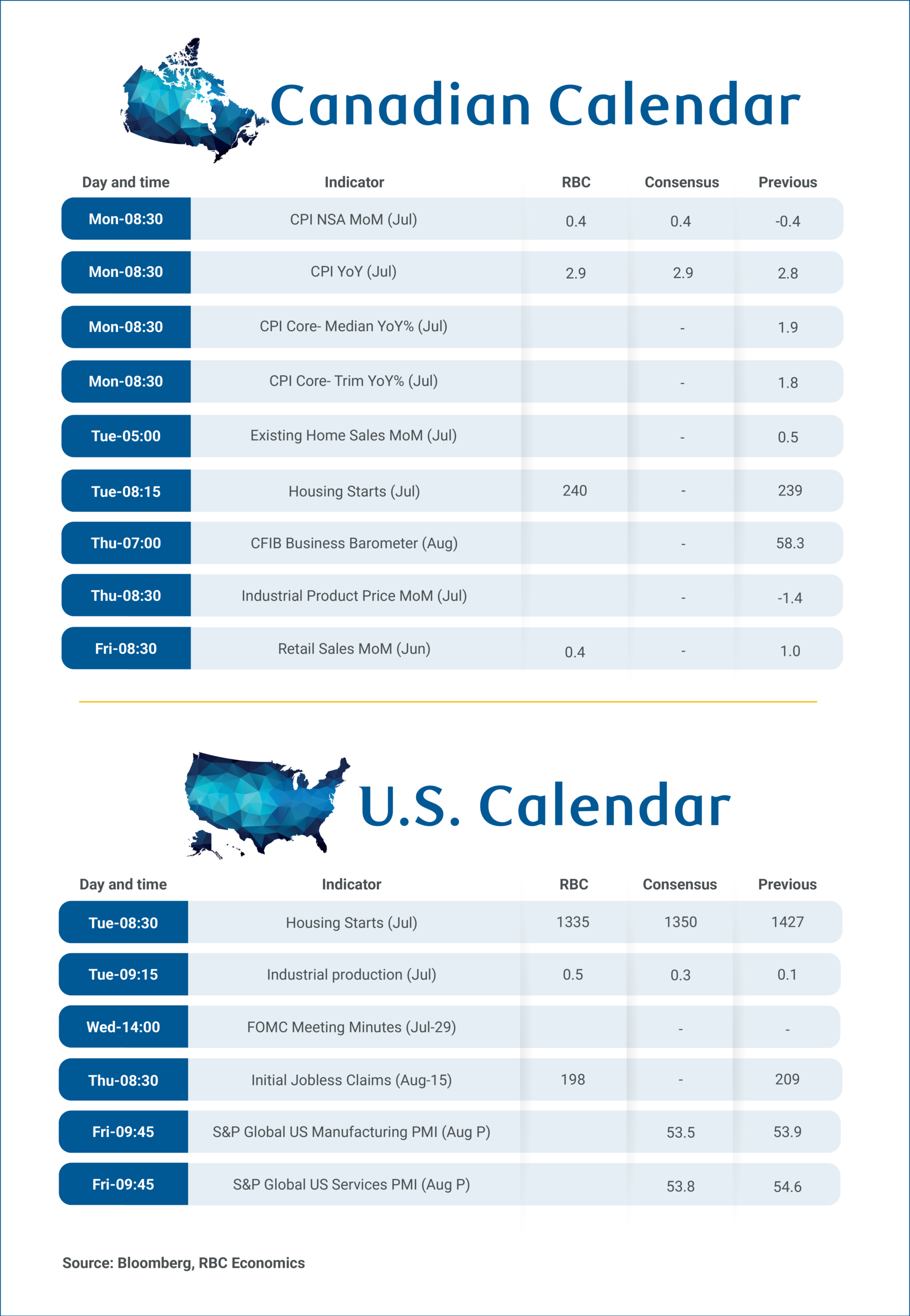
Canada’s Consumer Price Index for July on Monday is expected to show a tick higher in headline CPI, before the latest round of U.S. Section 338 tariffs are set to take effect on Wednesday.
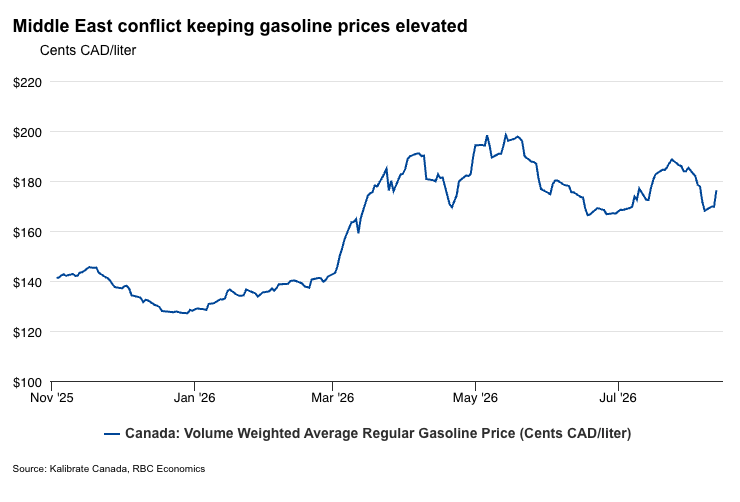
We expect year-over-year price growth rose to 2.9% from 2.8% in June, driven by a reacceleration in energy prices. Oil prices are still lower than peaks in April and May, but bounced higher in July as conflict in the Middle East continued to disrupt transportation through the Strait of Hormuz. Gasoline prices were on average 25% above a year ago in July—up from a 20% rise in June.
We expect pass-through from higher energy prices to broader consumer prices have remained limited. Growth in airfares remains high, but growth in “core” measures’ prices have remained near the 2% target. In July, we look for prices excluding food and energy products to tick up to 1.9% from 1.8% in June, and for the Bank of Canada’s preferred median and trim measures to hold around similar rates. Food price growth likely edged lower, but remained above 3%.
Latest U.S. tariff threats are significant but manageable for Canada
A more important development is U.S. Section 338 tariffs targeting about 5% of Canada’s exports, set to take effect on August 19.
The deadline has fast-tracked trade talks between Canada and the U.S., but the odds of a full resolution of all trade irritants before Wednesday remain low. For the U.S. economy, the impact will be negligible as the targeted products represent a small (0.5%), and highly substitutable share of U.S. imports from the world.
For Canada, as we’ve covered here and in our latest forecast update, the impact will be bigger, but still manageable. We estimate the new U.S. tariffs target 0.4% of Canada’s gross domestic product and jobs.
The economy wide impact may be small, but reduced foreign demand for these products would still hurt production and jobs in key manufacturing industries—notably apparel and electrical equipment and appliances manufacturing—mirroring effects from past U.S. Section 232 tariffs.
Overall, even with the new tariffs in place, 80% of Canada’s exports to the U.S. remain duty free under CUSMA exemptions. This should ultimately limit the impact of tariff headwinds on the Canadian economy, which is expected to continue to strengthen over the second half of this year.
- Tuesday’s home resales data is expected to show diverging trends across markets in July that net out to relatively flat resale activities and prices month over month. Separately, housing starts are expected to have annualized 240k in July, also little changed from June.
- Friday’s retail sales are expected to show an increase in nominal sales in June, supported by real underlying strength as gasoline prices temporarily dropped lower. Overall, consumer spending remained resilient in Q2 and is poised to add to real GDP growth in the quarter.