


- The euro is awaiting signals from the ECB regarding a rate rise.
- The pound will be looking for clues in the macroeconomic data.
The US dollar is finding support amid geopolitical developments and the high likelihood of Fed tightening. Although the futures market has priced out the prospect of a federal funds rate hike in June, it still anticipates monetary policy tightening in 2026. The probability of such an outcome is estimated at 81%. Moreover, the higher the oil prices rise, the sooner the Fed is likely to take decisive action. This bodes well for the greenback.
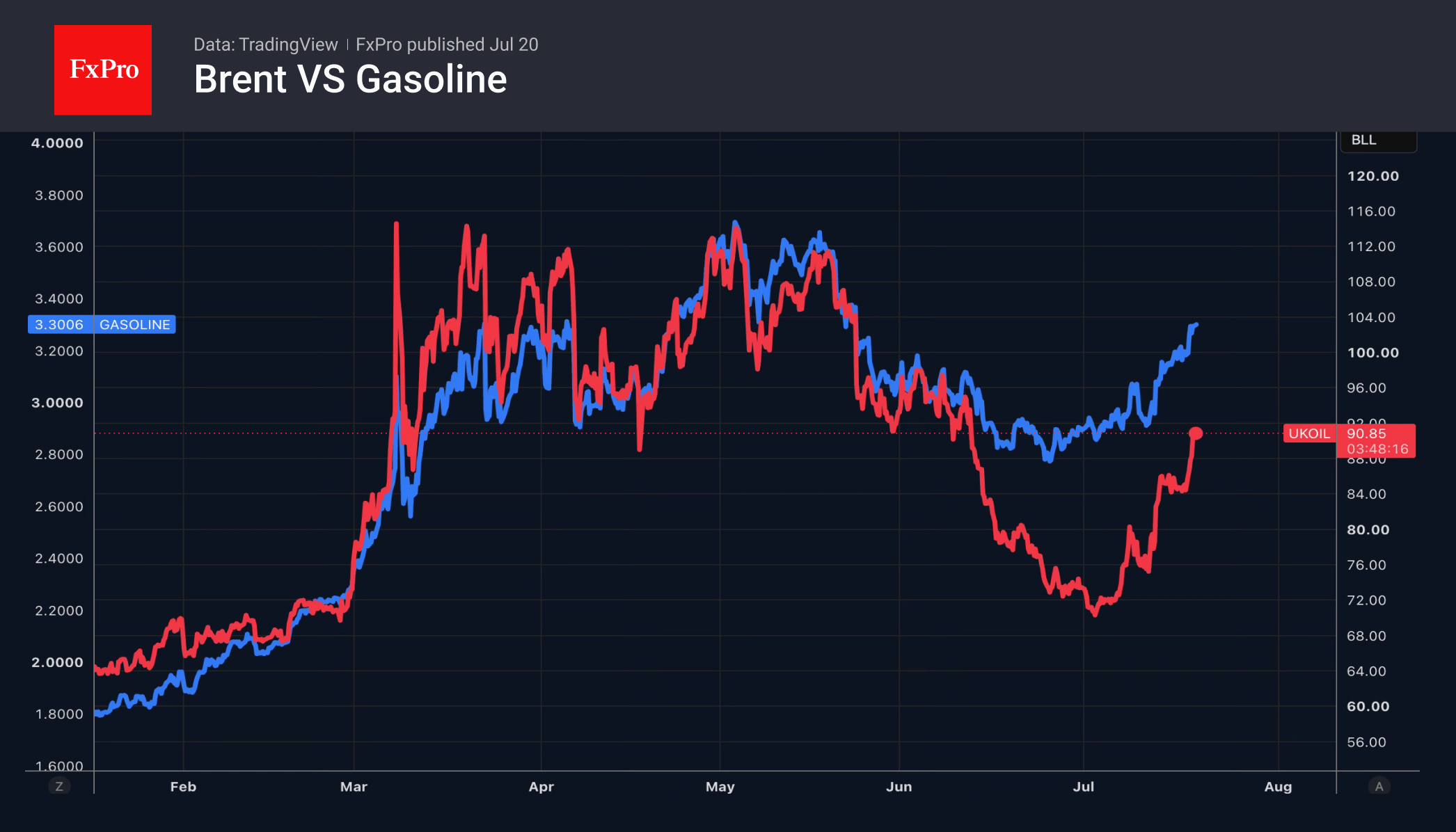
Brent has climbed above $90 per barrel for the first time since early June. Stabilising factors, such as a decline in global demand led by China, sales from strategic reserves, and alternative supply routes, suggest that the potential for an oil rally is limited. However, refined petroleum products lack such stabilising factors. Even if North Sea crude hits a ceiling and begins to fall, petrol and diesel prices are unlikely to drop significantly. This points to a prolonged period of high inflation in the US and requires the Fed to tighten monetary policy.
The US dollar has a long-term advantage, but in the short term, its rivals may benefit from expectations of monetary tightening. In particular, even a currency as vulnerable to rising energy prices as the euro can mount a counterattack against the backdrop of the ECB’s ‘hawkish’ rhetoric. The ECB is not expected to raise its deposit rate in July, but Christine Lagarde’s hints about September could push the EURUSD exchange rate higher.
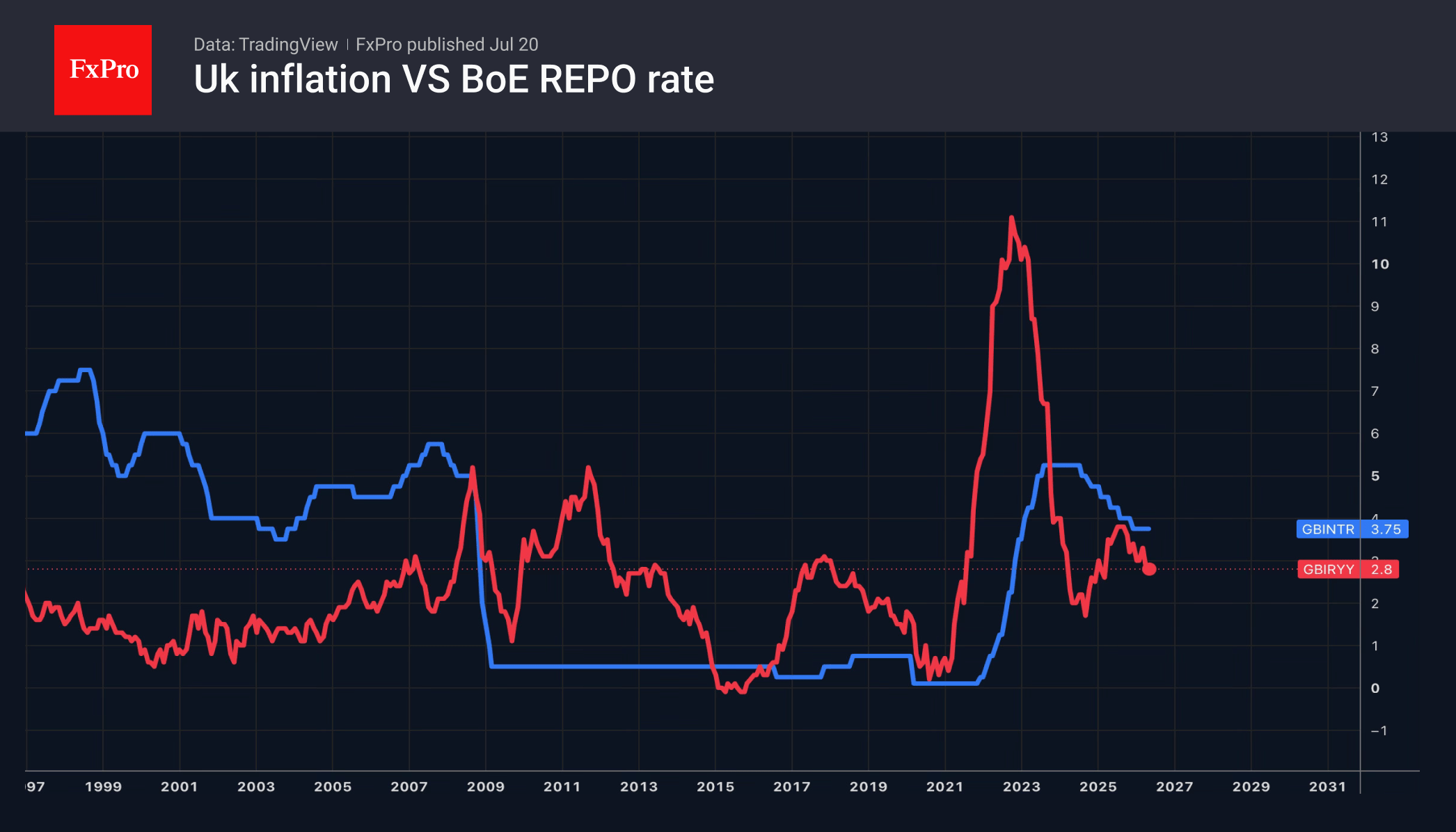
While the euro will look for cues from the European Central Bank, the pound will seek them amid a busy economic calendar. The labour market is expected to stabilise, whilst inflation and UK retail sales are forecast to slow. This backdrop reduces the likelihood of the Bank of England tightening monetary policy and may prompt investors to take profits on long positions in GBPUSD. Conversely, positive surprises from the indicators would allow traders to return to buying sterling.
The yen remains under pressure, despite comments from Prime Minister Sanae Takaichi on the importance of encouraging pension funds, including the GPIF, to invest in Japanese assets. It is used as a funding currency in carry trades, which are flourishing amid low volatility and rising risk appetite.
The FxPro Analyst Team





