


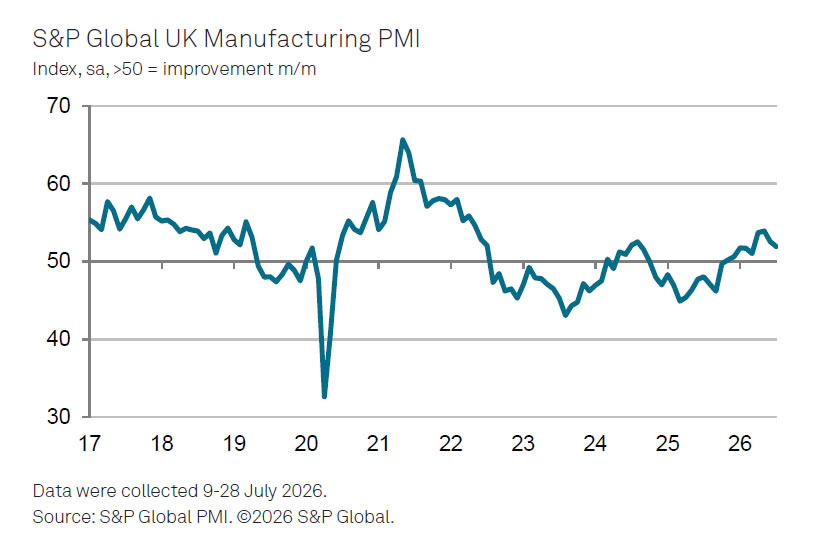
The UK’s manufacturing sector lost some momentum in July, with the final S&P Global Manufacturing PMI easing to 51.9 from 52.5 in June, its lowest level in four months. Even so, the index remained above the 50 threshold for a ninth consecutive month, indicating that the sector continues to expand despite a moderation in the pace of improvement.
The details of the survey painted a more encouraging picture than the headline suggested. Manufacturing output rose for a fourth straight month, with production growth accelerating to its fastest pace in nearly two years as stronger market conditions boosted new orders and export demand. Four of the five PMI components remained consistent with improving operating conditions, while the decline in the headline index mainly reflected a sharp reduction in stocks of purchases, slower hiring and a smaller deterioration in supplier delivery times. Growth, however, remained uneven, with medium and large manufacturers outperforming smaller firms, where production declined modestly.
S&P Global also pointed to improving supply and cost conditions. Input cost inflation slowed to a five-month low as supply-chain delays eased to their weakest level since the outbreak of the Middle East conflict, offering manufacturers some relief after months of disruption. Although hiring growth nearly stalled, the first increase in backlogs of work in more than four years suggests labor demand could strengthen if new orders continue to improve. Still, business confidence remained subdued, with geopolitical developments, global trade tensions and the new UK government’s industrial and tax policies likely to shape the outlook in the months ahead.
Economic Data
| Indicator | Actual | Previous |
|---|---|---|
| Manufacturing PMI | 51.9 | 52.5 |
| Manufacturing Output | Near 2-year high | Expanded |
| New Orders | Expanded | Expanded |
| New Export Orders | Accelerated | Expanded |
| Employment | Increased | Increased |
| Input Cost Inflation | 5-month low | Higher |
Market Takeaways
- Manufacturing PMI eased from 52.5 to 51.9, a four-month low, but remained above the 50 threshold for a ninth consecutive month, signalling continued expansion.
- Factory output accelerated to its fastest pace in almost two years, supported by stronger domestic and export demand.
- The softer headline PMI largely reflected lower stocks of purchases, slower hiring and a smaller deterioration in supplier delivery times rather than weaker demand.
- Input cost inflation slowed to a five-month low, while supply-chain delays eased to their lowest since the outbreak of the Middle East conflict, providing relief for manufacturers.
- Employment growth nearly stalled despite stronger production, although the first increase in backlogs of work in more than four years suggests hiring could improve if demand remains firm.
- The recovery remained uneven, with medium and large manufacturers outperforming smaller firms, where production continued to decline modestly.





