


TL;DR: The RBNZ’s latest Survey of Expectations pointed to a September hike and firmer growth, yet NZD fell across the board — because markets had already priced the hawkish rate path and instead traded an 81-basis-point collapse in near-term inflation expectations.
A Survey That Looked Hawkish on Paper
On paper, the RBNZ Survey of Expectations looked like something NZD bulls should have welcomed. Respondents effectively expected a September hike, saw the OCR climbing further over the following year, and became more optimistic on growth and wage inflation. Yet the Kiwi fell across the board and New Zealand’s 2-year yield dropped around 6bp. The market didn’t misunderstand the survey — it simply traded the part that was actually new.
The Real Surprise: Inflation Expectations Collapsed
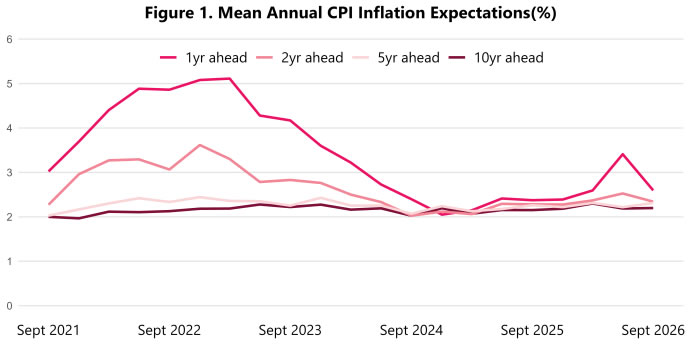
That surprise came from inflation expectations. One-year-ahead CPI expectations collapsed from 3.41% to 2.60%, an extraordinary 81bp drop, while the two-year measure eased from 2.53% to 2.34%. Longer-term expectations stayed anchored, with five- and ten-year readings at 2.31% and 2.20%. The survey therefore didn’t show confidence in the inflation target deteriorating — it showed respondents expecting substantially less near-term inflation pressure.
The Rate Path Itself Stayed Hawkish
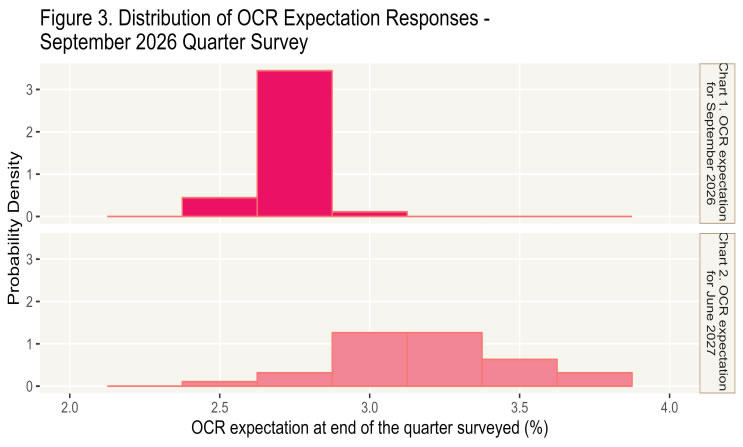
Contrast that with the rate path. The end-September OCR expectation stood at 2.73%, essentially pointing to a 25bp hike from the current 2.50%, while the one-year-ahead expectation climbed from 3.01% to 3.21%. Together with firmer GDP growth and wage expectations, that’s hardly a dovish policy signal — the RBNZ tightening story survived the survey intact.
Why Markets Traded the Inflation Number, Not the Rate Path
The problem for NZD bulls is that markets already knew most of it. Swaps had roughly 90% of a September hike priced before the release, leaving little room for another hawkish rate signal to surprise. The 81bp plunge in one-year inflation expectations was different — that was new information, and markets reacted to the marginal change rather than the headline policy bias.
So the NZD selloff doesn’t necessarily mean traders suddenly doubt a September hike. The more nuanced interpretation is that markets are questioning how much tightening may ultimately be needed beyond it — the RBNZ can still hike while inflation risk around the future path becomes less threatening. The next NZ Business PMI will help determine whether softer inflation expectations stand alone or are beginning to align with broader evidence of slowing activity.
ActionForex’s Technical View on NZD/USD
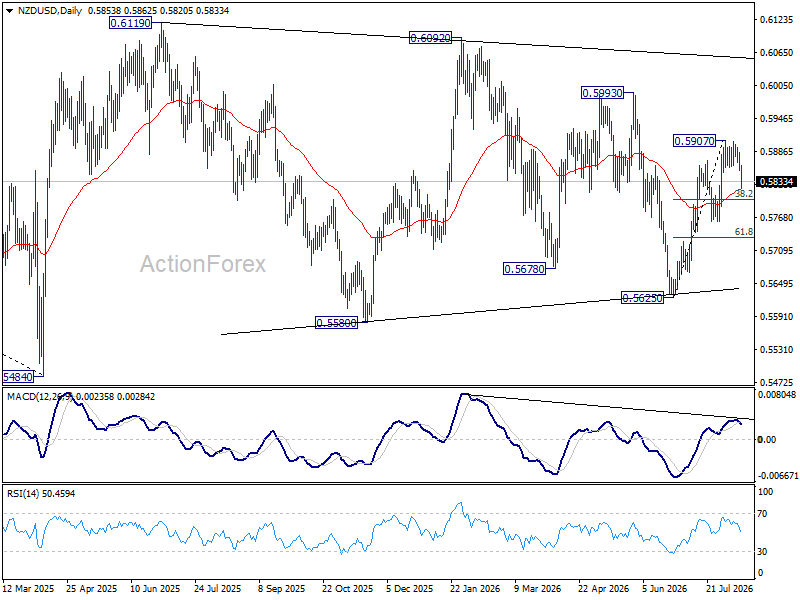
That distinction is also important technically, because NZD/USD has weakened sharply without yet breaking its near-term bullish structure. The pair continues to defend both the rising channel floor and the 55-day EMA, and remains well above the 38.2% retracement of 0.5625 to 0.5907, at 0.5799.
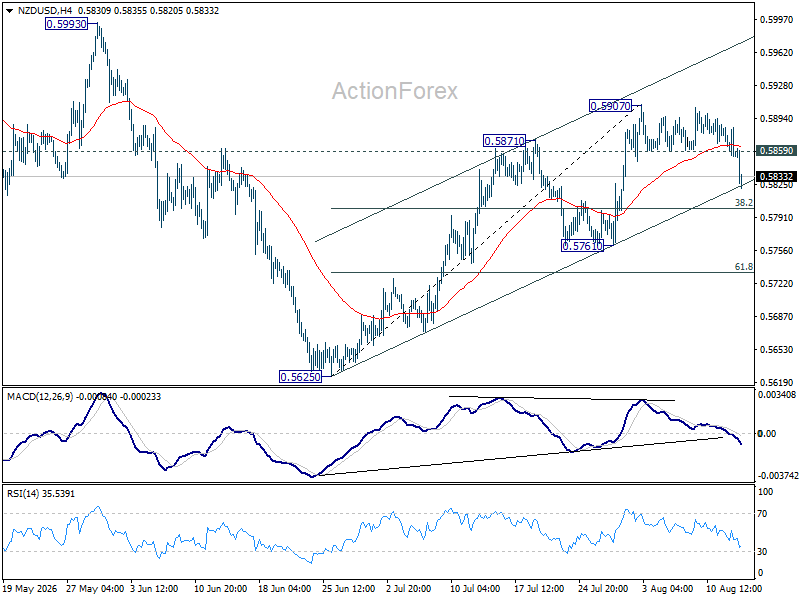
A break back above 0.5859 minor resistance would suggest the pullback has run its course, while clearing 0.5907 would resume the rise toward the medium-term range top around 0.6000.
The real warning would come from a sustained break of 0.5799. That would strengthen the case the decline is becoming more than a data-driven dip and expose 0.5733, the 61.8% retracement, with room for deeper losses.
Until then, the market message is narrower than price action initially suggests: the survey was hawkish, but the hawkishness was already priced. What the Kiwi wasn’t prepared for was near-term inflation expectations falling by 81bp.
Key Takeaways
- The RBNZ Survey of Expectations pointed to a September hike, firmer growth, and higher wage inflation — a hawkish signal that left the tightening story intact.
- One-year-ahead inflation expectations collapsed 81bp, from 3.41% to 2.60%, the actual surprise that drove NZD lower despite the hawkish rate path.
- Swaps had already priced roughly 90% of a September hike, meaning the rate-path signal carried little new information for markets to trade.
- The selloff likely reflects doubt about how much tightening is needed beyond September, not doubt about the hike itself.
- NZD/USD remains above 0.5799 support; a sustained break would expose 0.5733 and suggest the pullback is more than a data-driven dip.





