


- The end of the corporate earnings season leaves the S&P 500 vulnerable.
- Concerns about the effectiveness of investments in AI have not gone away.
US stock indices reacted cautiously to Kevin Warsh’s ‘hawkish’ rhetoric, confirming historical patterns. Since 1999, the S&P 500 has fallen or risen by 3% or more four times during central bank governors’ meetings in Jackson Hole. The average gain over these years was a modest 0.4%.
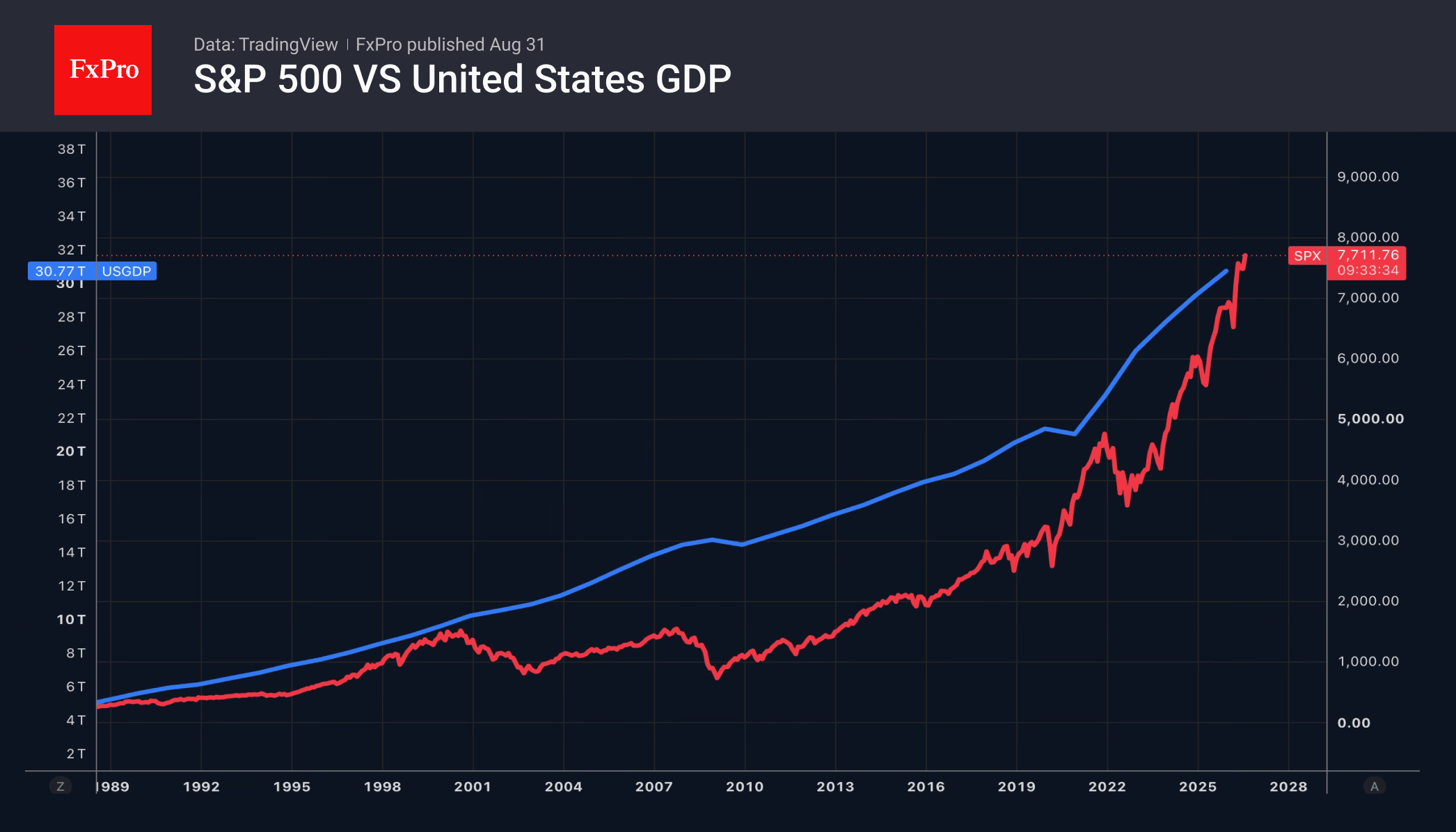
From a fundamental perspective, the S&P 500 continues to look strong. The Atlanta Fed’s leading indicator forecasts US GDP growth of 4.6 per cent in the third quarter. According to estimates by Apollo Global Management, around 0.2 percentage points of this figure are attributable to the rollback of tariffs. Kevin Warsh believes that the current level of interest rates is not restrictive enough. In other words, they are not holding back economic growth. According to LSEG data, corporate profits rose by 53% in April–June, whilst revenue increased by 16% year-on-year. Thanks to a strong corporate earnings season, fundamental valuations, including P/E ratios, do not appear stretched.
That said, there are grounds for concern. Following Kevin Warsh’s ‘hawkish’ speech in Jackson Hole, the probability of a federal funds rate hike in September has jumped to 60%. The futures market assesses the likelihood of two rounds of monetary tightening in 2026 as 50/50. The escalation of the conflict in the Middle East and the associated rise in oil prices are pushing up Treasury bond yields and increasing the cost of borrowing for S&P 500 issuers, which is holding back earnings growth.
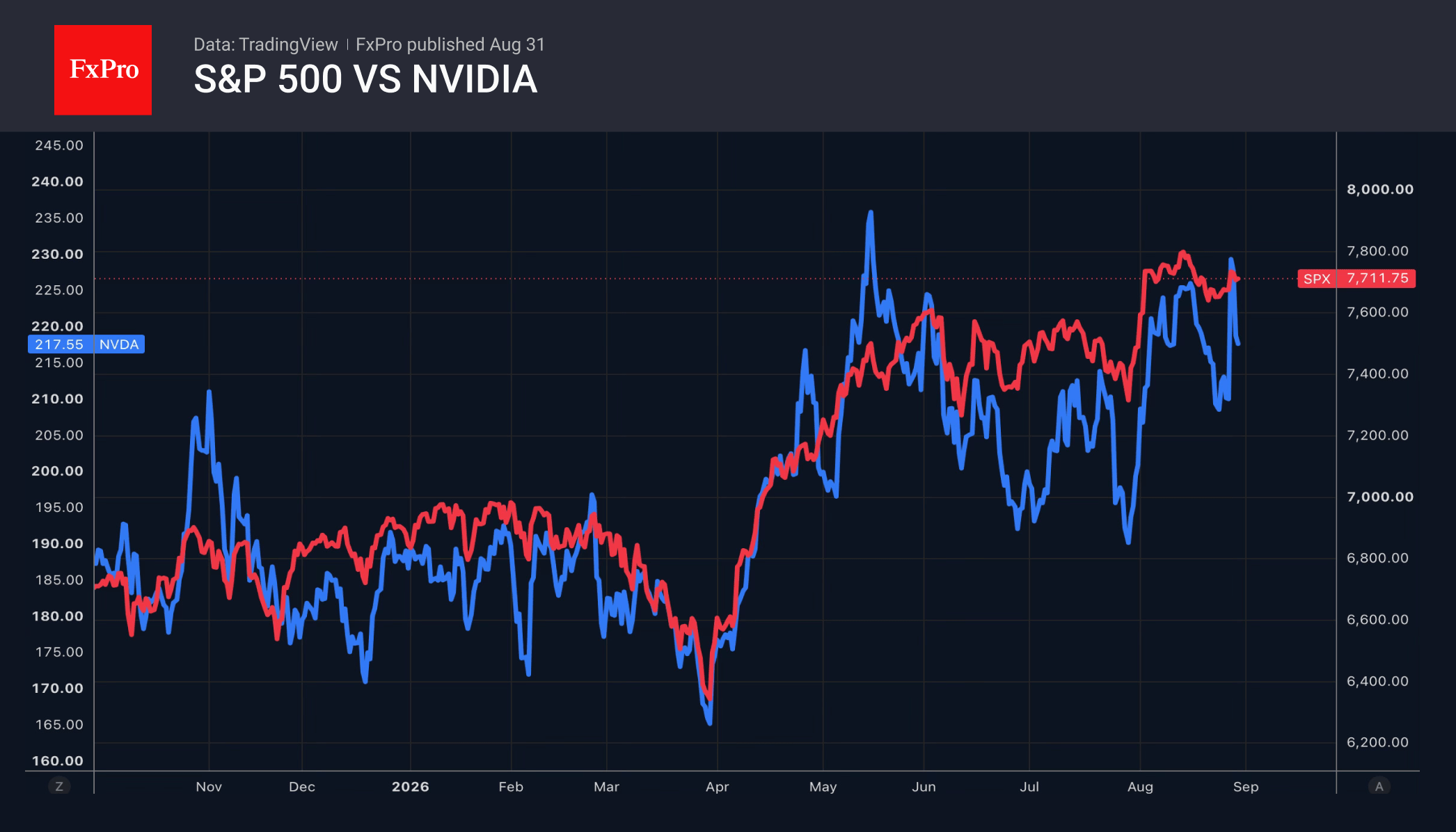
Fears regarding the effectiveness of investments in artificial intelligence technology have not gone away. The stock market’s nervousness can be gauged by the performance of the world’s largest company’s shares. After rising by almost 9%, NVIDIA shares lost more than half of their gains in the following trading session. The sell-off in the S&P 500 was further fuelled by a deterioration in consumer sentiment, as reported by the University of Michigan, for the first time in the last three months.
As the corporate earnings season draws to a close, investors’ attention will shift to macroeconomic data, monetary policy and geopolitical risks. These are far less significant drivers of the S&P 500 rally than impressive growth in profits and revenue. The focus will be on the release of US labour market data for August.
The FxPro Analyst Team





