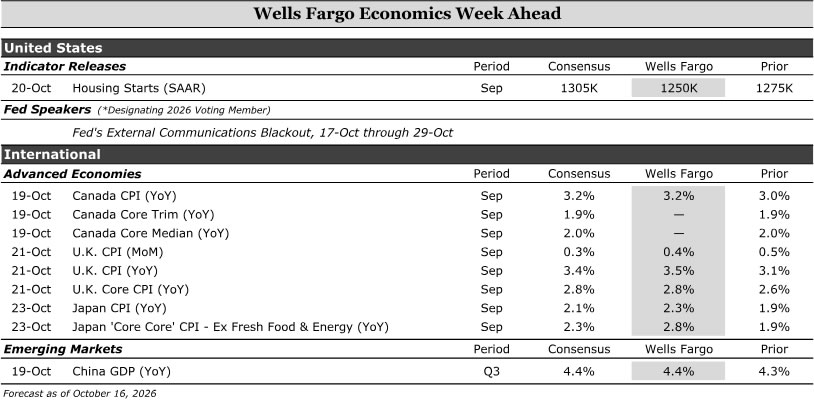
Next week is quiet on the domestic data front, with Tuesday’s housing starts the main report. Starts likely declined further under pressure from elevated mortgage rates. Abroad, Canada CPI likely picked up on energy costs, though steady core inflation still argues for policy patience. U.K. and Japan inflation should also accelerate, reinforcing our calls for November and December rate hikes, respectively. China’s Q3 GDP growth likely edged higher as exports and policy support offset domestic weakness.
United States:
- Housing Starts (Tuesday)
Advanced Economies:
- Canada CPI (Monday), U.K. CPI (Wednesday), Japan CPI (Friday)
Emerging Markets:
- China GDP (Monday)
U.S. Week Ahead
Housing Starts • Tuesday
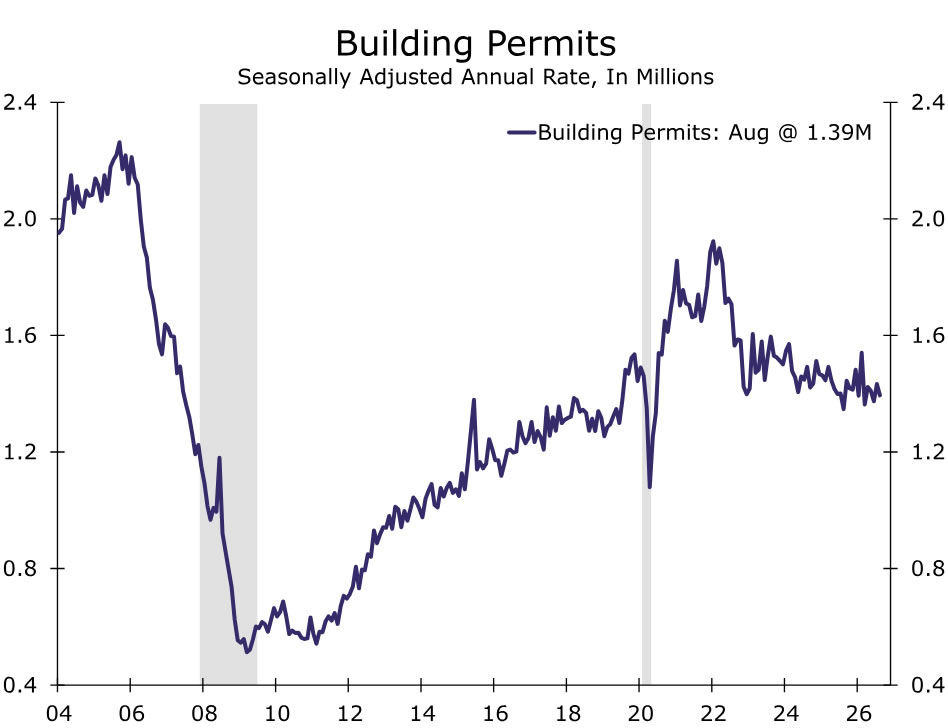
Residential construction faces intensifying pressure. Housing starts have declined in four of the past five months alongside a steady rise in mortgage rates. Mortgage rates specifically surpassed 7.0% by the end of September, setting a fresh affordability challenge for prospective buyers. As a result, the NAHB home builder survey showed a sharp deterioration in builders’ sales expectations and corresponding increase in price cuts. Multifamily construction is simultaneously soft amid rising financing costs and modest rent growth. Looking to September, a pullback in permits signals another drop in starts. We forecast housing starts fell 2.0% to 1,250K.
Advanced Economies Week Ahead
Canada CPI • Monday
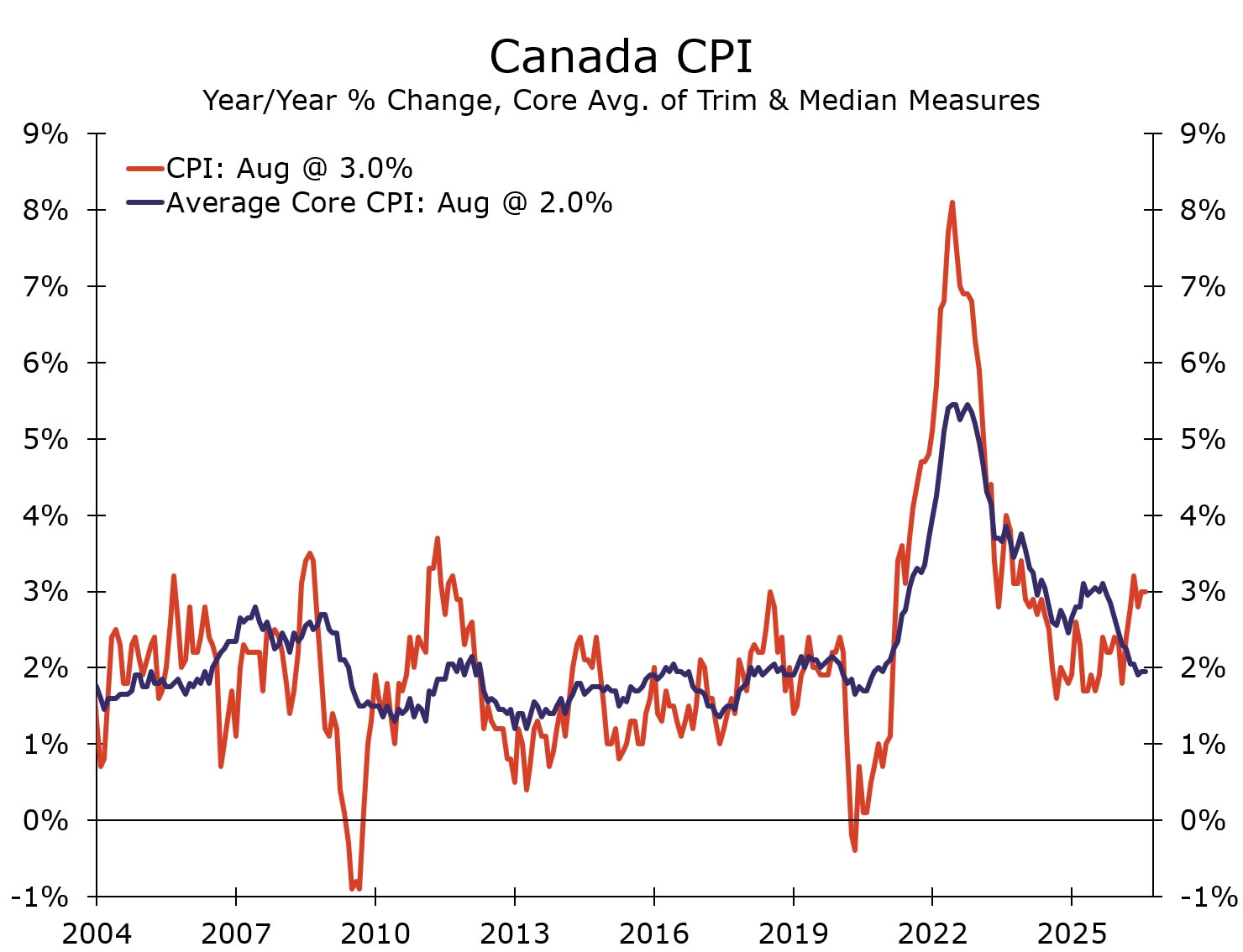
The Canadian CPI report takes on added importance next week ahead of the Bank of Canada’s (BoC) upcoming policy decision on October 28. The BoC has been increasingly focused on inflation and whether persistent-oil driven price pressures could warrant tighter monetary policy. We continue to believe recent economic developments, including some softening in hiring and heightened uncertainty around the growth outlook, argue for patience. Still, another firm inflation print next week could raise the odds of a rate hike as soon as the December meeting.
Concerns around inflation are not unwarranted. Headline inflation has moved higher in recent months amid the pickup in oil prices, but underlying price pressures remain relatively contained, with little evidence that the increase is broadening beyond energy-related categories. Importantly, core inflation measures continue to run near 2%. We expect headline CPI to pick back up to 3.2% in September on higher oil prices during the month, while core measures remain broadly steady near 2%.
U.K. CPI • Wednesday
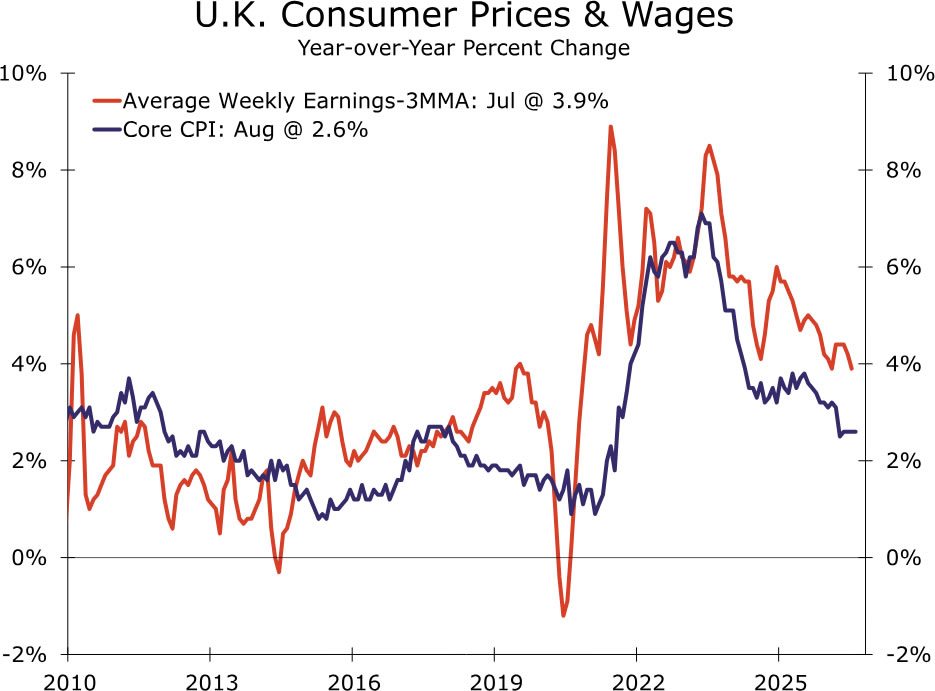
Energy prices will push UK inflation higher in September, though the composition of the increase will matter more for the Bank of England (BoE). We expect headline CPI inflation to rise from 3.1% to 3.5% year-over-year, with prices up 0.4% month-over-month. Core inflation should increase from 2.6% to 2.8% year-over-year and 0.2% month-over-month. The key question is whether the pickup in core inflation points to emerging second-round effects. The BoE has seen little evidence of material spillovers into prices and wages so far, though it views the risk as greater the longer higher energy prices persist
The labor market release will also be important, with consensus expectations for a further rise in unemployment. Still, activity has proved slightly stronger than expected and underlying wage growth remains somewhat above the pace consistent with the inflation target. Even with some further labor market weakness, a rise in core inflation would reinforce our expectation for a 25 bps hike in November, which would take the Bank Rate to 4.00%.
Japan CPI • Friday
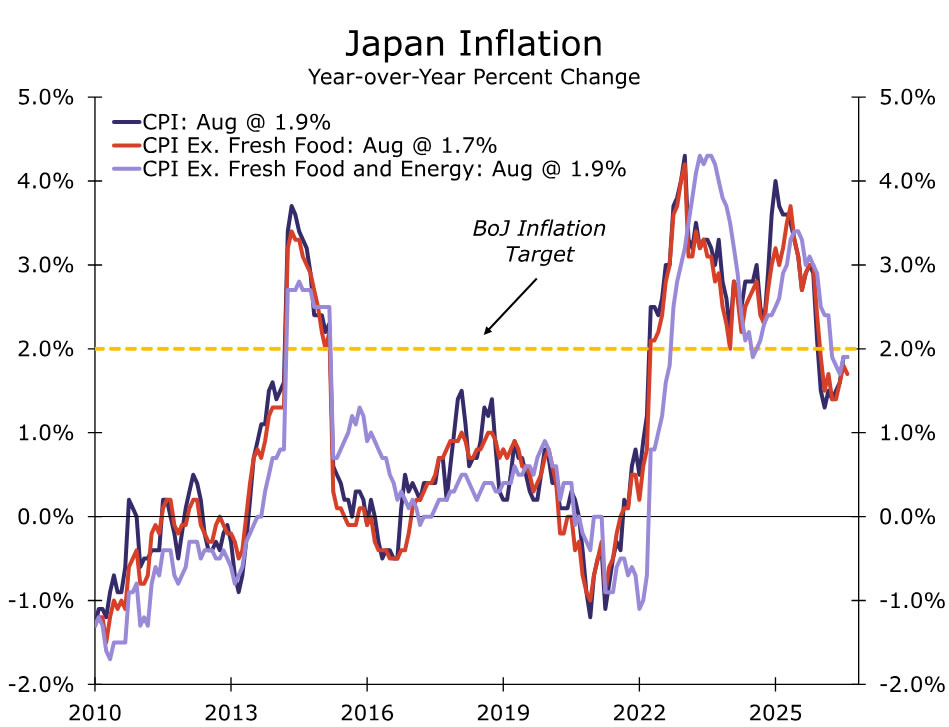
Japan’s September inflation print should provide further evidence that price pressures are reaccelerating. We expect headline inflation to rise to 2.3% year-over-year and ‘core-core’ inflation to increase to 2.8%. Tokyo inflation provides a strong signal ahead of the national release, with headline and core inflation rising to 2.7% in September and core-core inflation jumping from 2.0% to 3.0%. Higher energy costs should account for part of the increase, while the earlier depreciation of the yen and strong AI-related demand have added pressure to durable goods prices.
A firm national CPI print would reinforce the case for further Bank of Japan (BoJ) policy normalization, especially if underlying inflation shows a similar pickup to Tokyo. The BoJ raised its policy rate to 1.25% in September and continues to view financial conditions as accommodative. We expect another 25 bps hike in December, which would bring the policy rate to 1.50%, followed by further tightening in 2027.
EM Week Ahead
China GDP • Monday
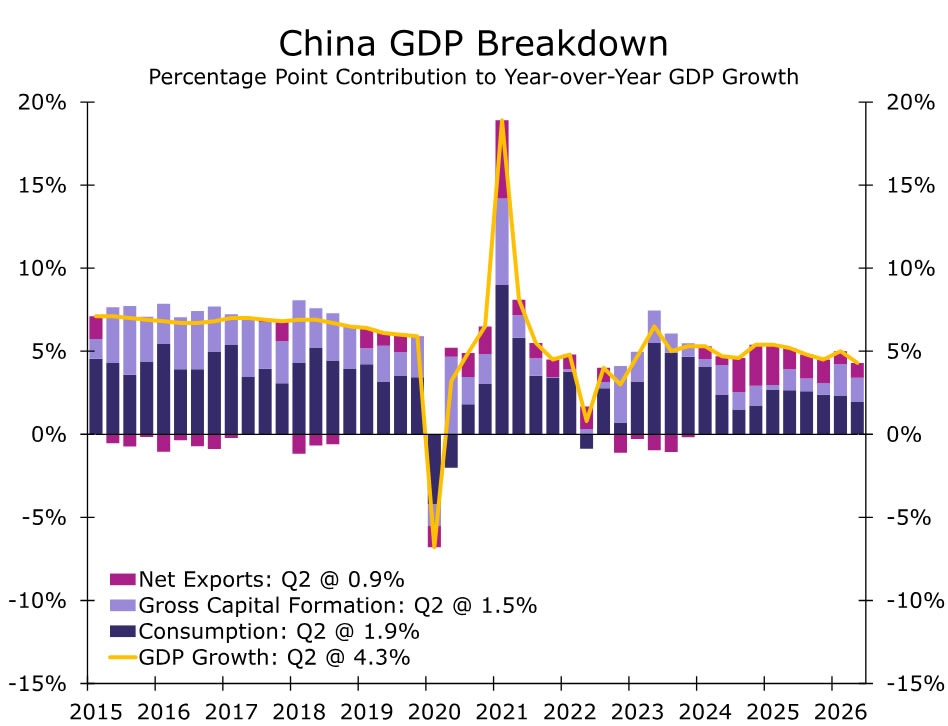
China’s economy likely regained some momentum in Q3, though the recovery remains heavily dependent on external demand and policy support. We expect GDP growth to edge up from 4.3% to 4.4% year-over-year, as stronger exports and fiscal support partly offset weak consumption, softer investment and continued property-sector strains.
Net exports should remain the main driver, supported by strong external demand for semiconductors and other high-tech goods. September’s manufacturing PMIs also point to firm industrial activity after production rose 5.2% year-over-year in August. Retail sales likely improved from August’s weak 0.4% increase, though subdued consumer confidence should limit the recovery.
Overall, a more targeted approach to easing should cushion domestic headwinds without generating a significant acceleration in growth. We expect policy support and strong exports to keep the economy broadly stable through year-end.