Canadian Highlights
- Canadian home sales and prices declined in September, reflecting the pinch from higher borrowing costs.
- Homebuilding activity rose in September but remained flat on a six-month trend basis, pointing to continued weakness in residential investment.
- Next week will bring a flurry of economic data, including the latest inflation report. We’ll be watching for any signs that price pressures are broadening beyond energy.
U.S. Highlights
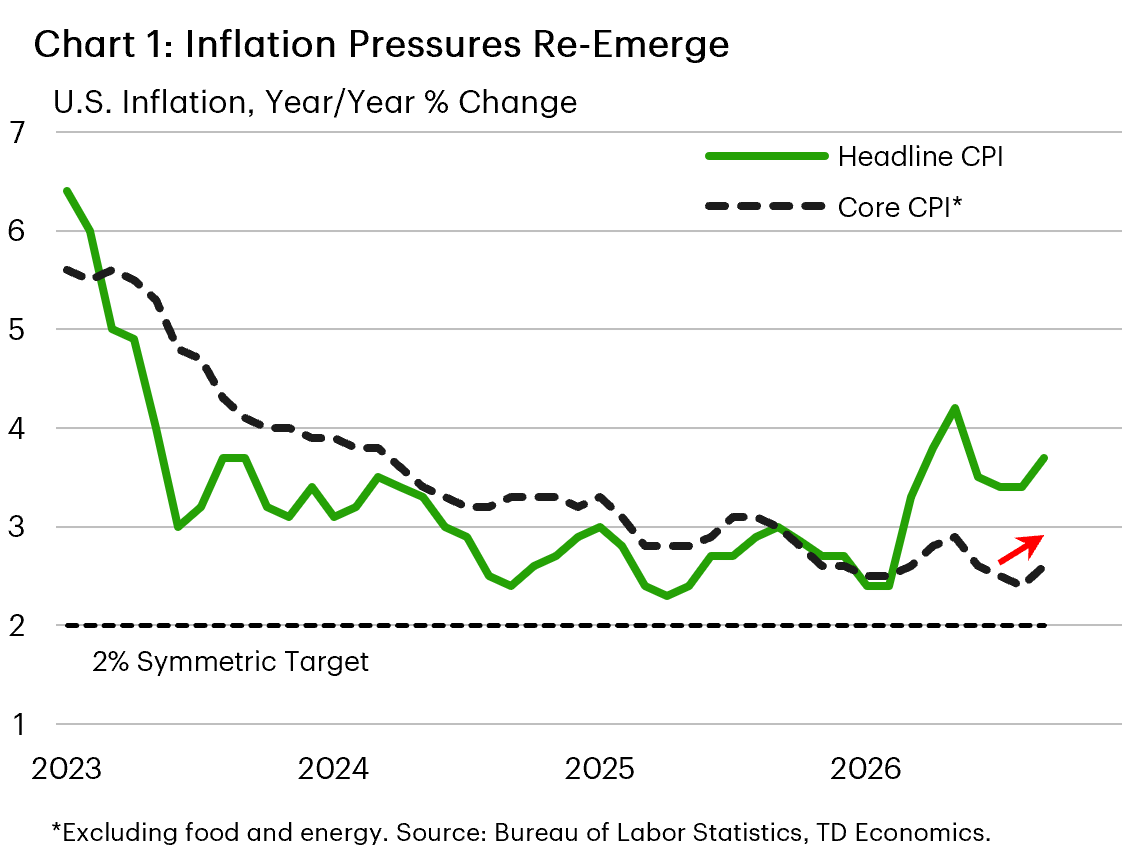
- Evidence of building price pressures was everywhere this week. Headline and core CPI inflation accelerated to 3.7% and 2.6%, respectively, while NFIB, Beige Book and producer-price data also pointed to building pressures.
- Gas prices helped lift retail sales 0.8% in September. Under the surface though, gains were broad-based and healthy spending at bars and restaurants showed consumers remain willing to spend in discretionary areas.
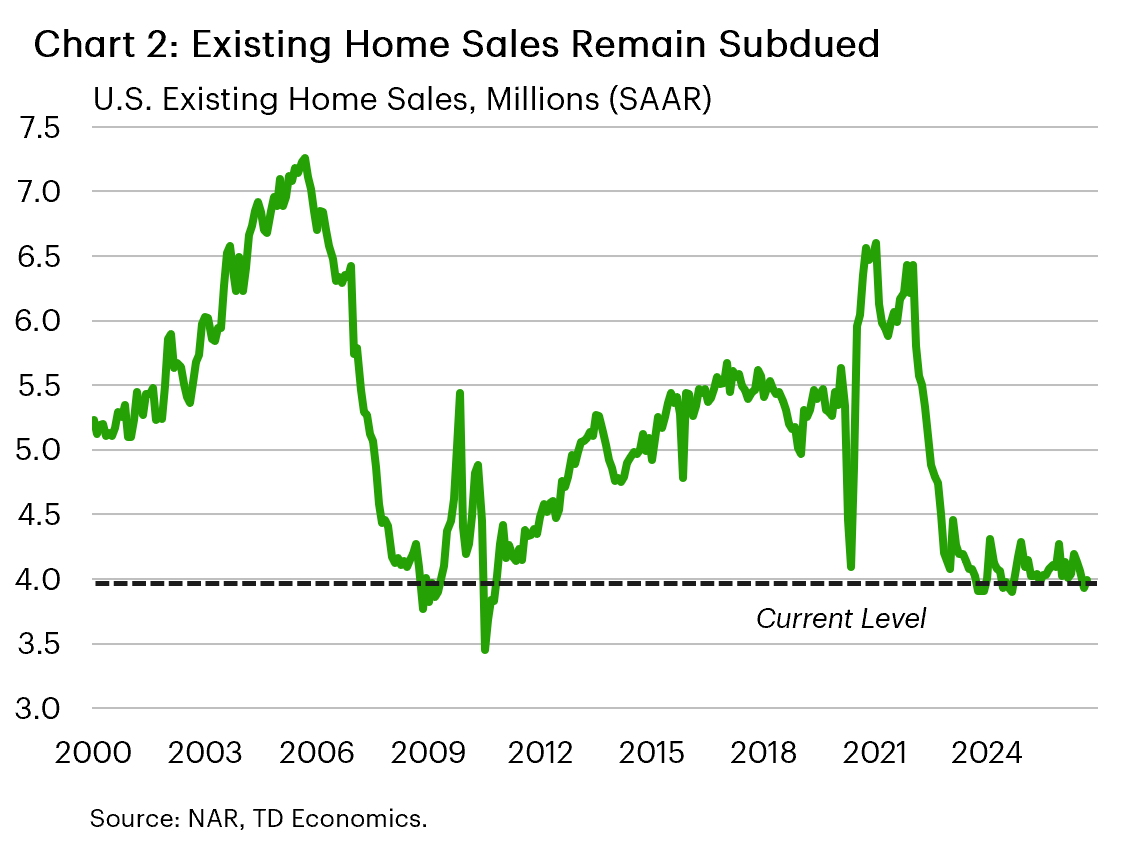
- Existing home sales remained subdued in September. Sales edged 1.5% higher, but remain near the four-million mark, with poor affordability continuing to weigh on transaction activity.
Canada – Yields Are Always on My Mind
The post-Thanksgiving week was short on both trading days and economic data. Canadian equities took their cues largely from higher oil prices, with the S&P/TSX closing 1.3% higher on the week. Meanwhile, bond markets reflected developments south of the border, where stronger-than-expected inflation reports contributed to a flattening of the yield curve. The 5-year Government of Canada bond yield ended the week flat but remained 15 basis points below its September peak.
This reprieve in yields has yet to provide relief to Canada’s housing market. Home sales have been losing momentum since spring and dropped a steep 2.3% in September (Chart 1). Higher borrowing costs are a major culprit. Five-year mortgage rates have risen by roughly 35 basis points since the beginning of summer, weighing particularly heavily on rate-sensitive and affordability-constrained markets, especially the GTA.
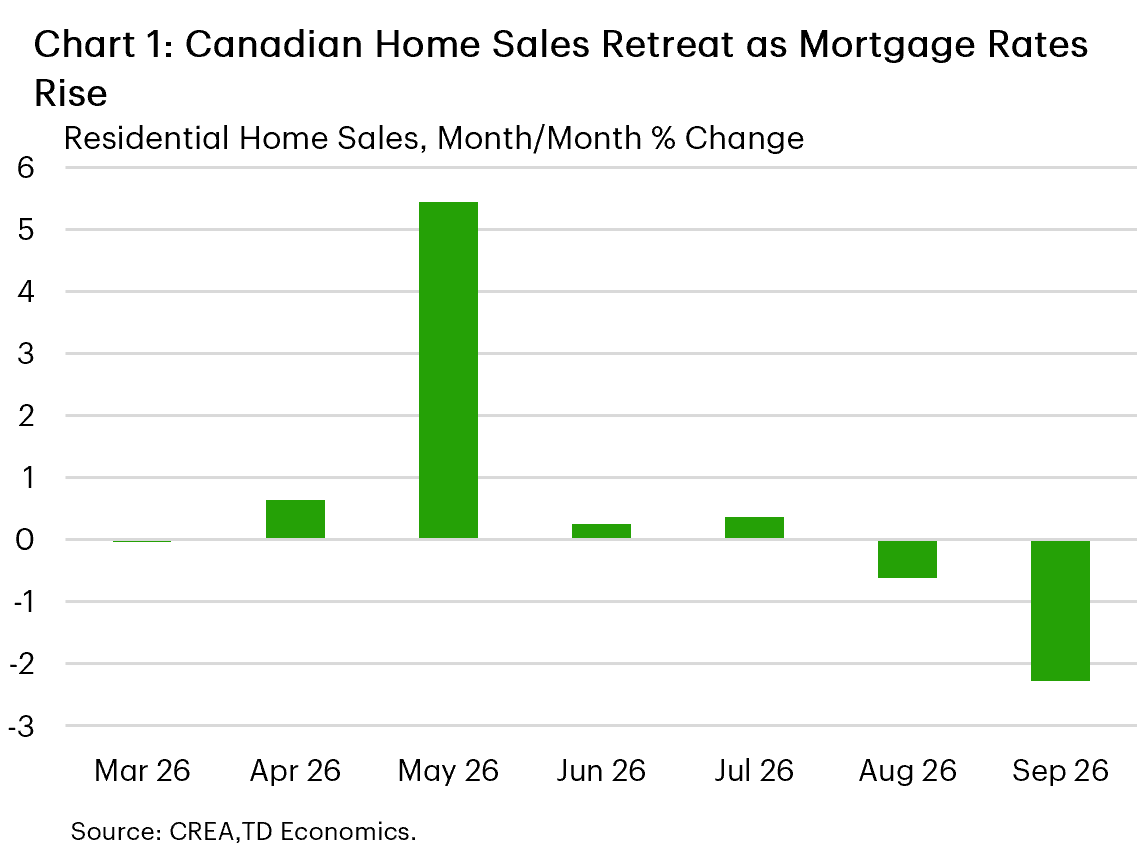
Weakness is also evident in prices. Average home prices declined by 2.3% nationally, driven by losses in Ontario, B.C., and Quebec. Meanwhile, the latest housing starts data offered little encouragement. Starts rose in September, but the six-month trend remained flat. Homebuilding is still constrained by elevated inventories of unsold units, earlier declines in pre-sales, weak population growth and – you guessed it – higher borrowing costs. This weakness is likely to weigh on residential investment and, by extension, GDP growth.
But higher yields aren’t just a problem for prospective homebuyers. They also matter for existing borrowers. As expected, the mortgage interest cost (MIC) component of CPI turned deflationary in the second half of 2026. However, mortgage rates have since moved higher, weakening the disinflationary impulse from mortgage interest costs. We now expect MIC inflation to turn positive again in the coming months (Chart 2).
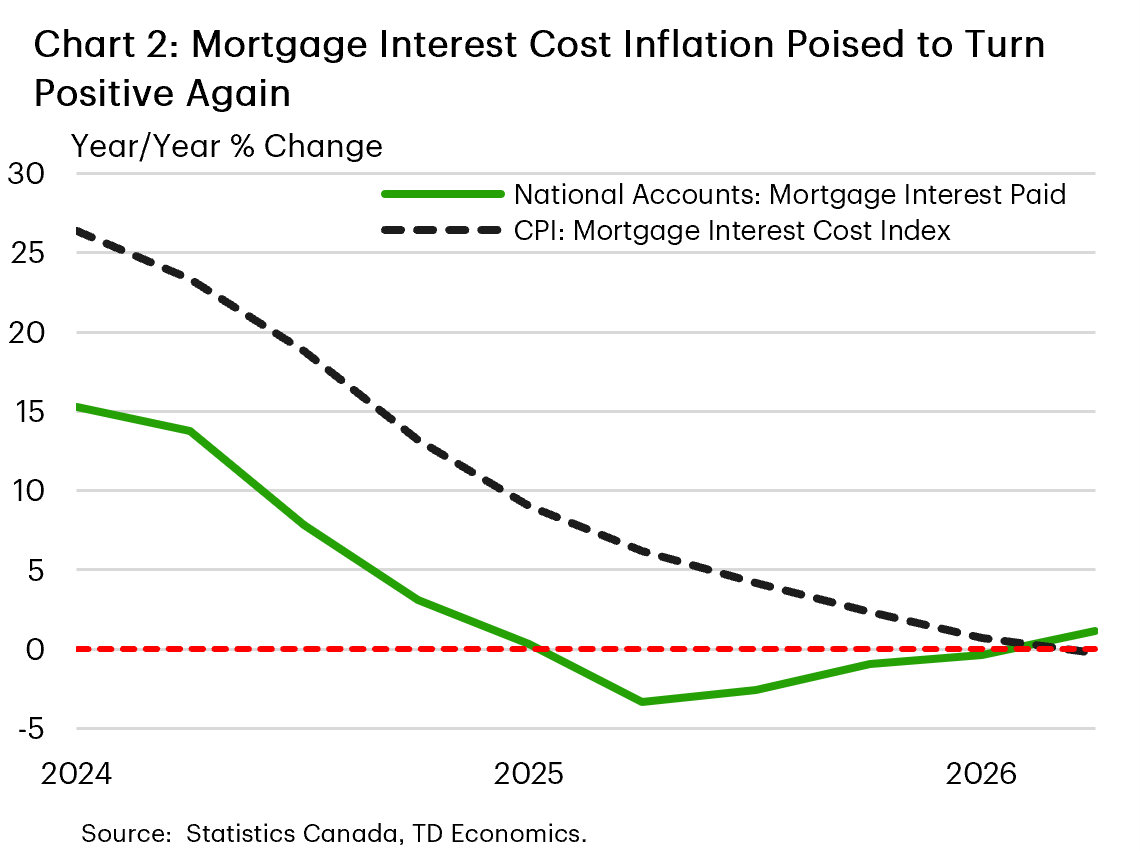
This is no small matter. Mortgage interest costs account for roughly 5% of the total CPI basket and 18% of the shelter component. A renewed increase would complicate the inflation outlook, particularly against an increasingly unfavourable backdrop for goods inflation. The next inflation reading is due Monday, and we’ll be watching for signs that inflationary pressures are broadening beyond energy. Last month, the Bank of Canada’s preferred core inflation measures began drifting above the 2% target. If that trend continues, the Bank could have a stronger case for raising rates. Markets are pricing in almost a full rate hike by year-end, with the Bank’s next rate decision on October 28th
Monday will also bring the BoC’s quarterly business and consumer surveys. Last quarter, firms largely looked through the energy price shock, while consumers revised their inflation expectations higher. Yet households have continued to spend despite these concerns, as reflected in retail sales. We’ll get another test of that resilience on Friday, with the release of August retail sales. Housing may be feeling the pinch from higher yields, but will consumers follow?
U.S. – Price Pressures Strengthen the Case for Another Hike
It was a busy week on the U.S. economic calendar, with the latest data pointing to solid economic momentum, but elevated inflation pressures. U.S. equities look to end the week in the red, as a hotter inflation report led to a significant AI-related selloff amid growing concerns that elevated interest rates could pose funding challenges and slow the AI buildout. Meanwhile, the 10-year Treasury yield retreated to just under 5.1% after briefly climbing above 5.3% earlier in the week. The pullback appeared to reflect a flight to safety rather than easing inflation concerns.
Retail spending held up in September, rising 0.8% on the month, following a 1.3% gain in August. While higher gasoline prices helped to boost the headline figure, gains were relatively broad-based with 8 of 13 retail segments recording higher sales on the month. Moreover, spending at bars and restaurants remained healthy, suggesting consumers remain willing to spend in discretionary areas. Elsewhere, initial jobless claims remained low and range-bound, while the Federal Reserve’s Beige Book reported little change in employment, pointing to continued labor market stability.
The inflation details were less reassuring. Headline CPI rose 0.6% m/m in September as higher energy prices pushed year-on-year inflation to 3.7%. Core inflation held at 0.3% m/m, disappointing expectations for some cooling, and accelerated to 2.6% year-on-year (Chart 1). Price pressures built across several categories, with firmer readings across core goods, shelter and non-housing services. The share of small businesses citing inflation as their most important problem picked up in September, while the Beige Book also pointed to some broadening in price pressures. Producer prices reinforced the message, surging 1.3% m/m and 6.3% year-on-year in September. These firmer inflation readings strengthened the case for additional tightening, though markets see December as the more likely timing for the next hike rather than October.
Higher rates are already weighing on interest-sensitive sectors, such as housing. Existing home sales ticked higher in September, but the improvement came off a downwardly revised August reading and activity remained subdued near the four-million mark (Chart 2). Inventory improved a little, with the months’ supply rising to 4.6. Still, the recent surge in mortgage rates will make September’s modest sales gain difficult to sustain. The average 30-year fixed mortgage rate has eased from 7.6% earlier this month, but remains above 7.3%. The roughly 130-basis-point increase from late-February levels of 6% adds about $300 to the monthly mortgage payment on a typical single-family home, weighing on affordability.
Overall, this week’s data depict an economy that remains on a decent footing. However, with inflationary pressures elevated and demand remaining resilient, further policy action will be required from the Fed before year-end. Given the recent wave of Fed speak downplaying the urgency of delivering back-to-back hikes, it seems more likely that the FOMC will opt to skip October and hike again in December.