


- The stock market is moving further and further away from its record highs.
- Good news from the US economy is turning out to be bad news for the S&P 500.
The 162,000 rise in US employment in August was good news that nobody asked for. The S&P 500 fell on rumours that the strength of the US labour market would remove a major obstacle to the Fed raising the federal funds rate. The consumer sector, healthcare and energy were hit hardest. Nevertheless, the VIX volatility index’s reluctance to move away from its lows since last December suggests that strong macroeconomic data has not spooked investors.
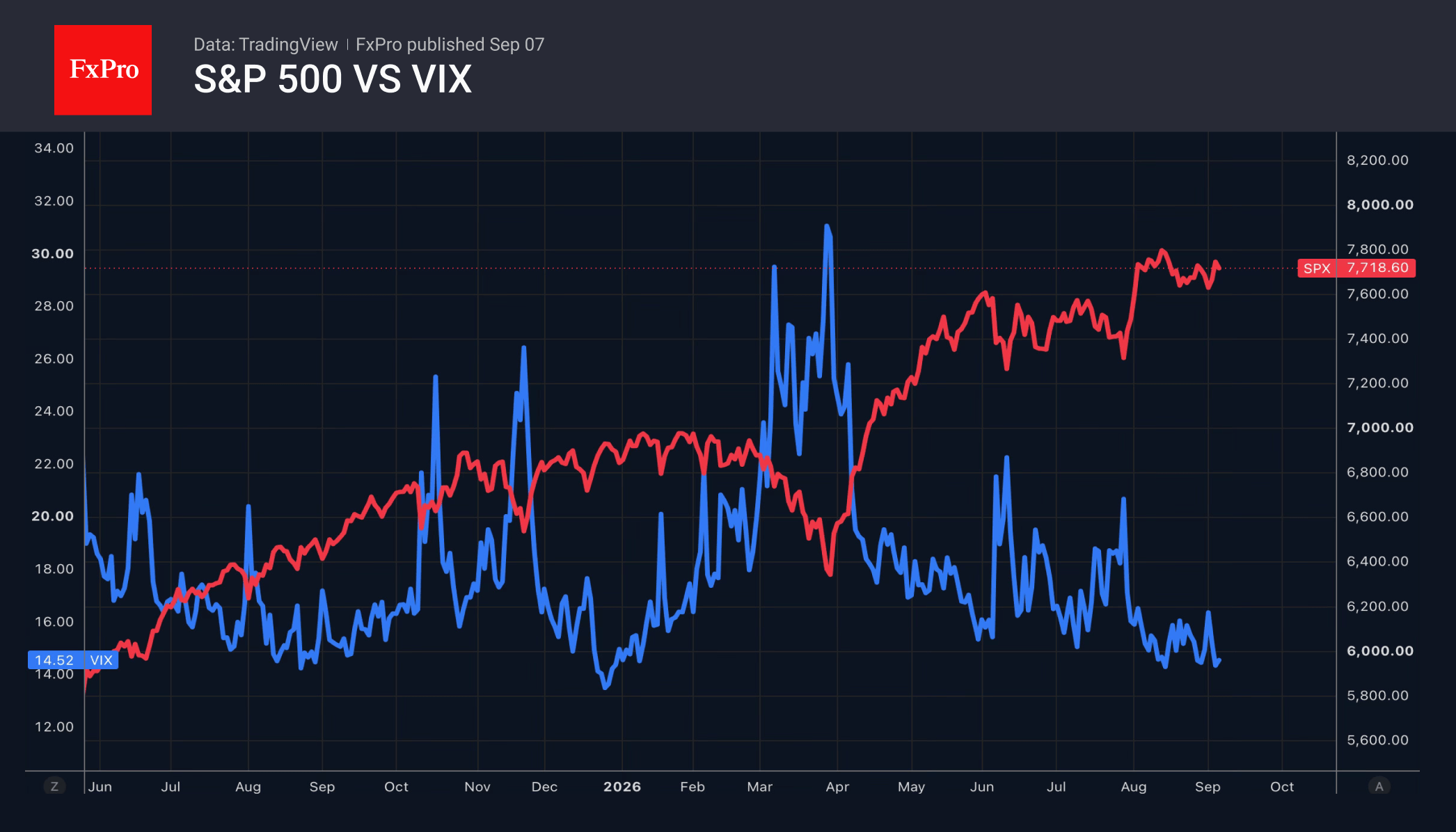
In the second half of 2025, the S&P 500 often rallied on weak economic data, as investors expected it to prompt the Fed to ease monetary policy. A year later, that dynamic has reversed. Now, good news from the US economy is bad news for the broad stock index, as the central bank stands on the brink of monetary tightening.
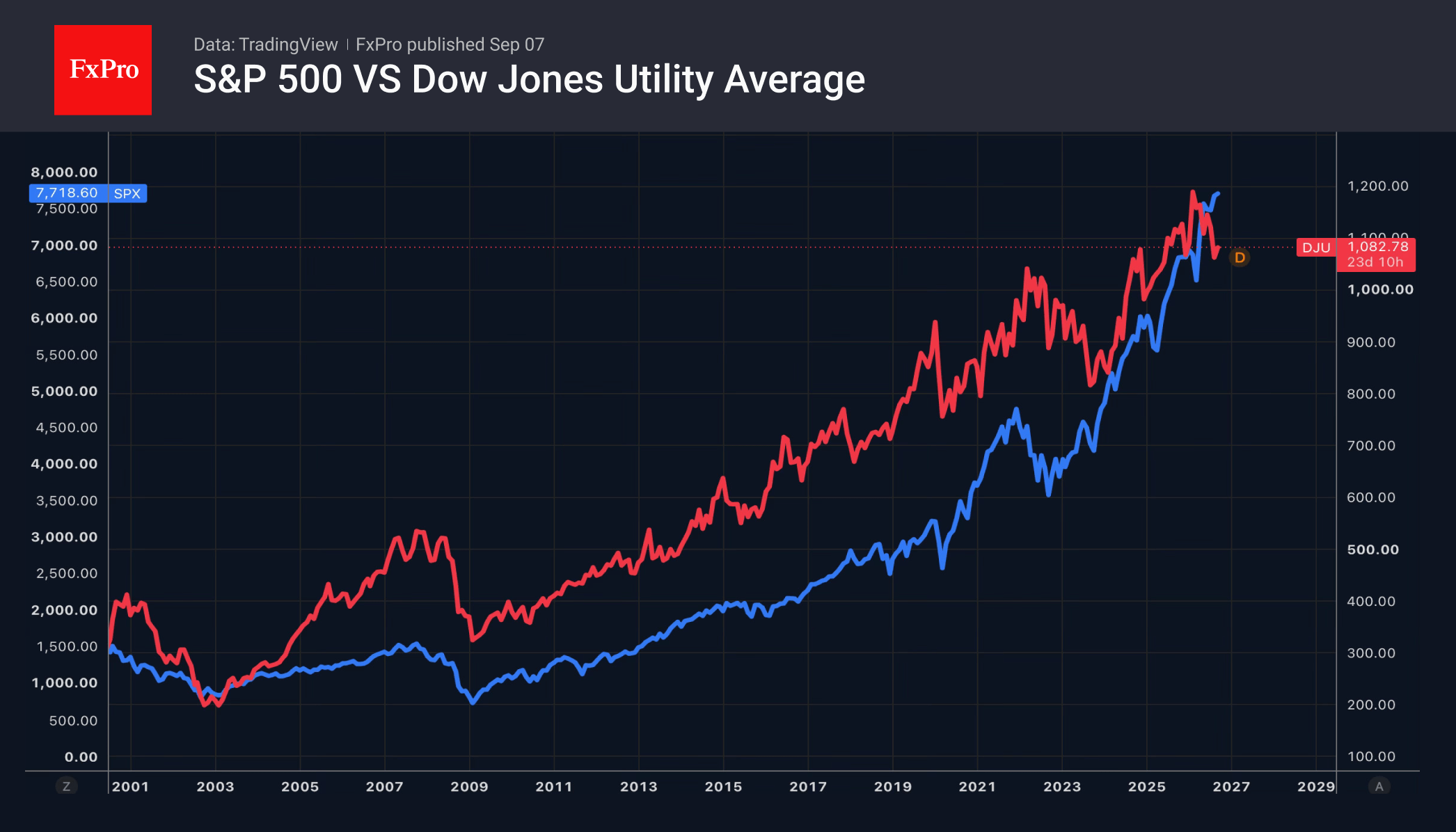
In such conditions, investors’ attention is particularly drawn to the utilities sector, which is sensitive to changes in interest rates. In 21 out of 30 instances since 1930, the Dow Jones Utility Average, which is based on this sector, has reached its peaks in a ‘bull’ market faster than the S&P 500. Following these 21 instances, the stock market retreated by an average of 29%. It is hardly surprising that the sector is likened to a canary in a coal mine. Its performance provides an indication of the trends unfolding in the S&P 500.
Discontent over the fall in stock market indices, against the backdrop of positive macroeconomic data on the US labour market, prompted Donald Trump to call on the Fed to cut interest rates. According to the White House, the economy is so strong that it deserves the lowest borrowing costs in the world. In fact, the President’s pressure on the central bank is one of the factors contributing to the loss of American exceptionalism and is forcing investors to withdraw their money, which is contributing to the fall in the S&P 500.
Rising Treasury bond yields are also putting pressure on the broad stock market index. Scott Bessent cites the conflict in the Middle East as one of the reasons. According to the finance minister, as soon as it ends, oil prices will fall to $40–50 per barrel, which will bring down debt market rates. In fact, the situation is escalating, as Iran has fired on US ships, although attacks on military bases had previously taken place.
The FxPro Analyst Team





