


- The spread of the conflict in the Middle East has pushed oil prices above $100 a barrel.
- Previous market buffers, such as alternative supply routes and a decline in Chinese demand, are no longer effective.
For more than three months, Brent traded below $100 a barrel due to reduced global stocks and Chinese imports, alternative supply routes, increased production outside OPEC+, and hopes of a de-escalation of the conflict in the Middle East. Unfortunately, the resumption of hostilities between the US and Iran, as well as attacks by Yemeni Houthis on Saudi Arabia’s oil infrastructure, threaten to push prices back up to April’s highs.
Despite increased production in the US, Canada, Guyana, and other countries, the IEA forecasts a 4.3M bpd reduction in supply, or approximately 4%, by 2026. The main reason is the continuing tense situation in the Middle East. According to a Bloomberg survey, OPEC+ oil production fell by 0.9M bpd to 19.9M bpd in August. Just over 1M bpd of the shortfall was attributable to Saudi Arabia.
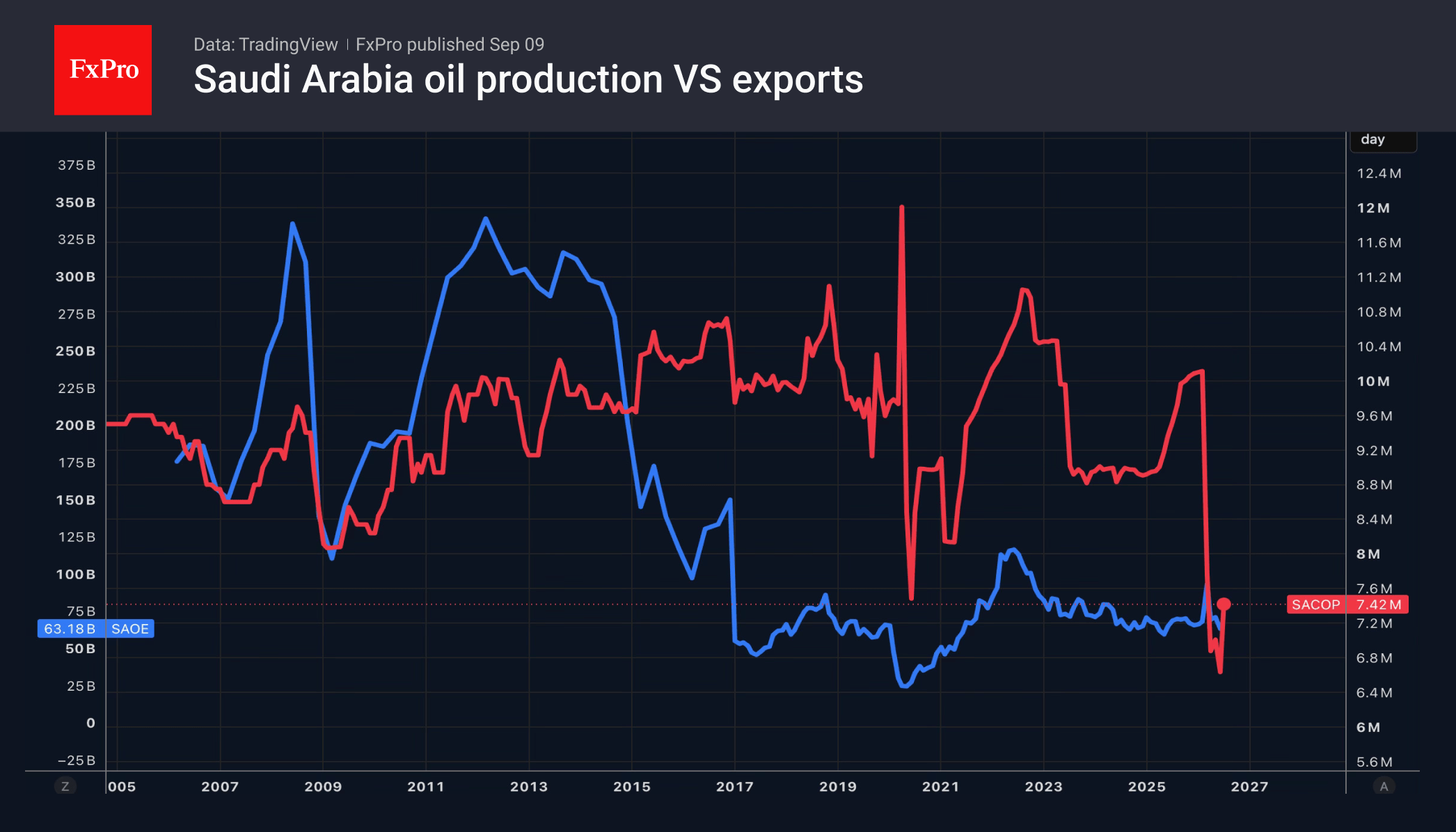
Houthi attacks risk reducing not only production but also exports. Riyadh had previously found alternative routes to supply oil to the global market. If these are cut off, Brent is set to continue its rally. All the more so as transit through the Strait of Hormuz is approaching zero, even though Iran reports that it is set to sign an agreement with Oman on a safe passage through the world’s main oil artery. On 8 September, only six tankers passed through the strait, compared with nine the previous day and an average of 12 over the last 10 days.
China’s renewed interest in oil is adding fuel to the Brent rally. In August, China’s imports rose to 37.9M tonnes (8.93M bpd), up 6.2% from July. Previously, a drop in purchases to their lowest levels since 2017 had held back the bulls’ advances.
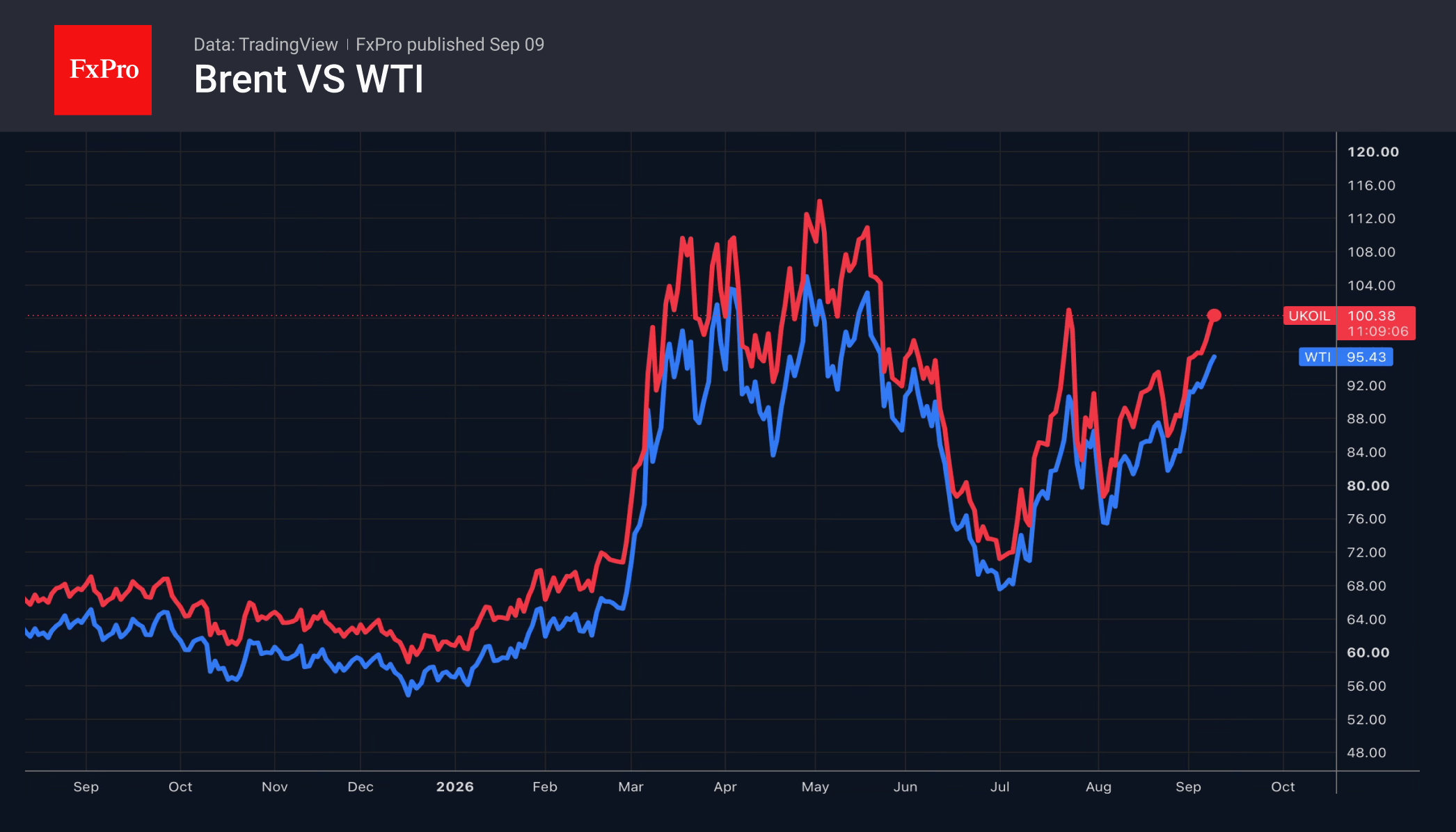
According to Goldman Sachs, Brent crude could rise to $120 per barrel in 2027, as the conflict in the Middle East is likely to extend into next year. Bank of America believes this figure will be reached as early as 2026 and forecasts that Brent will trade within the $95–125 range by the end of December. Under the most pessimistic scenario, prices will soar to $150 per barrel.
Such forecasts were common at the outset of the conflict in the Middle East. However, a local high of just over $126 was recorded at the end of April. Will Brent manage to surpass it?
The FxPro Analyst Team





