


- Decisions by the BoJ and the BoE have weighed on their respective currencies.
- A resurgence of interest in US assets is supporting the dollar.
Following a brief pullback on Thursday, the US dollar resumed its upward trend on the back of the Fed’s hawkish stance. Rival central banks have so far failed to adopt a sufficiently decisive tone to match the FOMC. The Bank of England refrained from tightening policy, whilst the Bank of Japan’s decision to raise rates was not unanimous, casting doubt on the next move being imminent. It is, in fact, quite typical that, when there is an almost simultaneous shift in monetary policy, markets react in the first few months as if the change were limited to the US, even though the ECB began its cycle in June and the Reserve Bank of Australia as early as February.
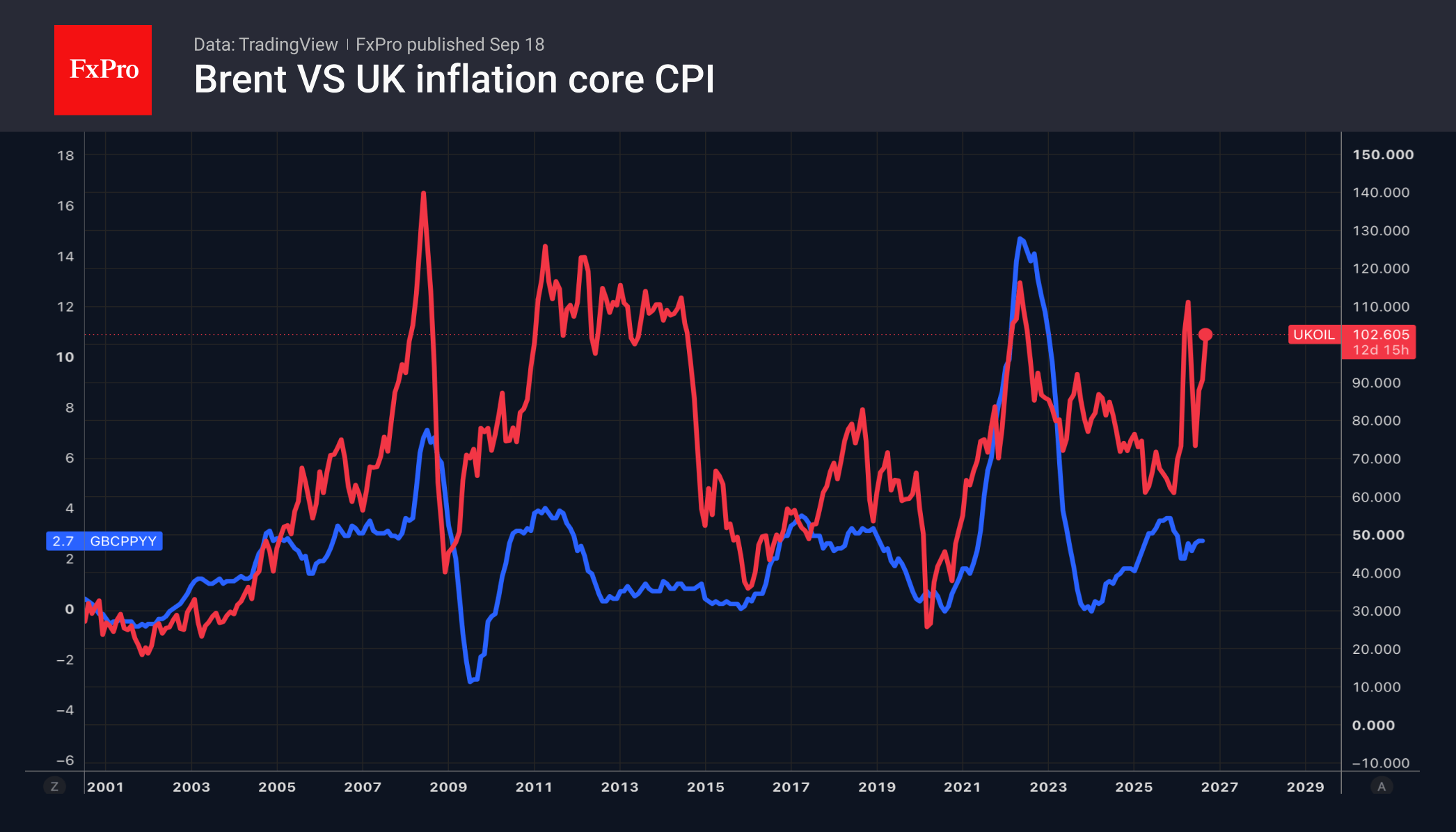
The Fed’s intention to begin a cycle of rate rises is based on the strength of the US economy, inflation consistently exceeding the 2% target for a prolonged period, and heightened geopolitical risks.
Andrew Bailey of the Bank of England pointed out that, so far, high global energy costs have had a limited impact on prices and wages in the UK. However, this will happen over time, forcing the BoE to raise rates. Markets expect this to happen as early as the next meeting in November. This rhetoric from the Bank of England disappointed sterling supporters and sent the GBPUSD exchange rate to its lowest level since the end of July.
The Bank of Japan also failed to support the yen, as two of the nine members of the Policy Board voted against raising the overnight rate from 1% to 1.25%. Sanae Takaichi appointed both. For the markets, this outcome signalled that the Prime Minister is opposed to the BoJ aggressively tightening monetary policy. Furthermore, the cycle of interest rate normalisation will not be as rapid as previously anticipated. USDJPY soared by more than 1.2% to 157.8, reaching two-week highs. As the pair moves towards the 160 level, the risks of verbal and, subsequently, currency interventions will increase.
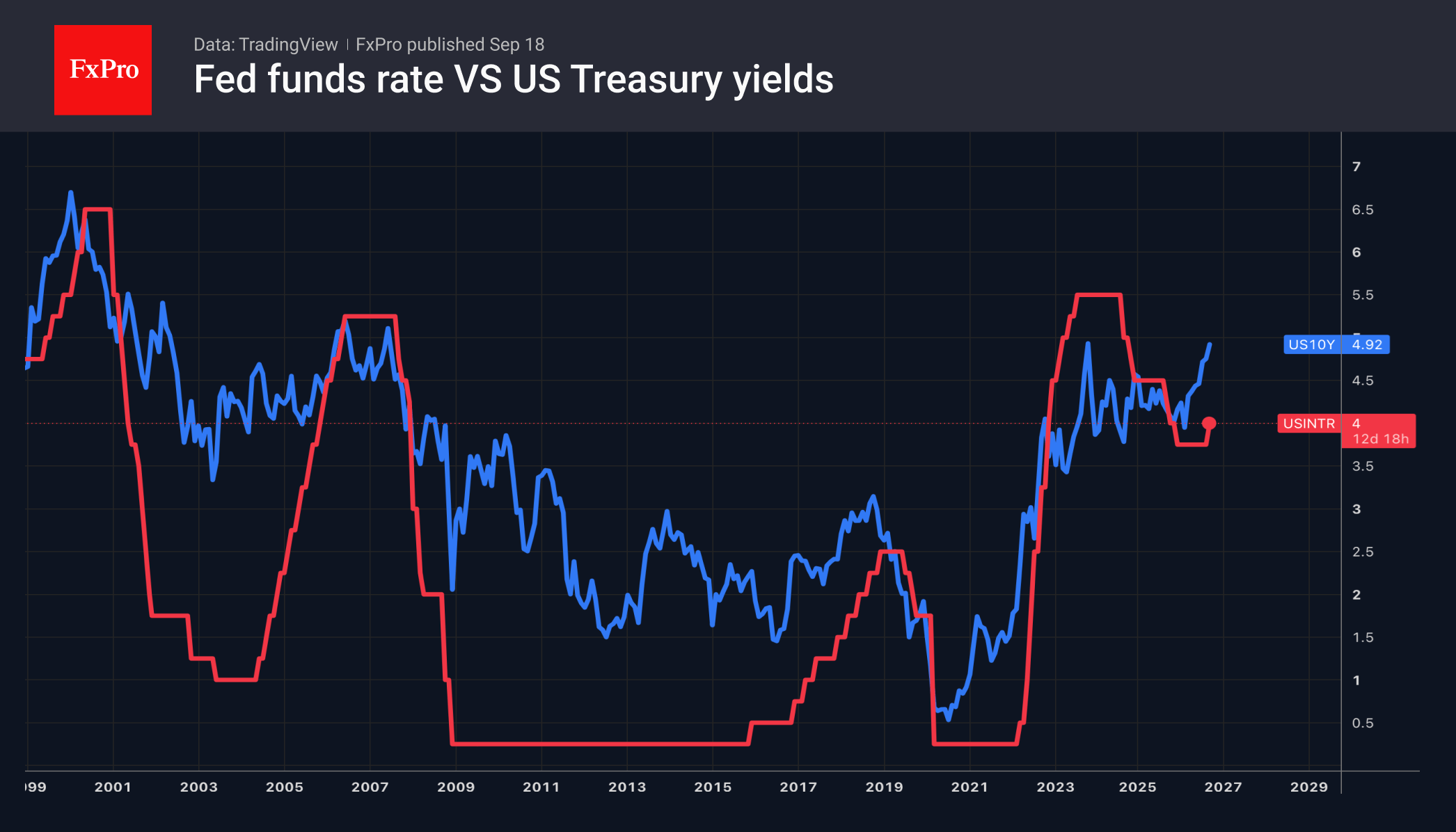
Recent initiatives by US Treasury Secretary Scott Bessent, involving interventions in the debt and foreign exchange markets, have merely bought time. Time during which the Fed stabilised the equity and debt markets by reassuring them of its commitment to fighting inflation, and which the Bank of Japan used to raise its interest rate.
At the same time, the return of demand for US assets, coupled with the cautious approach of the Fed’s rival central banks, suggests that the US Dollar Index will continue to rise, having now surpassed the psychologically important 100 level. The weakening of the yen is a perfectly logical reaction to the news, but traders must not forget that USDJPY is close to the notional red line, beyond which intervention will follow.
The FxPro Analyst Team





