


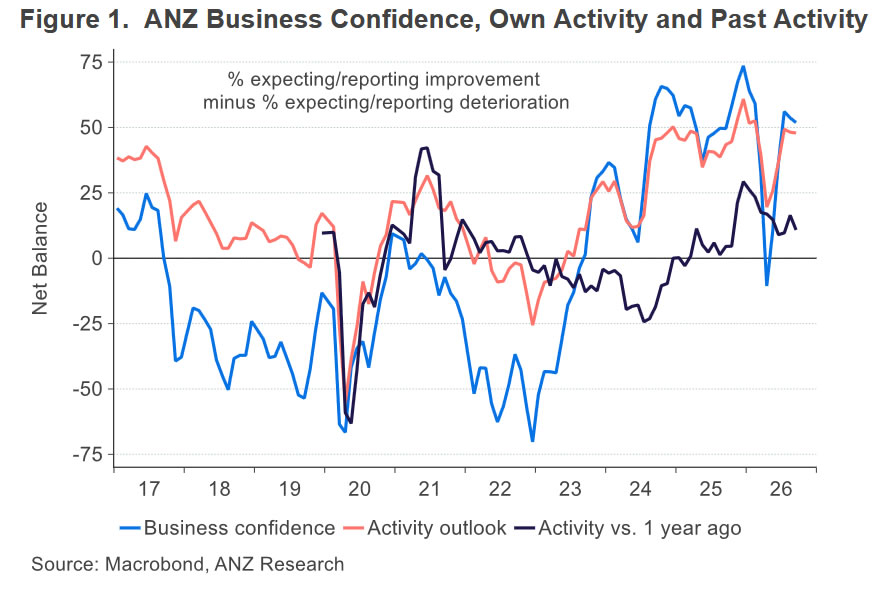
New Zealand’s business outlook softened modestly in September, but the more significant deterioration came in reported activity rather than headline confidence. Business confidence eased from 53.7 to 51.9, while firms’ own activity outlook was little changed at 47.9 versus 48.2. Reported activity compared with a year earlier fell more sharply from 16.4 to 10.8, while export intentions slipped from 31.4 to 30.0 and employment intentions from 19.3 to 17.9. Investment intentions, however, edged higher from 22.1 to 22.6, while residential construction intentions improved from 15.5 to 22.2. ANZ said the survey still points to a recovery, but one that remains uneven across sectors.
The most striking feature was the late-month deterioration in activity as oil prices surged. Most responses were received early in September, while roughly a quarter came later after Dubai spot oil had climbed from around USD100/bbl to a peak of USD128. Own activity was around 52 in early-month responses but only 36 later, while reported past activity weakened sharply, particularly in retail. ANZ noted that as the month progressed and oil prices rose, activity indicators deteriorated across the board except investment, although late-month readings remained well above the lows seen earlier in the year.
Inflation indicators, by contrast, were surprisingly stable despite the renewed energy shock. One-year inflation expectations were essentially unchanged at 3.25% versus 3.26%, while pricing intentions eased from 51.0 to 48.4 and expected price increases over the next three months slowed from 1.82% to 1.76%. Cost expectations rose slightly from 80.8 to 81.9, and expected wage growth increased from 2.62% to 2.83%, which ANZ said points to mild upside risk to wage forecasts. Overall, the survey suggests the oil surge has so far weighed more heavily on business activity and confidence than on inflation expectations, reinforcing ANZ’s description of the recovery as “bumpy.”
Data Summary
| Indicator | Previous | Current |
|---|---|---|
| Business Confidence | 53.7 | 51.9 |
| Own Activity Outlook | 48.2 | 47.9 |
| Activity vs. year ago | 16.4 | 10.8 |
| Export Intentions | 31.4 | 30.0 |
| Investment Intentions | 22.1 | 22.6 |
| Employment Intentions | 19.3 | 17.9 |
| Residential Construction | 15.5 | 22.2 |
| Commercial Construction | 24.6 | 23.6 |
| Profit Expectations | 23.1 | 22.5 |
Business confidence softened modestly, while the sharper deterioration came in reported past activity. Residential construction was a notable positive and investment intentions edged higher.
Inflation and Cost Indicators
| Indicator | Previous | Current |
|---|---|---|
| Inflation Expectations, 1-year | 3.26% | 3.25% |
| Pricing Intentions, net % | 51.0 | 48.4 |
| Expected Price Increase, next 3 months | 1.82% | 1.76% |
| Cost Expectations, net % | 80.8 | 81.9 |
| Expected Cost Increase, next 3 months | 2.53% | 2.64% |
| Wage Expectations, next 12 months | 2.62% | 2.83% |
Despite the sharp rise in oil prices during September, inflation expectations were essentially unchanged and pricing intentions eased, while cost and wage expectations moved somewhat higher.
Key Takeaways
- Business confidence eased from 53.7 to 51.9, while firms’ own activity outlook was nearly unchanged at 47.9.
- The more notable weakness was in actual activity, with the net balance reporting stronger activity than a year ago dropping from 16.4 to 10.8.
- Late-month responses were materially weaker after oil prices surged. Own activity fell from around 52 early in the month to 36 later, while retail reported activity swung from +17 to -13.
- ANZ found that nearly all activity indicators weakened as the month progressed, although investment remained comparatively resilient.
- Inflation indicators showed surprisingly little reaction to the oil spike. One-year inflation expectations held at 3.25%, while pricing intentions fell from 51.0 to 48.4.
- Cost pressures remained elevated, with the net share expecting higher costs rising to 81.9, while 12-month wage expectations increased to 2.83%.
- Sector performance remained uneven. Manufacturing and construction strengthened, while retail, services and agriculture cooled.
- Overall, the survey supports ANZ’s description of a “bumpy recovery”: activity remains in recovery territory, but renewed external shocks are weighing on momentum without yet producing a corresponding rise in inflation expectations.





