The Q3 labour market statistics were weaker than expected. We discuss potential implications for the RBNZ noting that a December hike remains more likely than not at this point.
- The Q3 labour market data were weaker than RBNZ and our expectations.
- A December hike remains more likely than not, but there will be a clear debate to be had between the MPC hawks and doves.
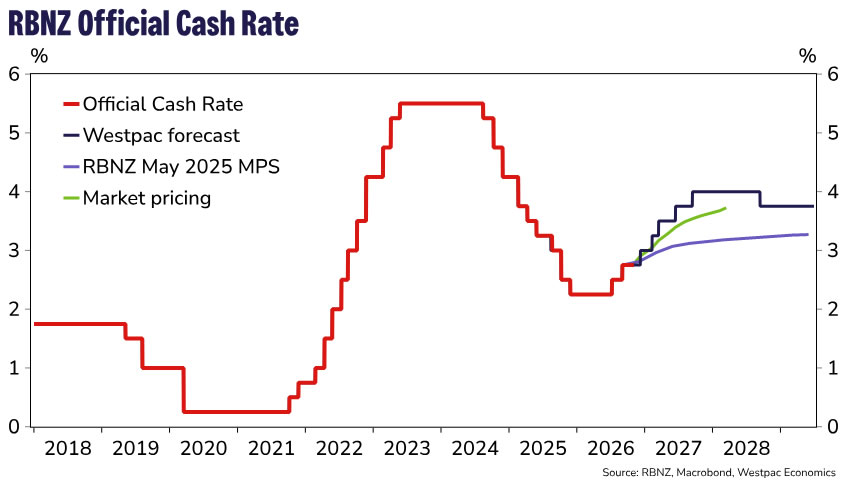
- The forecast peak OCR is likely less impacted than the time to reach that peak. Further pauses in the tightening cycle could come earlier than currently forecast.
- The outlook for the exchange rate is especially clouded by this data should it take a longer time for NZ rates to move closer to global norms.
- Watch for updated RBNZ commentary on 10 and 19 November. The Governor’s observation that it would have been useful to update markets ahead of the October meeting could imply a greater willingness to comment in the coming weeks.
Today’s labour market data seem unequivocally weaker than expected by either us or the RBNZ. While likely not a gamechanger for the cycle overall, it will add ammunition to the arguments of the MPC doves that a pause in interest rate rises will make sense soon – perhaps in December or in the New Year. It’s likely the case that a bit much was priced into December, so the change in market probabilities in the wake of today’s data makes sense – although my base case remains that a December rate rise remains more likely than not.
The message from the RBNZ in the October meeting though was to be careful about pricing in “done deals” and that the outlook will be data-dependent. As we noted at the time, alongside measures of inflation expectations, the key domestic data to watch ahead of the RBNZ’s 9 December meeting will be indicators of what is happening to excess capacity (the output gap) as this will be a key determinant of the Bank’s assessment of the outlook for inflation over the coming year.
It’s useful to remember in the RBNZ’s forecasting framework that GDP figures are the main determinant of excess capacity in the economy (i.e., the output gap). The Q2 GDP data told us that the output gap probably narrowed a bit through Q2, mainly reflecting historical revisions. In light of today’s labour market numbers, the forecast for growth in Q3 may have some downside risk – but there are conflicting indicators there, so it’s not that clear. However, it’s probably hard to argue that the level of excess capacity reduced further in Q3 given today’s data.
In the eyes of dovish MPC members, the rise in the unemployment rate and other measures important for the RBNZ’s labour market dashboard likely push in the direction of having greater comfort with the medium-term inflation outlook. The vacancy to unemployment ratio increased a bit, labour constraints eased a bit, and the unemployment rate has increased. Hence from a labour market perspective it could be argued that policy could have more time all else equal. The outcome of the election, with the possibility of a new RBNZ mandate, could increase the prominence of these factors – although this won’t likely be an explicit factor in the RBNZ’s thinking in December even though it may be in the minds of individual MPC members.
It could be the case that the argument for increases in the OCR track through 2027 could be undermined with this data. It’s important to note (probably self-evidently) that there are other data that will also be relevant. Hence the risk of a pause earlier in the New Year has probably increased with this data, all else equal. I don’t think our forecast peak OCR is really at issue here, but the time taken to get there could be more flexible. Takes along the lines of “3% is the terminal rate” are very premature and misplaced, in our view.
The outlook for the exchange rate is undermined by this data. I feel very happy about our year-end target of 79c for the NZD/AUD rate with the risk that a recovery in the NZD takes longer than currently assumed.
Looking ahead, there are some opportunities for the RBNZ to update markets on their views. Top of mind is Paul Conway’s 10 November speech to the UBS Australasia Conference. The Governor is also speaking to the Institute of Directors on 19 November. If the RBNZ has something to say, then it might happen in conjunction with these events (the 10 November speech is titled “How is the NZ economy tracking”, so it will be difficult for Conway to avoid saying something about how he is interpreting today’s data). We also note the Governor’s comments in the October MPR that it could have been useful to have been more flexible about updating markets on emerging views of new economic data. This might increase the likelihood that these events could be used to provide guidance on the RBNZ’s views of this data (and other emerging events), especially if it feels that the market’s interpretation is at odds with its own.