


- Expectations regarding the scale of the Fed’s monetary tightening are beginning to look overblown.
- The central bank is unlikely to resort to aggressive rate hikes during periods of market stress.
The US dollar is pulling back from recent highs amid concerns that expectations of Fed tightening are overstated. CME derivatives put the probability of a federal funds rate hike in December at 95%. On Friday, the probability of a 75-basis-point or larger rate hike over the next 12 months fell to 37%. With a slight improvement in market sentiment, it stands at 52% at 10:30 GMT, down from 75% a week ago. Investors are sceptical that the Federal Reserve will act aggressively during a period of severe market stress.
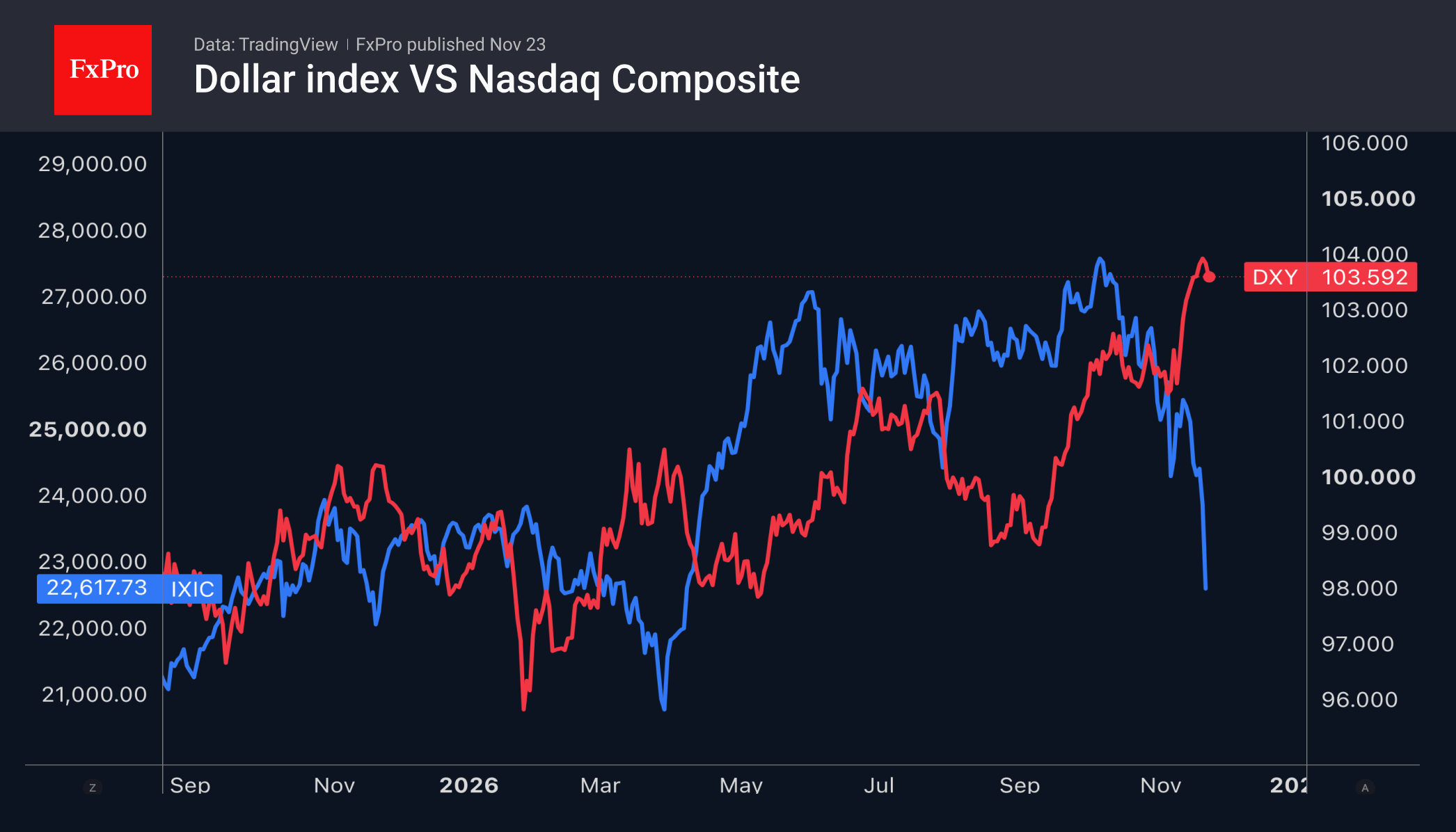
The Nasdaq-100‘s slump of more than 5% over the week to 20 November brought the index right to the threshold of a bear market, with a 20% fall from its peak in early October. The S&P 500 and the Dow Jones Industrial Average have entered correction territory, meaning they have lost more than 10% from their most recent peaks. There is increasing talk in the market of the AI bubble deflating, with comparisons drawn to how the dot-com bubble burst. Over three weeks in 2000, the Nasdaq-100 plummeted by a third. The phase of denial back then lasted almost half a year, while the renewed decline that began in September dragged on for two years. The index’s ultimate low was 83% below its peak, and it was not until 2016 that those highs were finally surpassed.
The Fed could exacerbate the situation by raising interest rates. Treasury Secretary Scott Bessent has warned of a potential mistake by the central bank. According to him, there has recently been a significant tightening of financial conditions, which needs to be taken into account. This is particularly worrying for students of economic history like us. At the start of the century, the Fed continued to raise rates, increasing them by 25 basis points in March 2000 and by 50 basis points in May. It took more than six months before emergency rate cuts began on 3 January 2001, but by then the bull market had already collapsed.
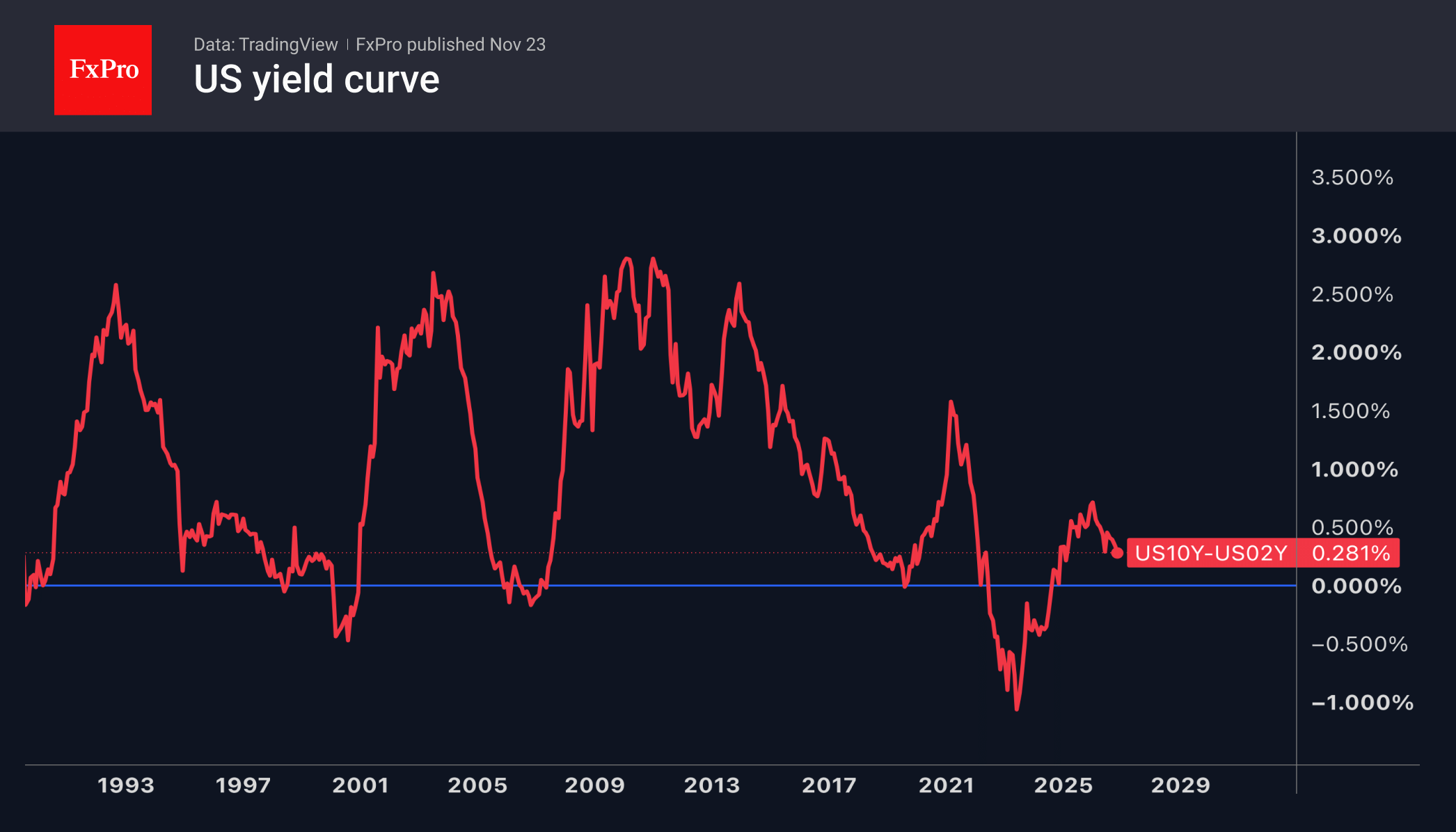
For now, investors can only hope that the central bank is prepared to apply the lessons of those historical events to the current situation. If, faced with large-scale capital outflows and a deterioration in financial conditions, artificial intelligence fails to provide the US economy with the same support as before, a recession may be on the horizon. History shows that the yield curve’s exit from inversion typically signals an impending downturn. In such circumstances, the Fed will be forced to halt its cycle of monetary tightening, which will weigh on the US dollar.
On Friday, the flight to safety and deleveraging played into the hands of classic safe havens such as the yen and the Swiss franc, allowing USDCHF to retreat from its 18-month high. At the same time, gas and electricity prices in Europe are rising due to worsening weather forecasts and low natural gas stocks, which works against the franc, the yen and the euro through higher energy import bills.
Nevertheless, the broader backdrop of falling Treasury yields and declining global risk appetite amid sell-offs in the US equity market remains favourable for the yen and the franc. The dollar, meanwhile, risks lagging behind them, as the fate of AI has been closely linked to American exceptionalism.
What to watch
Base case: in our view, the market will continue to scale back expectations of Fed tightening, which will work against the dollar and in favour of the yen and the franc.
Risk: a stabilisation in equities and strong PCE data would revive bets on an aggressive Fed.
Upcoming: US PCE and GDP on 25 November; the account of the ECB’s October meeting on 26 November; the Fed decision on 9 December. Check the economic calendar for more events.
The FxPro Analyst Team