


- The breakdown in US-Iran talks has led to price gaps.
- The dollar is regaining ground amid rising demand for safe-haven assets.
The US dollar opened the week with a gap higher after US-Iran talks failed to end the conflict. Tehran refused to abandon its nuclear ambitions, whilst the United States intends to block its tankers from passing through the Strait of Hormuz. To date, the conflict in the Middle East has removed around 13 million barrels per day from the oil market. If we add 2 million barrels per day of Iranian exports to this figure, Brent risks rising even further, dragging the USD index with it, as the two have been moving in tandem over the last couple of months.
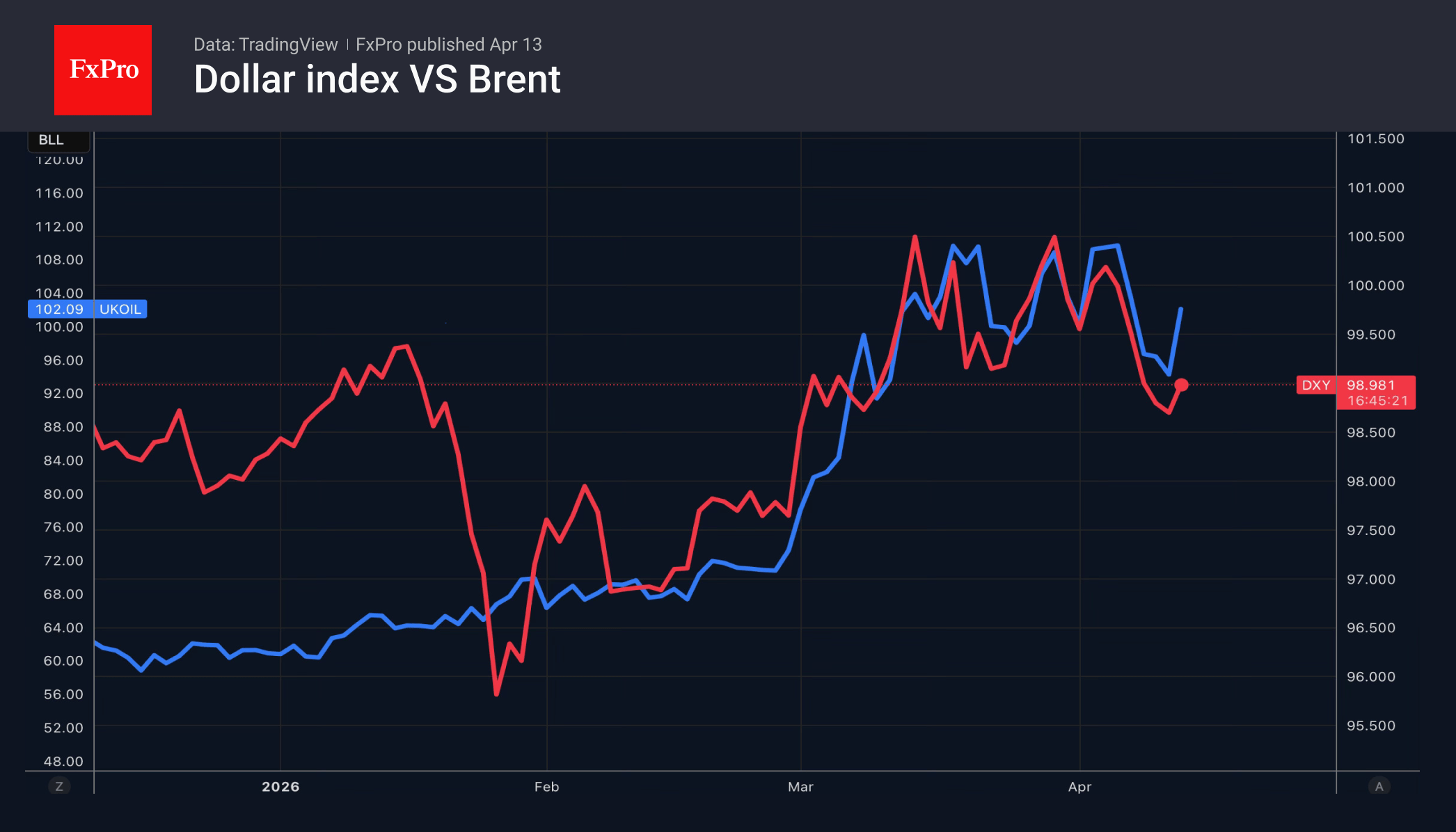
The situation could either worsen or improve. A pessimistic scenario suggests that, having been backed into a corner, Tehran will strike at Saudi Arabia’s alternative routes, whilst the Houthis block another vital oil artery – the Bab al-Mandeb Strait. However, investors remain hopeful that negotiations will resume, as officials on both sides have suggested. Moreover, a blockade of the strait would signal de-escalation following a threat to destroy an ancient civilisation.
If the war was a reason to buy the US dollar as a safe-haven currency, and US-Iran talks a reason to sell it, what should one do now?
A prolonged closure of the Strait of Hormuz would deal the heaviest blow to the economies of Europe and Asia. According to Wall Street Journal experts, the chances of a US recession within 12 months have risen slightly – from 27% to 33%. Experts expect slower GDP growth – 2% rather than 2.2% – and faster inflation. Prices are forecast to rise by 3.2% by the end of 2026, rather than 2.6%.
As oil prices rise amid the ongoing conflict in the Middle East, the risk of core inflation accelerating in the US will increase through second-order effects. In March, the figure showed a modest month-on-month increase of 0.2% and a year-on-year increase of 2.6%. However, the figure for April will clearly be higher. This will fuel speculation about a Fed rate hike and strengthen the US dollar.
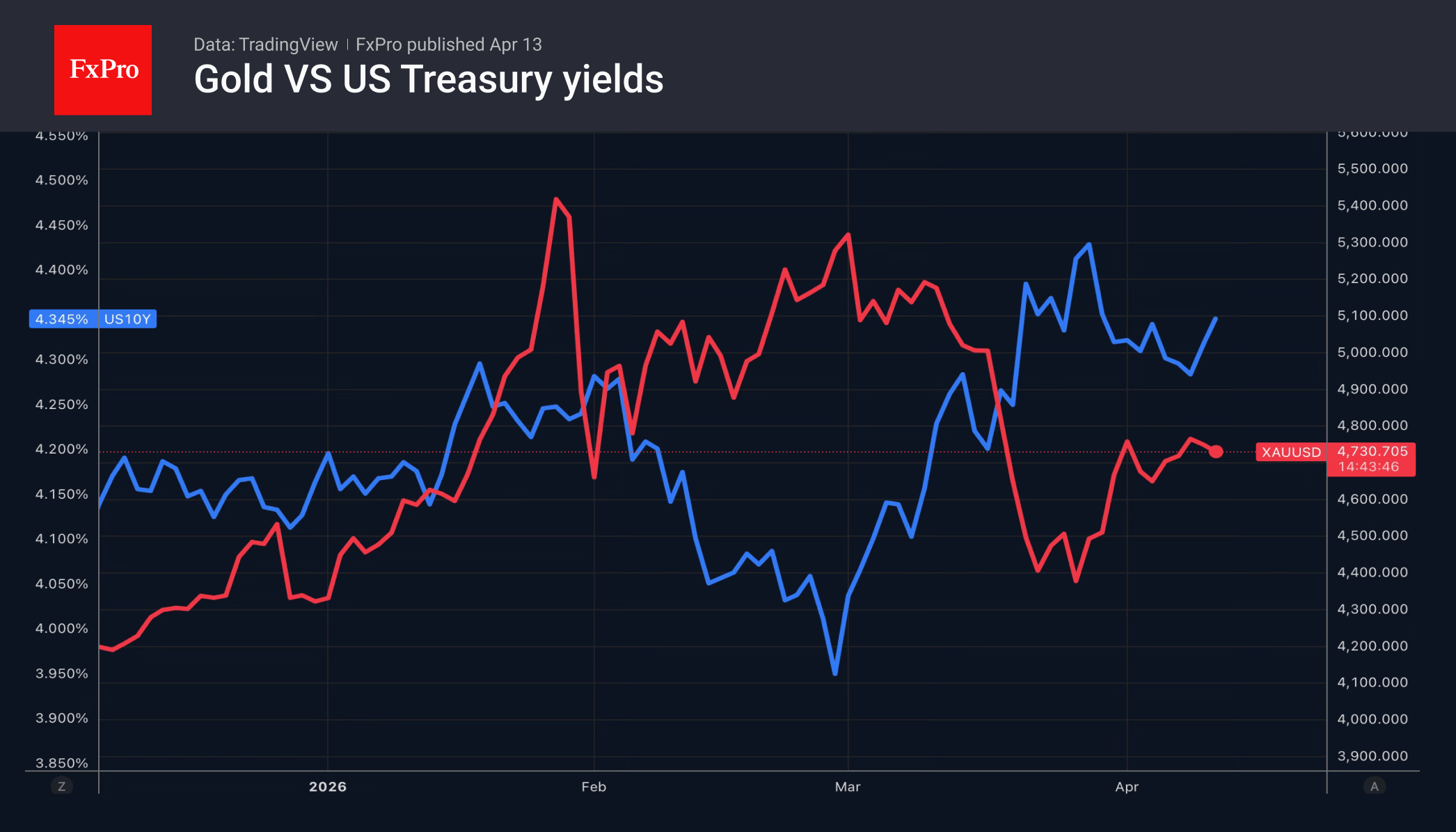
Unsurprisingly, news of the breakdown in US-Iran talks has clipped gold’s wings, with the metal closing last week at $4,750. Monday’s trading opened with a gap down, and the price soon slipped to $4,635, but by the time of writing had recovered nearly $100 from the day’s lows. In recent days, the precious metal has risen on expectations that the Fed will remain passive despite rising inflation, which will lead to a decline in real Treasury yields. The protracted conflict in the Middle East risks changing the rules of the game.





