


- High volatility led to fluctuating ETF flows, with outflows emerging in March
- Total ETF inflows in Q1 were significantly lower than a year earlier
- Elevated prices are weakening jewelry demand
- Geopolitical risks and central bank actions remain key drivers
Strong start followed by corrections
The first quarter in the gold market was marked by high volatility. Prices reached a record high of nearly USD 5,600 per ounce in January, followed by two sharp corrections. These price swings had a clear impact on investor behavior, particularly visible in flows into gold-backed ETFs. After strong inflows in January, February saw a noticeable slowdown, while March brought clear outflows, especially in North America.
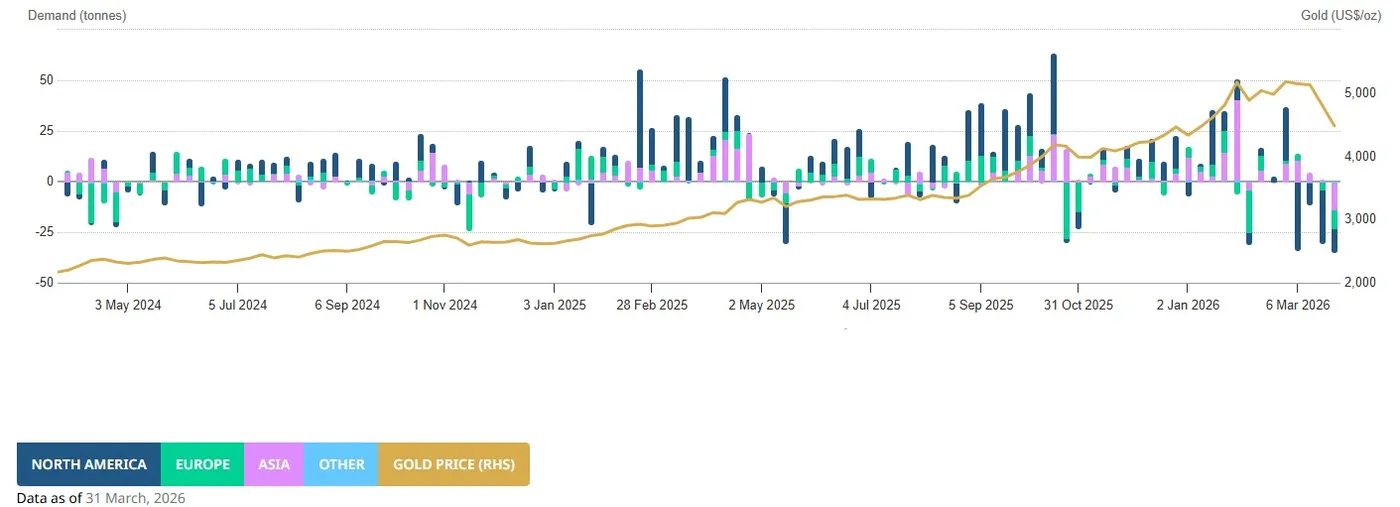
Inflows into gold-backed ETFs, weekly data, source: WGC
Weak overall etf demand
As a result, the entire first quarter ended with only modest net inflows, significantly lower than a year earlier. This may limit overall demand for gold, which in 2025 exceeded 5,000 tonnes and reached a record level, supported largely by strong purchases of bars and coins.
High prices weigh on jewelry demand
Elevated price levels are beginning to negatively affect jewelry demand. Gold is currently trading around USD 4,700 per ounce, well above the 2025 average, reducing consumer interest in this segment.
Central banks remain a key factor
Central bank activity continues to play an important role. For instance, the Turkish central bank was forced to significantly reduce its gold reserves in March to support its domestic currency amid tensions related to the conflict with Iran.
Medium-term outlook remains positive
Despite short-term weakness in physical demand, the medium-term outlook for gold remains favorable. Elevated geopolitical uncertainty and expectations of a more accommodative Federal Reserve policy could support further price increases in the coming months.
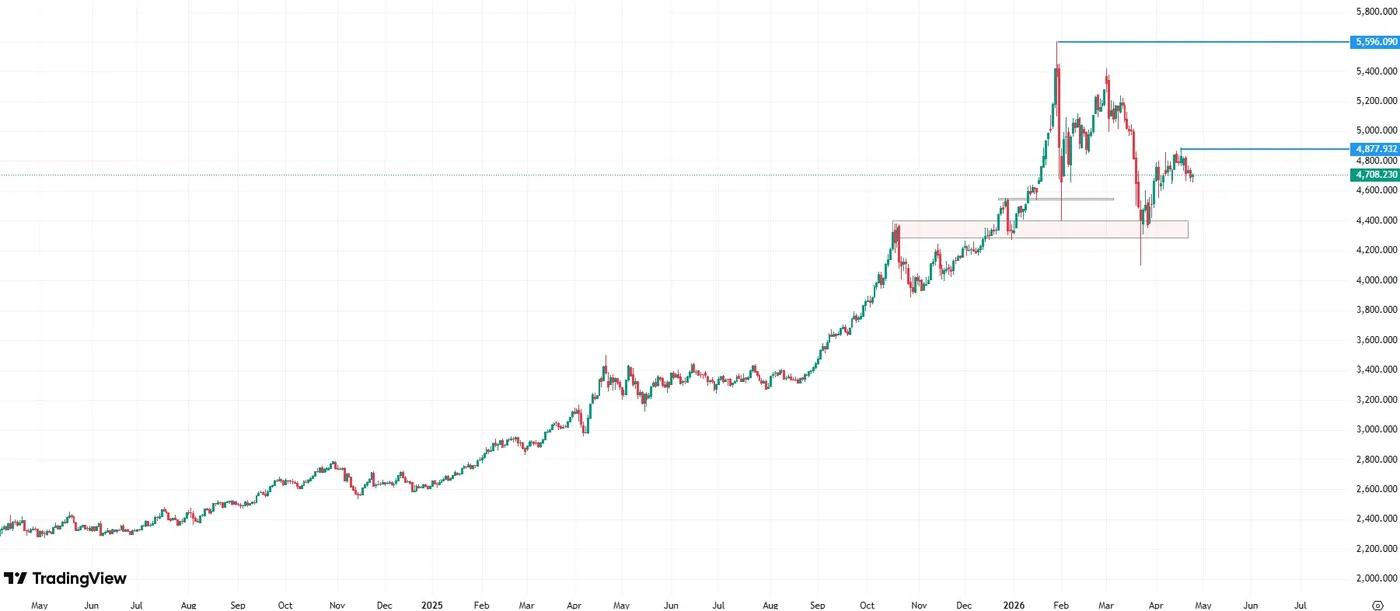
Gold chart (CFD), daily data, source: Tradingview





