- Expectations of signals regarding an ECB rate hike are supporting EURUSD.
- Miscommunication by the Bank of Japan will lead to a rise in USDJPY.
The US dollar initially rose at the start of the week, following oil prices, but quickly turned lower, losing a quarter of a per cent against a basket of major currencies since the start of the day. This week, markets are awaiting Congress’s confirmation of Kevin Warsh as Fed Chair, an acceleration in European inflation and hawkish rhetoric from the ECB. With additional support from risk appetite, as evidenced by the rally in key indices, this will be sufficient to drive euro growth.
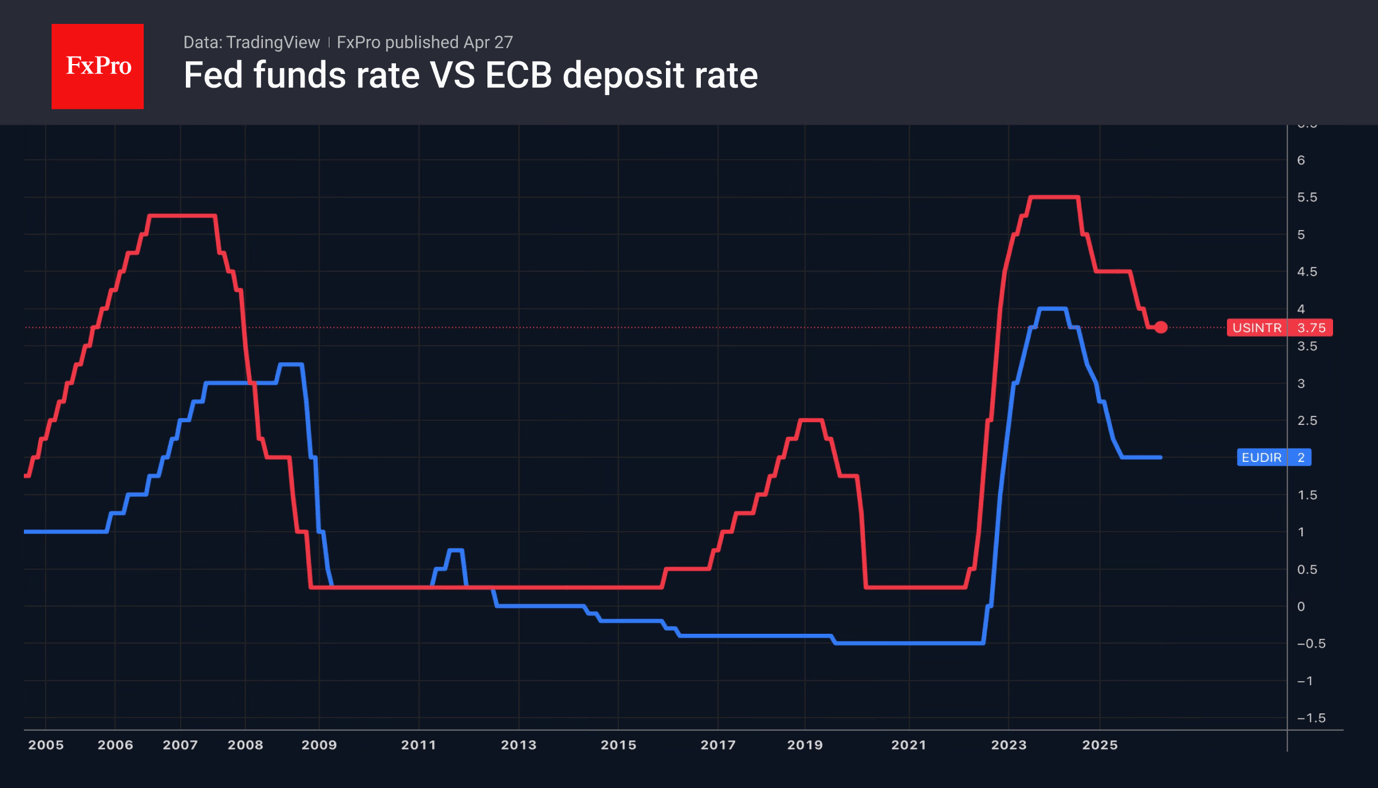
The US Department of Justice is closing its criminal investigation into Powell, and Senator Tom Tillis is ready to back Warsh’s nomination for the post of Fed Chair. With 13 of 24 Republican votes, the central bank will have a new leader by mid-May. For his part, Warsh is firmly convinced that inflation will slow in the long term, although he has also stated that he would not cut rates at Donald Trump’s request.
With a firmer basis for the appointment of the new Fed chair, markets are beginning to price in a more dovish monetary policy stance. Bloomberg experts forecast that the Fed will cut rates twice in the next 12 months – in October 2026 and March 2027. However, the new chair could accelerate this process, which is why we are seeing increased pressure on the US dollar.
Experts surveyed by Bloomberg expect the ECB to make significant decisions as early as June. And specifically, the focus is on policy tightening. Markets could receive an early signal on rate hikes as soon as this week, helping investors prepare. Expectations of hawkish rhetoric from Christine Lagarde and divergence in monetary policy are firmly supporting the EURUSD pair. Even more so as European inflation is forecast to accelerate to 3% in April, the highest level since 2022.
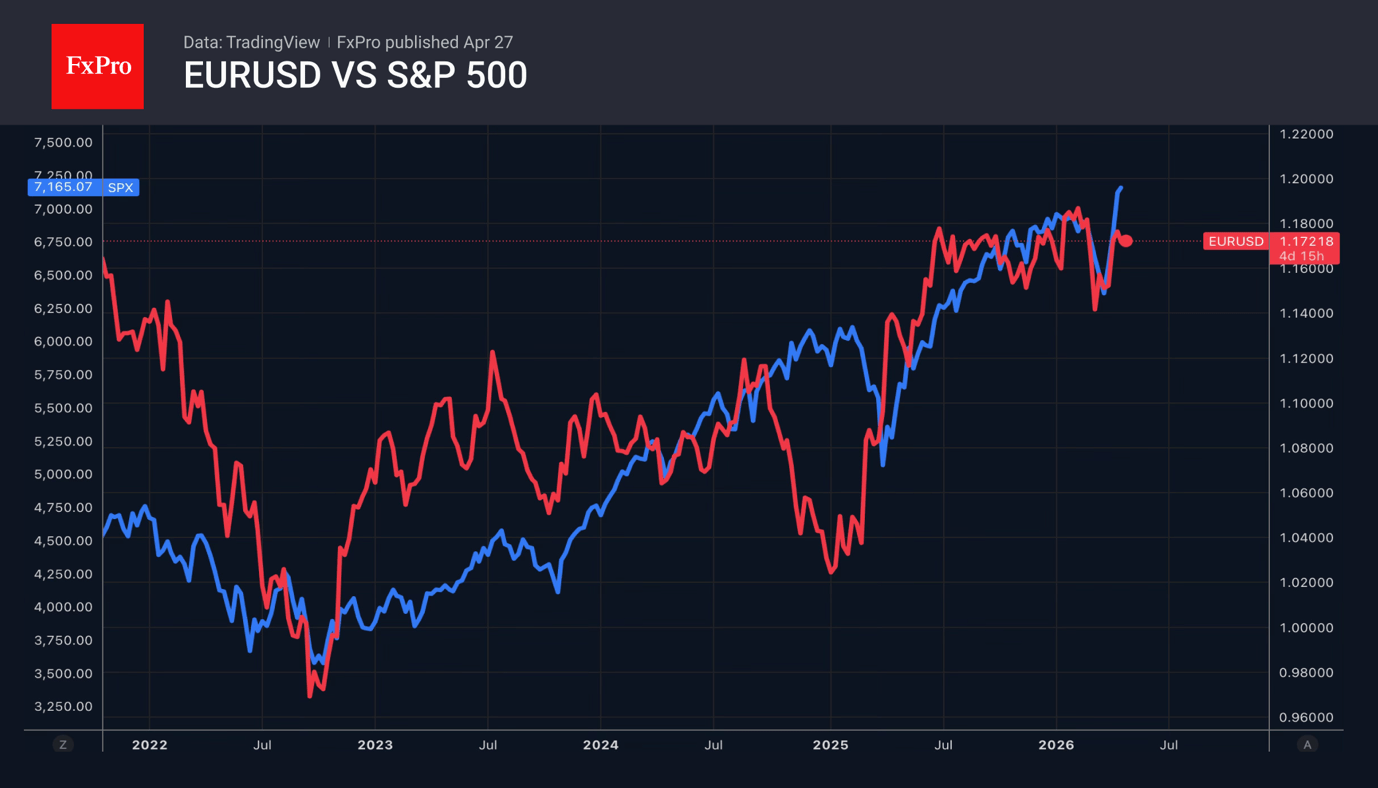
The US dollar, as a safe-haven asset, is under pressure from the ongoing rally in US stock indices, which are once again capitalising on artificial intelligence. The S&P 500 and EURUSD are finding support as investors gradually grow accustomed to the geopolitical conflict in the Middle East and believe a continuation of the ceasefire is more likely than escalation.
Signals of rate hikes are likely to come not only from the ECB but also from the Bank of Japan. Bloomberg experts also favour the resumption of the BoJ’s monetary tightening cycle in June. However, if Kazuo Ueda makes any missteps in his communications, USDJPY risks resuming its upward trend.