


- The S&P 500 was spooked by Kimi K3, just as it had been by DeepSeek in the past.
- Investors have turned their backs on the Magnificent Seven and are on the hunt for new stars.
The S&P 500 was down on Thursday and Friday as investors sold off tech shares. The market believes that the massive investments in artificial intelligence will become increasingly difficult to justify against a backdrop of intensifying competition and falling service costs. The catalyst for the slump was the news that the Chinese firm Moonshot had unveiled the Kimi K3 model, which outperforms its American counterparts. This immediately brought to mind the events of early 2025, when DeepSeek sent the broad stock index tumbling.
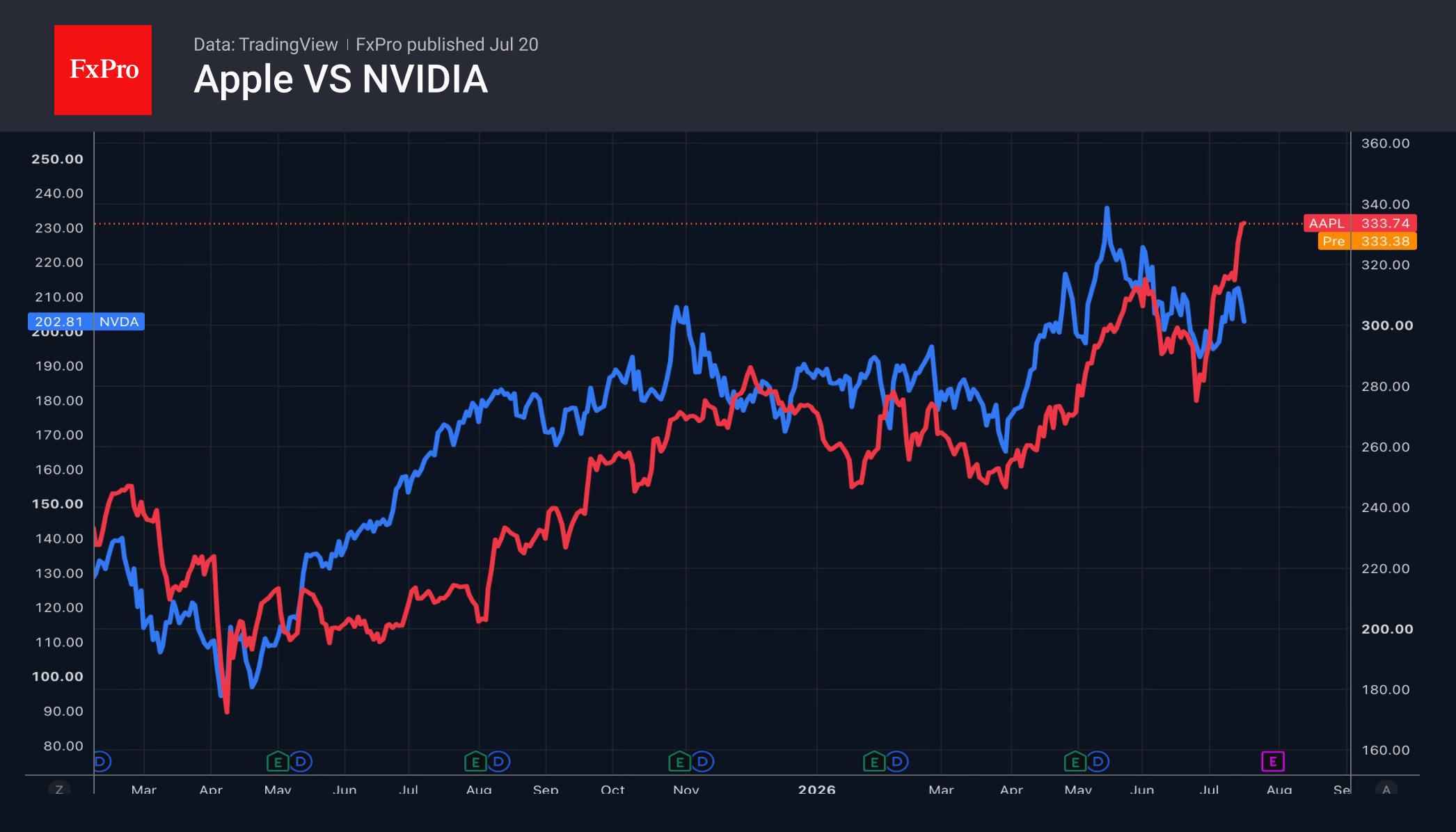
Investors’ long-standing love affair with the Magnificent Seven is drawing to a close. The group of companies has barely grown since the start of the year and is underperforming both the S&P 500 and the weighted average index. The latter hit a record high during trading on 16 July, indicating broad-based market growth. It is no longer dependent on a handful of issuers. At the same time, Apple’s market value briefly exceeded NVIDIA’s market capitalisation, making the iPhone manufacturer the world’s most valuable company again.
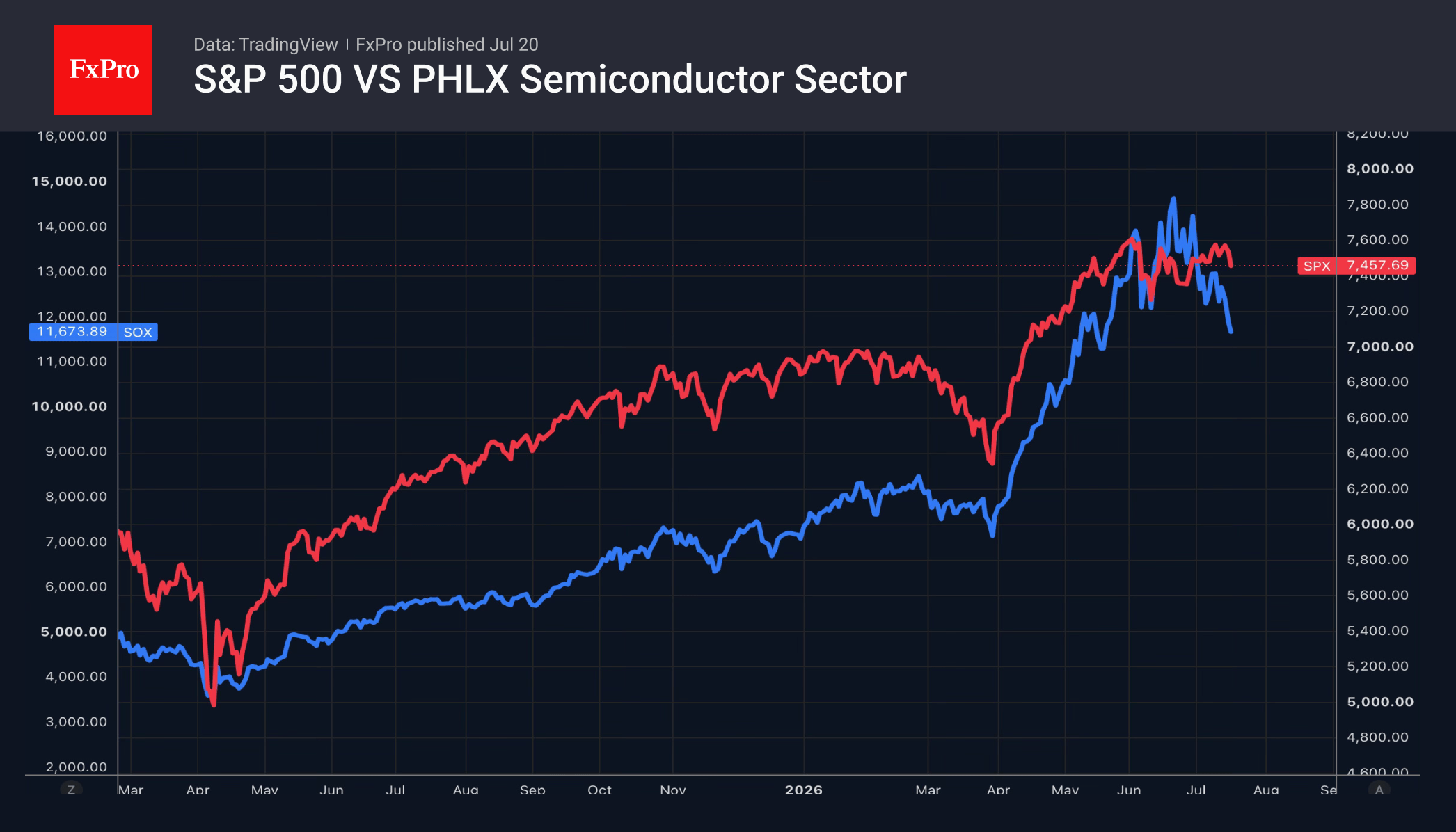
Investors are on the lookout for new stars and are actively rotating their portfolios. Moreover, there is a massive withdrawal of funds from chip manufacturers’ shares, which have replaced the ‘Magnificent Seven’. This has led to a 20% fall in the SOX semiconductor index from its record highs, signalling a shift to a bear market.
Investors are eagerly awaiting second-quarter corporate results to confirm or dispel their fears regarding the poor performance of technology companies. This week, up to 24 July, attention will focus on results from General Motors, Alphabet, IBM, Tesla, Intel and Verizon.
The market is focused on finding new stars and is reacting little to other factors. For instance, the resurgence of conflict in the Middle East and the associated rise in oil prices have had no impact on the S&P 500. Yet this could lead to prolonged inflation and a rise in the federal funds rate, both of which are bearish factors for the stock market.
Investors have also ignored the slowdown in consumer and producer prices, which has reduced the likelihood of further Fed rate hikes and, in theory, should have helped the broad stock index. At present, however, the index is driven solely by sector rotation.
The FxPro Analyst Team





