


- The dollar is rising in line with Treasury yields and the likelihood of interest rate hikes.
- The yen is falling on the back of weak fundamentals and has no hope of currency intervention.
The US dollar has reached a six-week high and is once again trading near 17-month highs, thanks to US business activity strengthening to its highest level since 2021 and growing support from FOMC members for a rate rise, pushing 10-year Treasury yields to 19-year highs. Further momentum came from a nearly 6.5% rise in oil prices following Iran’s statement at the UN that it would not open the Strait of Hormuz until all sanctions against the country had been lifted.
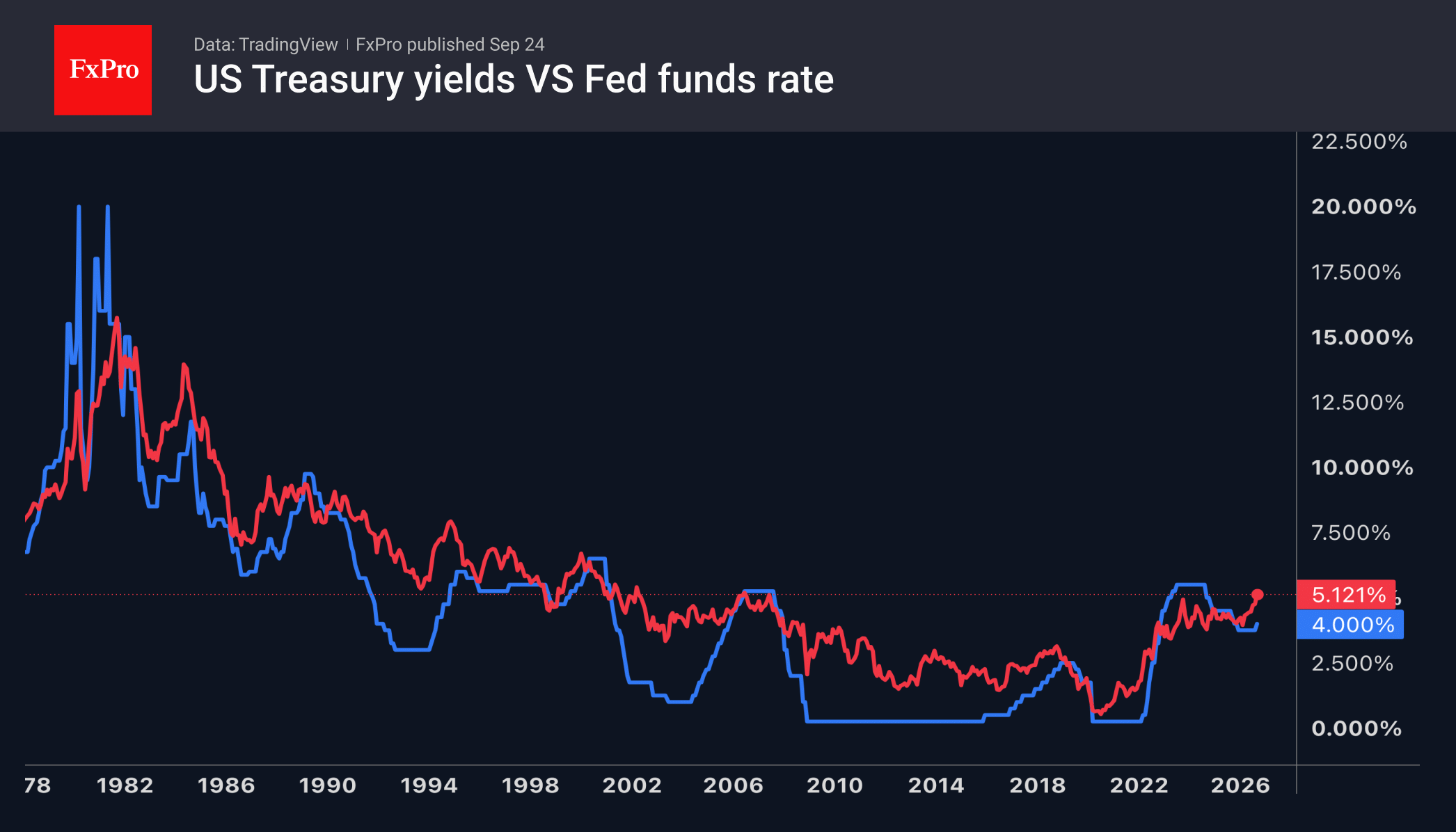
Purchasing managers are painting a picture that justifies the start of the Fed’s rate-hiking cycle: employment is improving, and output prices are rising. Meanwhile, the strengthening of the PMI suggests that US GDP growth will be faster than experts had previously forecast. The economy can withstand higher rates, and the futures market has now fully priced in a rise to 4.75%–5.00% over the next year, up from the current 3.75%–4.00%. The probability of two rate rises by the end of this year has jumped from 40% to 58% over the past week. The likelihood of a further rise in October has risen from 54% to 70%.
Rising Treasury yields are pushing up the USDJPY. It has reached 158.6. The pair’s exchange rate correlates directly with the level of anxiety amongst forex traders. At the start of the month, large-scale interventions took place near 160; at the end of July, the market reversed course as it approached 164. There are fears of a new wave of coordinated currency interventions by Japan and the US, particularly as Treasury Secretary Bessent, who is focused on reducing the trade deficit, is surely watching the dollar’s current strengthening with displeasure.
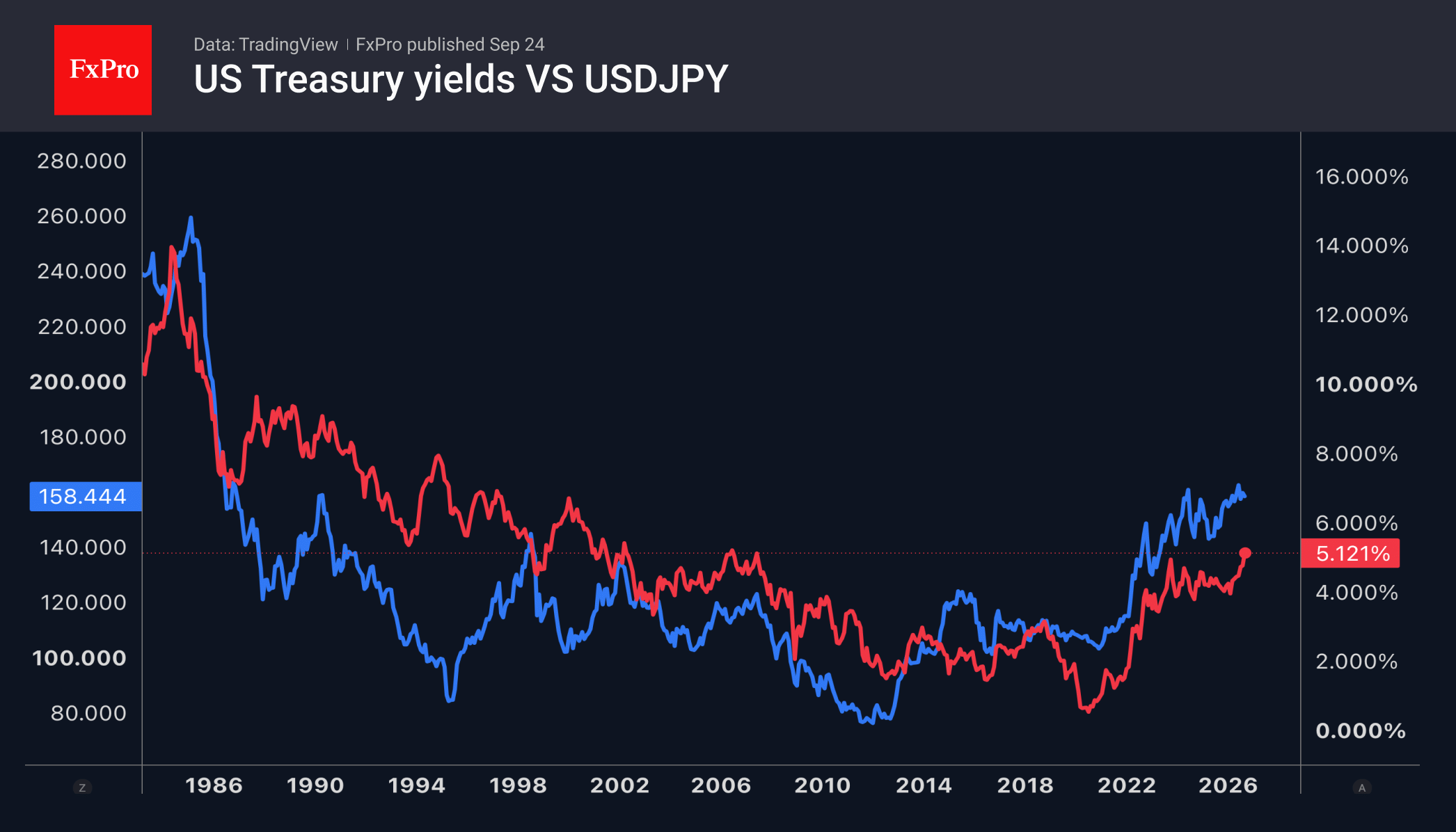
However, speculators are taking heart from the fact that the Treasury’s buyback of government bonds is not halting the rise in yields, and that previous interventions in the forex market have not broken the back of the USDJPY bulls. Relatively restrained moves are providing entry points at slightly more attractive prices. Fundamental conditions remain unchanged, and the interest rate differential between central banks is still wide. Interventions require a ‘shock and awe’ scale of operation: it is necessary to highlight the problem, demonstrate bottomless pockets and full commitment to action, and often, too, to demonstrate this in practice, as the ECB and the SNB did 10–15 years ago. For the first time since July 2025, hedge funds have become net buyers of the yen, and the way is now clear for them to return to short positions.
To break the upward trend in USDJPY, the Bank of Japan will need to tighten policy more quickly, but to begin with, the scale of interventions seen in 2022–2024 may be required. Currently, the presence of ‘dissenters’ signals the BoJ’s cautious stance, whilst an increasing number of FOMC officials are calling for a rise in the federal funds rate, and rising Treasury yields are drawing capital away from competing developed markets.
The FxPro Analyst Team





