Canada’s economy entered Q3 on a softer footing as activity stalled in July. Statistics Canada’s advance estimates pointed to a 0.2% increase in August, but declining home resales already released and weaker manufacturing, wholesale shipments expected next Thursday suggest a more modest increase.
New U.S. Section 338 tariffs targeting 5% of imports from Canada came into effect on August 22. Trade data on Tuesday showed meaningful front-loading, with U.S. buyers driving a 40% year-over-year surge in their imports of products on the tariff lists from Canada that month.
Those products, however, map to a relatively small share of the Canadian economy. As a result, front-loading widened trade surplus but is not expected to have meaningfully added to production.
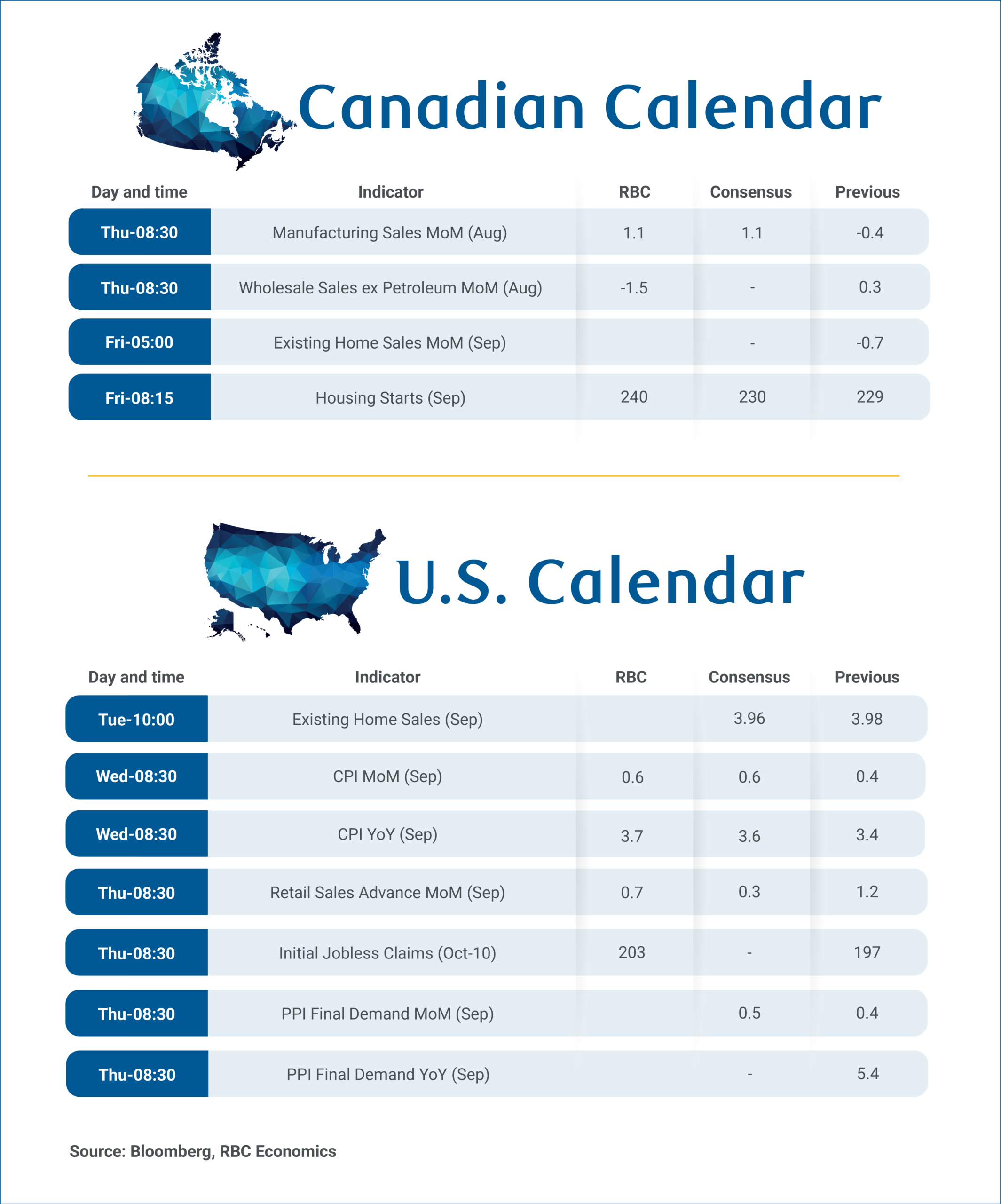
StatsCan’s advance estimate for August manufacturing sales was up a nominal 1.1%, which rounds to little change in volumes once a similar 1.3% increase in industrial manufacturing prices is taken into account. Wholesale trade also looked softer, with the advance estimate pointing to a 1.5% decline in core sales from July, dragged down by lower shipments of agricultural supplies, vehicles, and parts.
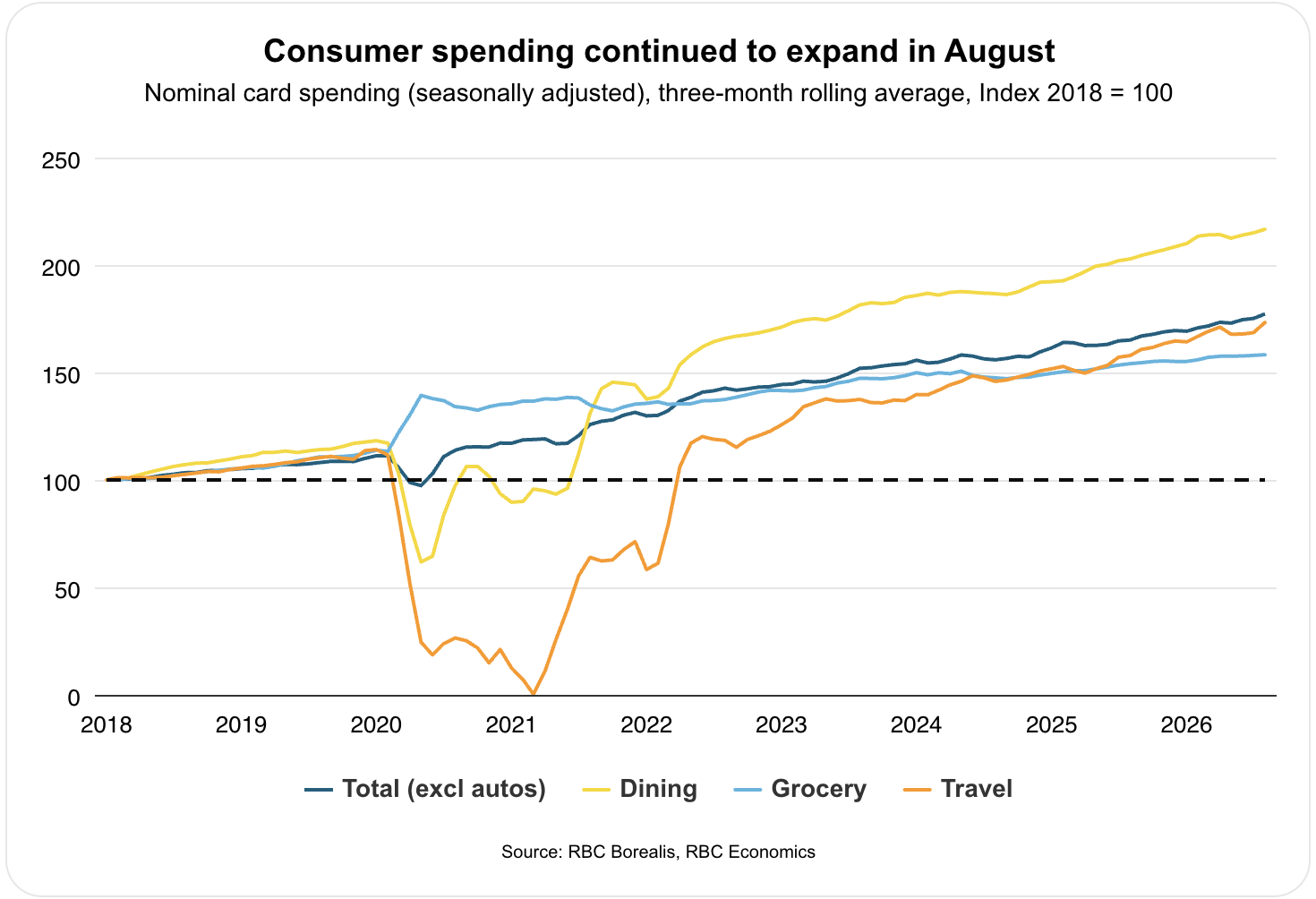
Those alongside weaker home resale activity are suggesting downside risks to StatCan’s preliminary estimate for a 0.2% rise in real GDP in August — although retail activity likely remained strong and offered some offset, consistent with robust purchases in our RBC cardholder spending tracking.
A more modest rebound in August GDP growth should still leave growth in the third quarter around our 1.8% annualized estimate. That is softer than the 3.2% real GDP growth in Q2 but still solid.
Also in focus next week are September home resale data on Thursday, which are expected to show further softening after most early regional real estate boards reports pointed to weaker activity that month. Housing starts data on Friday, however, are expected to show some stabilization, with starts rising to 240,000 annualized units in September, up roughly 5% from August.
Overall, we continue to expect a gradual and uneven recovery in Canada’s housing market, as affordability relief tapers off on the back of stabilizing home prices and rising bond yields.
On Tuesday, we expect the headline U.S. Consumer Price Index to rise 0.6% in September from rising energy prices, leaving year-over-year at 3.7%, up from 3.4% in August. Core inflation excluding food and energy is expected to have risen 0.2% from August or 2.5% year-over-year, with details closely watched for signs of potential passthrough from existing tariffs and/or elevated energy inflation.