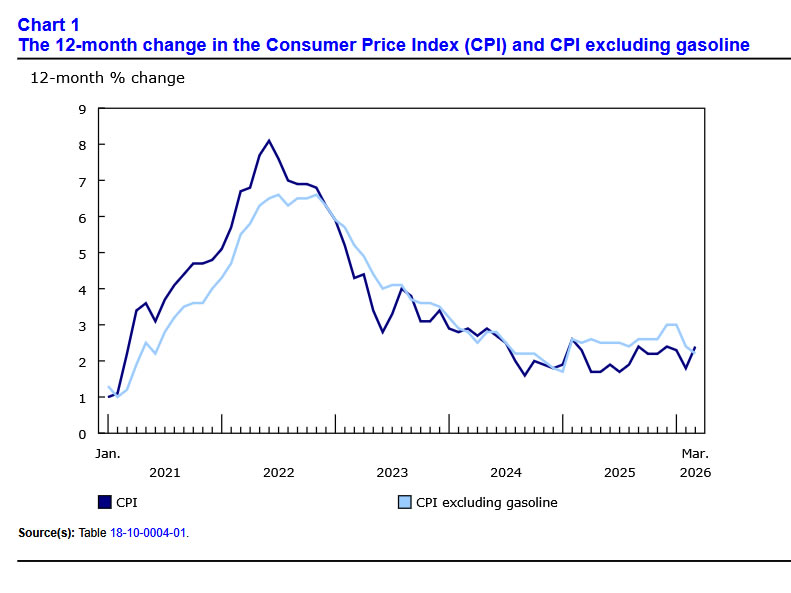
Canada’s inflation picked up in March as CPI rose from 1.8% yoy to 2.4% yoy, driven largely by a sharp rebound in energy prices, but missed expectation of 2.5% yoy. On a monthly basis, CPI increased 0.9% mom, also below expectation of 1.1% mom. Higher fuel costs linked to the Middle East conflict pushed headline inflation higher, offsetting softer underlying trends.
Energy was the dominant driver. Prices surged 13.1% mom on the month and swung from a -9.3% yoy decline in February to a 3.9% yoy increase. Gasoline led the move, rising 21.2% mom—the largest monthly increase on record—and 5.9% yoy, reflecting supply disruptions tied to geopolitical tensions. Fuel oil and other fuels also climbed sharply, up 26.1% yoy.
Despite the headline strength, underlying inflation pressures showed signs of easing. Excluding gasoline, CPI rose at a slower annual pace of 2.2% yoy compared with 2.4% yoy previously, suggesting that domestic price momentum remains contained for now. Even so, CPI common—a key core measure—accelerated from 2.4% yoy to 2.6% yoy, indicating that some underlying pressures are still building.
The data reinforces a familiar pattern: energy shocks are pushing headline inflation higher, while core trends remain more mixed. For the Bank of Canada, the key question will be whether these price increases begin to spill over into broader components. If second-round effects emerge, the current balance could shift quickly, complicating the policy outlook in the months ahead.