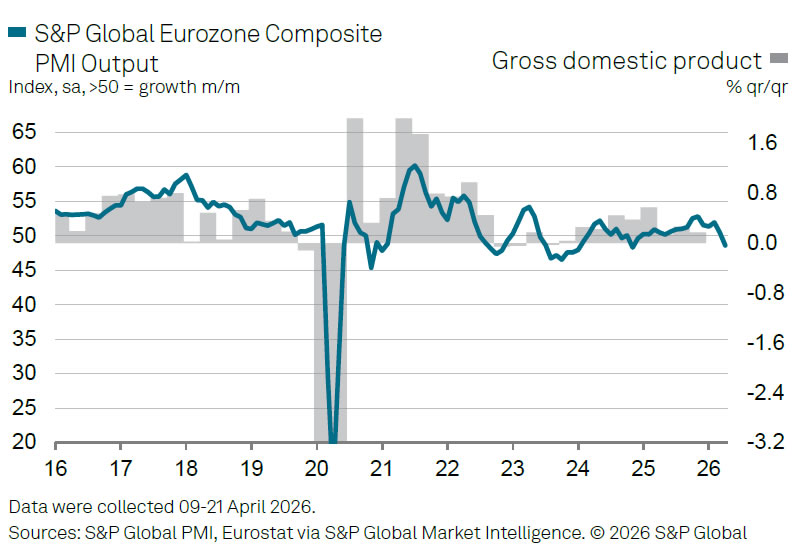
Eurozone business activity slipped back into contraction in April, with the Flash Composite PMI dropping from 50.7 to 48.6, a 17-month low. The downturn was driven primarily by a sharp deterioration in the services sector, where activity fell from 50.2 to 47.4, the weakest level in over five years.
The services slump highlights the growing impact of the Middle East conflict on the broader economy. Rising energy costs and supply disruptions are weighing heavily on demand, pushing activity down at a pace not seen since the pandemic period. The data suggests the Eurozone is already entering a mild contraction, with GDP expected to shrink slightly by -0.1% in the second quarter.
In contrast, manufacturing continues to show resilience. Output edged up from 52.0 to 52.2, while the headline PMI rose to from 51.6 52.2, the highest in nearly four years. However, this strength appears less encouraging beneath the surface. Much of the growth is being driven by “stock building” as firms rush to secure inputs ahead of further price increases and supply shortages.
Price pressures are intensifying sharply. Input costs and output prices have surged at the fastest rates since 2000 outside of the pandemic, reflecting higher energy prices and broader commodity inflation.
| Indicator | Apr | Mar |
|---|---|---|
| PMI Composite | 48.6 | 50.7 |
| PMI Services | 47.4 | 50.2 |
| Manufacturing PMI | 52.2 | 51.6 |
| Manufacturing Output | 52.2 | 52.0 |