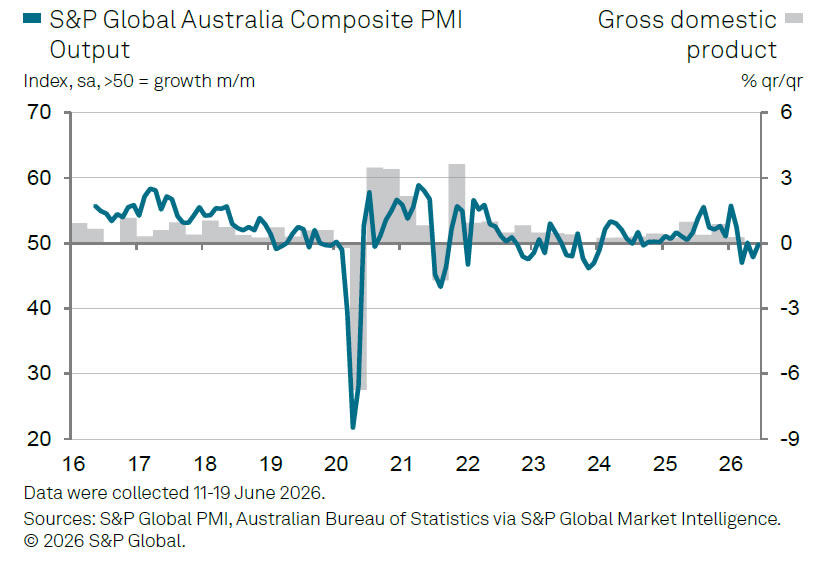
Australia’s private sector showed tentative signs of stabilization in June, with the S&P Global Flash Composite PMI Output Index rising from 48.7 to 49.8. The improvement was driven primarily by services, where the Business Activity Index increased from 48.7 to 49.9. Manufacturing PMI edged up from 50.7 to 51.2. However, manufacturing output remained subdued, slipping slightly from 49.0 to 48.9, highlighting the uneven nature of the recovery.
According to S&P Global’s Andrew Harker, the latest survey paints “a mixed picture of fortunes among the country’s businesses at a time of international turbulence and uncertainty.” Encouragingly, business activity moved closer to stabilization and service providers resumed hiring, helping improve operating capacity. Inflation pressures also showed signs of moderating, even though they remained elevated. Harker noted that lower oil prices following the US-Iran memorandum of understanding could further ease cost pressures, while improved shipping flows through the Strait of Hormuz may help alleviate supply-chain disruptions that have weighed on manufacturers.
However, the survey also revealed persistent weakness beneath the headline improvement. New orders declined again, reflecting ongoing market uncertainty, while business confidence fell to among the lowest levels on record. The findings suggest Australia’s private sector has yet to establish a clear growth trajectory. With activity stabilizing but demand remaining fragile, upcoming inflation and labor market data may prove crucial in determining whether the economy regains momentum or slips back into contraction.
| Indicator | May | June | Change |
|---|---|---|---|
| Composite PMI Output Index | 48.7 | 49.8 | ↑ 1.1 |
| Services PMI Business Activity Index | 48.7 | 49.9 | ↑ 1.2 |
| Manufacturing PMI | 50.7 | 51.2 | ↑ 0.5 |
| Manufacturing PMI Output Index | 49.0 | 48.9 | ↓ 0.1 |