UK private-sector activity accelerated in October, with PMI Composite rising from 52.0 to 53.1, its highest reading in eight months and the fourth consecutive month of expansion. PMI Services improved from 52.1 to 53.1, while PMI Manufacturing increased from 51.9 to 52.8, both exceeding market expectations. Manufacturing output also strengthened from 51.5 to 53.1, marking its fastest expansion in 25 months. The broad-based improvement was supported by a recovery in customer demand, with new orders increasing at their strongest pace since September 2024 across domestic and export markets.
Employment returned to growth for the first time since September 2024, ending two years of private-sector job reductions. The improvement was driven by renewed hiring among service providers, while manufacturers continued to reduce staffing slightly. Companies cited stronger order books, new projects and longer-term expansion plans as factors supporting recruitment, although overall employment growth remained marginal. Some businesses also reported increased demand linked to AI investment and technology services. Nevertheless, hiring remained cautious, with backlogs continuing to decline and weak consumer confidence, geopolitical uncertainty and subdued construction demand still constraining activity.
Meanwhile, input cost inflation accelerated to its fastest pace since June, driven largely by higher energy, raw-material and transportation costs in manufacturing. Supplier delivery times lengthened at their fastest rate since May amid shipping disruptions and shortages of semiconductors and electronic components. However, selling-price inflation eased slightly, indicating that stronger cost pressures were not translating into faster increases in customer charges overall. Business confidence improved modestly but remained below its long-run average. The October survey therefore points to strengthening growth momentum and an encouraging, though tentative, hiring turnaround, while persistent cost pressures and supply-chain constraints continue to complicate the outlook.
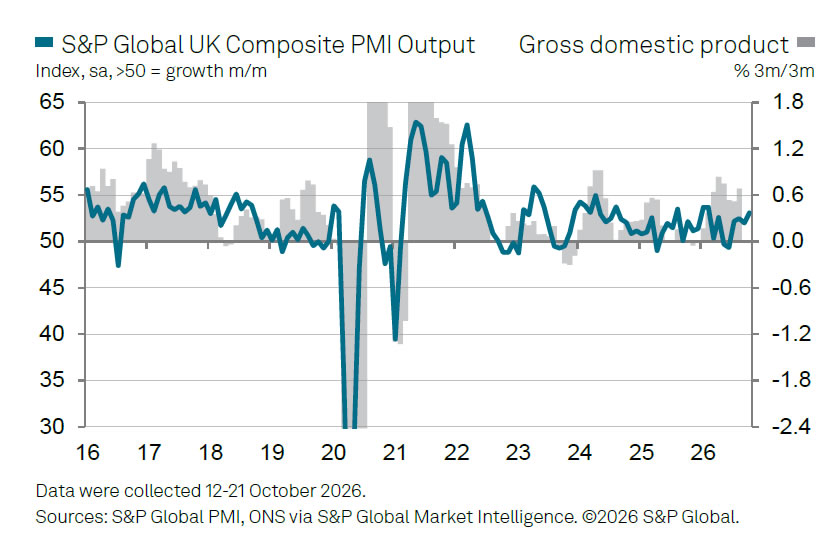
Data Summary
Headline PMI Data
| Indicator | Previous | Expected | Current |
|---|---|---|---|
| PMI Composite | 52.0 | — | 53.1 |
| PMI Manufacturing | 51.9 | 51.8 | 52.8 |
| PMI Services | 52.1 | 51.8 | 53.1 |
| Manufacturing Output | 51.5 | — | 53.1 |
Readings above 50 indicate expansion, while readings below 50 indicate contraction. Survey responses were collected October 12–21.
Additional Survey Details
| Indicator | October Development |
|---|---|
| Private-Sector Output | Fourth consecutive expansion; fastest growth in eight months |
| Manufacturing Output | Strongest expansion in 25 months |
| New Orders | Fastest growth in 25 months |
| Domestic and Export Demand | Both improved |
| Overall Employment | First increase since September 2024 |
| Services Employment | Returned to growth |
| Manufacturing Employment | Slight decline |
| Backlogs of Work | Continued declining, extending a trend of approximately three and a half years |
| Input Cost Inflation | Fastest since June |
| Supplier Delivery Times | Greatest deterioration since May |
| Manufacturing Stocks of Purchases | Fifth consecutive monthly decline |
| Manufacturing Finished-Goods Inventories | Largest decline since June 2025 |
| Selling Price Inflation | Eased slightly |
| Business Confidence | Improved modestly, but remained below long-run average |
Key Takeaways
- UK private-sector growth accelerates to an eight-month high: PMI Composite rose from 52.0 to 53.1, marking the fourth consecutive month of expansion. Both manufacturing and services activity strengthened, indicating broader growth momentum at the start of Q4.
- Manufacturing and services both exceed expectations: PMI Manufacturing increased from 51.9 to 52.8, while PMI Services improved from 52.1 to 53.1. Manufacturing output also accelerated from 51.5 to 53.1, its fastest expansion in 25 months.
- New orders signal stronger underlying demand: Total new business increased at its fastest pace since September 2024, supported by improving domestic and export orders. Some companies reported stronger demand linked to AI investment spending and technology services.
- Employment returns to growth after two years: Private-sector staffing increased for the first time since September 2024, driven by renewed services hiring. Manufacturing employment continued declining slightly, however, leaving the overall increase marginal and the recovery tentative.
- Hiring remains cautious despite improving demand: Businesses continued reporting limited pressure on operating capacity, while backlogs of work declined further. Weak consumer confidence, geopolitical uncertainty and subdued construction demand also remained constraints.
- Manufacturing cost pressures intensify: Input cost inflation accelerated to its fastest pace since June, driven by higher energy, raw-material and transportation expenses. International shipping disruptions and shortages of electronic components contributed to longer supplier delivery times.
- Selling-price inflation moderates despite rising costs: Prices charged to customers increased at a slightly slower pace than in September, indicating that accelerating upstream costs were not accompanied by faster overall selling-price inflation.
- Economic momentum improves, but risks remain: Stronger output, new orders and initial hiring gains suggest a more encouraging start to Q4. Nevertheless, elevated costs, supply-chain constraints and below-average business confidence leave the durability of the improvement uncertain.