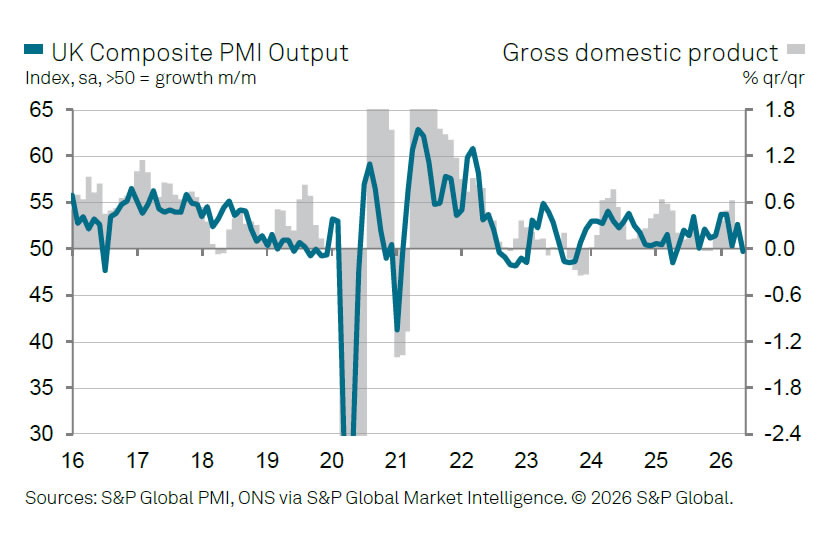
UK service-sector activity slipped into contraction in May for the first time in more than a year, highlighting the growing economic impact of elevated inflation and geopolitical uncertainty. PMI Services (final) fell sharply from 52.7 to 49.3, while PMI Composite dropped from 52.6 to 49.7, marking the first contraction in overall private-sector activity in 13 months and the weakest reading since April 2025.
According to S&P Global’s Tim Moore, subdued business and consumer demand across both domestic and overseas markets weighed heavily on activity. Many firms cited the Middle East conflict as a direct drag on sales pipelines and business prospects. Hospitality and transportation companies reported weaker discretionary spending and sharply rising operating costs, while professional services firms pointed to growing client caution and risk aversion. One notable exception remained technology-related investment spending, which continued to support parts of the services economy.
The survey also highlighted persistent inflation concerns. Moore noted that higher fuel and transportation costs continued to drive strong input-price pressures, with inflation running at levels not seen since the 2022 energy crisis. At the same time, business confidence deteriorated further, falling to its lowest level since the US tariff-related slowdown in April 2025.
| Indicator | April | May | Notes |
|---|---|---|---|
| PMI Services | 52.7 | 49.3 | First contraction since Apr 2025 |
| PMI Composite | 52.6 | 49.7 | First contraction in 13 months |