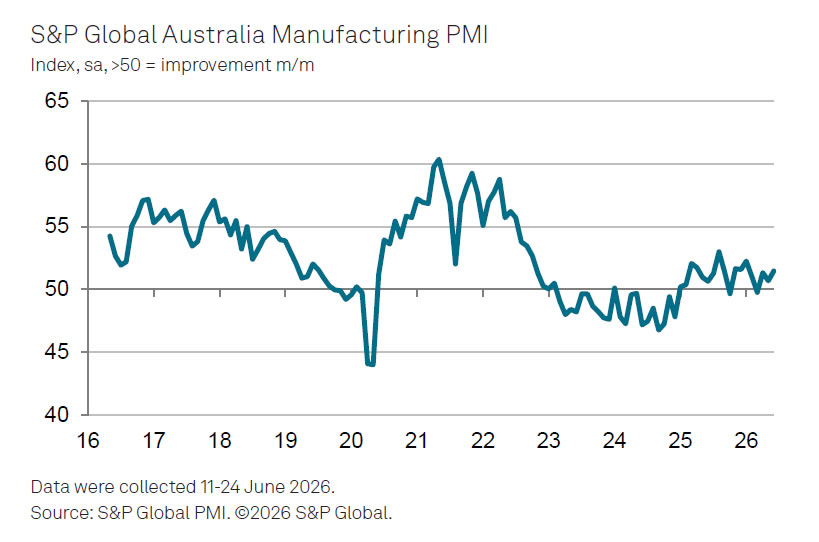
Australia’s manufacturing sector strengthened further in June, with the S&P Global Manufacturing PMI rising from 50.7 to 51.5, marking its third consecutive month above the 50.0 expansion threshold and its highest reading since January. The data suggest factory activity continued to improve despite ongoing geopolitical disruptions affecting global supply chains.
According to S&P Global, the conflict in the Middle East continued to weigh heavily on manufacturers during the month, even after the US and Iran signed a memorandum of understanding aimed at ending hostilities. Economics Director Andrew Harker noted that suppliers’ delivery times “lengthened substantially” and input costs “rose rapidly again.” However, he also pointed out that the increase in selling prices slowed markedly, suggesting inflationary pressures may begin to ease if geopolitical tensions continue to stabilize.
Australian manufacturers also appeared increasingly optimistic about future demand. Firms expanded hiring and increased inventories of purchased inputs to prepare for upcoming projects and to guard against further supply disruptions. Harker said businesses were “well positioned to ramp up production once new orders return to growth,” indicating confidence that activity could strengthen further once supply conditions normalize and demand improves.
| Indicator | Previous | Latest |
|---|---|---|
| Manufacturing PMI | 50.7 | 51.5 |
| Manufacturing Activity | Expansion | Expansion strengthened |
| Supplier Delivery Times | Lengthened | Lengthened substantially |
| Input Costs | Rising | Rose rapidly again |
| Output Price Inflation | Rising | Increase slowed |
| Employment | — | Increased |
| Inventories of Purchases | — | Increased |
| New Orders | Weak | Not yet expanding |