


UK private-sector activity returned to expansion in July, with the Flash Composite PMI rising to 52.1 from 49.3, its highest level in three months. Both manufacturing and services improved, marking the first expansion in overall business activity since April. The survey points to a firmer start to the third quarter, supported by stronger domestic demand and resilient export activity.
Manufacturing remained the standout performer. The Manufacturing Output Index climbed to 53.6 from 52.6, its highest level in 22 months, while the Manufacturing PMI edged up to 52.8 from 52.5. Services also returned to growth, with the Business Activity Index rising to 51.8 from 48.8, helped by warm weather, the FIFA World Cup and stronger domestic tourism. However, S&P Global noted that services growth remained relatively subdued as cost-of-living pressures continued to weigh on household spending, while part of the manufacturing strength reflected precautionary inventory building linked to Middle East-related supply chain disruptions.
The survey also pointed to easing price pressures as lower oil prices during the first half of July helped moderate input costs, reducing immediate pressure on Bank of England to tighten policy further. Nevertheless, inflation remained elevated due to the broader energy shock and supply constraints, while businesses continued to reduce headcount as higher costs weighed on hiring.
Business confidence improved during the survey period as geopolitical tensions temporarily eased, but renewed instability in the Middle East and rising oil prices could yet challenge both the inflation outlook and the durability of the recovery.
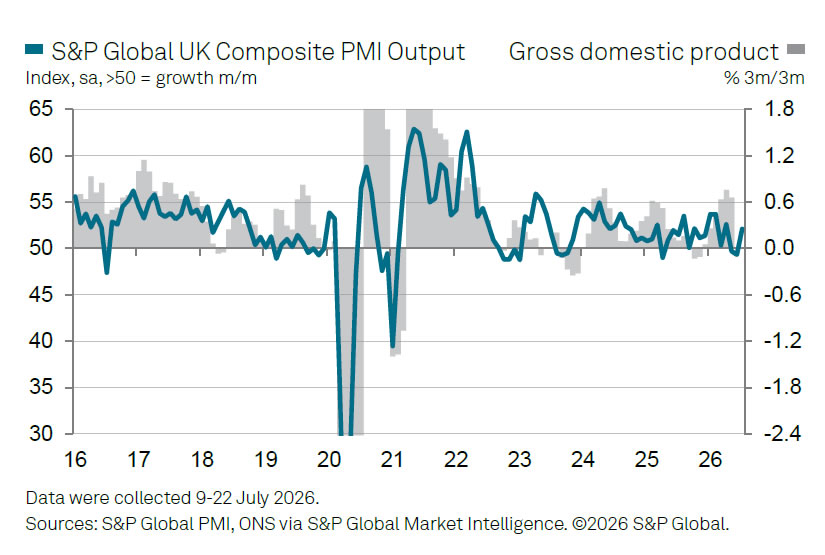
Economic Data
| Component | Current | Previous | Trend |
|---|---|---|---|
| Composite PMI Output | 52.1 | 49.3 | ▲ 3-month high |
| Services PMI Business Activity | 51.8 | 48.8 | ▲ 3-month high |
| Manufacturing Output Index | 53.6 | 52.6 | ▲ 22-month high |
| Manufacturing PMI | 52.8 | 52.5 | ▲ 2-month high |
Key Takeaways
- UK Composite PMI rose from 49.3 to 52.1, moving back into expansion territory for the first time since April and signaling a stronger start to Q3.
- Manufacturing continued to outperform services, with the Manufacturing Output Index climbing to 53.6, its highest level in 22 months.
- Manufacturing PMI edged up from 52.5 to 52.8, indicating factory activity remained firmly in expansion.
- Services returned to growth, with the Business Activity Index rising from 48.8 to 51.8, supported by warm weather, the FIFA World Cup and stronger domestic holiday spending.
- Manufacturing growth was also supported by precautionary inventory building, as firms sought to mitigate supply chain risks linked to the Middle East conflict, raising questions about the sustainability of the recent factory rebound.
- Input cost inflation eased during the first half of July as oil prices softened, reducing immediate pressure on the Bank of England to tighten policy further.
- However, businesses continued to report elevated cost pressures, ongoing job losses and uncertainty related to energy markets and geopolitical tensions.
- Business optimism improved to its highest level in several months, though renewed increases in oil prices and shipping disruptions could quickly reverse recent gains.





