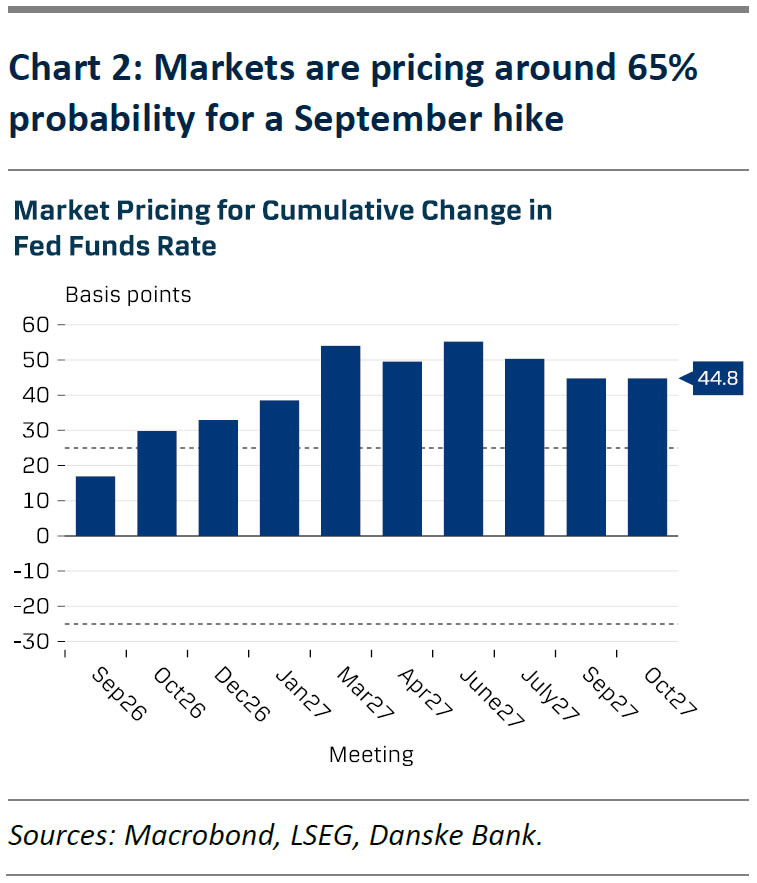
- The Fed maintained its monetary policy unchanged in the July meeting. Three participants voted for a hike in line with our expectations, but importantly, Chair Warsh voted with the majority for unchanged rates.
- Warsh’s tone was noticeably more neutral compared to his previous press conference, as he appeared satisfied with the rise in real rates since mid-June.
- Perhaps counterproductively, markets reversed part of its reaction to the June meeting. UST curve steepened, as markets cut back rate hike expectations and priced higher long-end inflation expectations. EUR/USD rose back above 1.14.
- We still think the macro case for tightening policy later on remains strong, and the market reaction could spark pushback from Fed speakers over coming days. We maintain our call for hikes in December and March meetings
At face value, the FOMC’s 9-3 split decision hold was exactly in line with the expectations we laid out in our Fed preview – a divided hold, 22 July. We also named the three dissenters – Hammack, Logan and Kashkari – as the most likely hawks to support rapid tightening. But the most important part of forward guidance for markets was that Chair Warsh himself voted for an unchanged decision despite his hawkish commitment to price stability heard in June.
Warsh highlighted several times that real rates had risen during the intermeeting period because markets were taking the signal from data, instead of forward guidance. We do not share this view, as data released in late June landed close to expectations, and instead believe markets were reacting to Warsh’s words of a ‘regime shift’. And in this light, tonight’s reaction felt like markets reconsidering their confidence in the Chair’s ability to deliver on the promise of price stability.
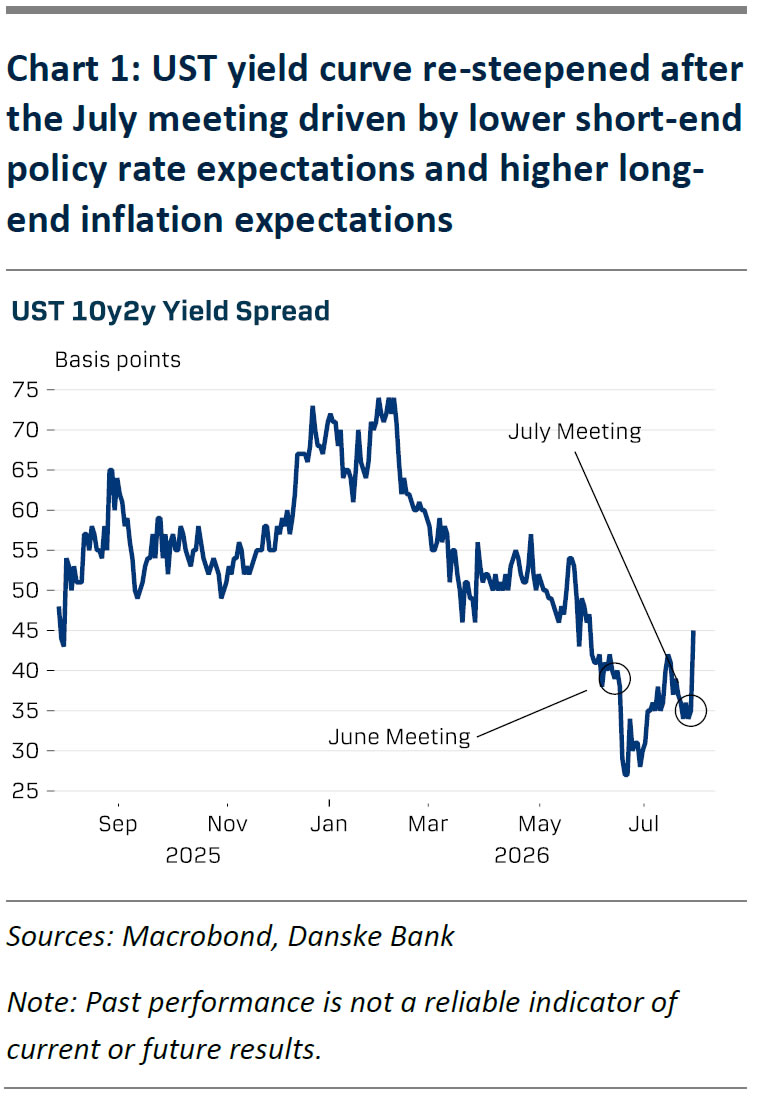
Markets cut back rate hike expectations, with cumulative hike pricing declining from 56bp to 50bp. The implied odds for a September hike declined from near-certain down to 65%. But more importantly, the UST yield curve saw the sharpest steepening since late March in 2s10s terms, as long-end inflation expectations moved higher. The current level (10y inflation swap at just above 2.3%) is by no means concerning as such, but if Warsh was happy with the post-June market reaction, tonight’s shift was likely not what he intended.
We still think the macro case for tightening later on remains solid. AI-capex spending, retightening labour market balance, consumers’ high propensity to spend and supportive fiscal policy all add to risk of persistent inflation. And if financial conditions ease further, Warsh might be forced to reconsider his vote already in September.
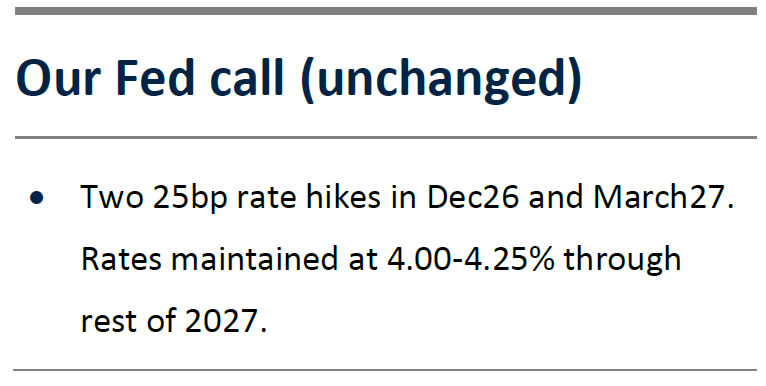
We maintain our base case for 25bp rate hikes in the December and March meetings. Note that the Fed made no changes to its balance sheet policy, and Warsh did not hint of changes before results from the task forces, which are expected by year-end. The NY Fed guides for reserve management purchases of T-bills at USD10bn/month.