


TL;DR: Gold’s rebound has technical and macro confirmation behind it, but whether it extends toward 4,500 depends on three interlinked markets — Brent crude, US Treasury yields, and Fed rate expectations — all still hinging on whether Strait of Hormuz negotiations produce a durable breakthrough.
A Rally That Looks More Convincing Than a Routine Bounce
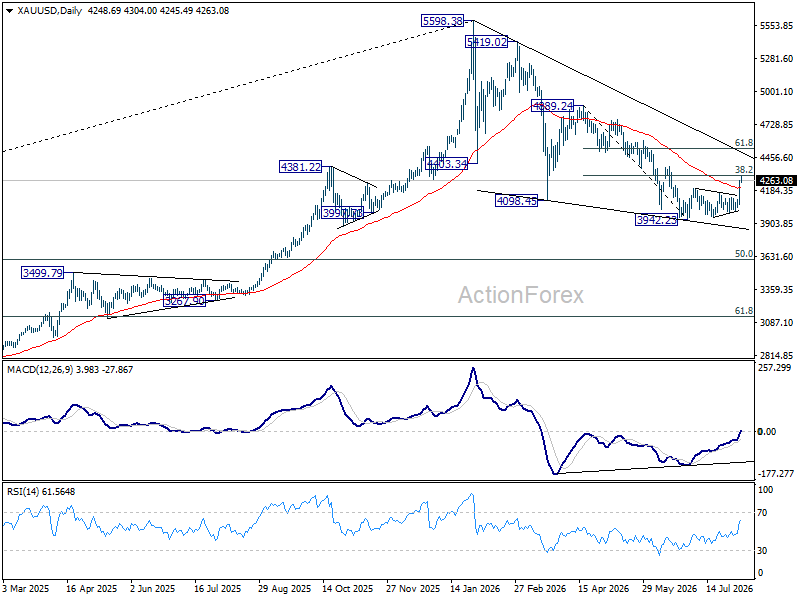
Gold’s rebound has evolved into something more convincing than a routine recovery from oversold conditions. The metal has broken back above its 55-day EMA, the daily MACD has developed bullish divergence, and — perhaps most importantly — markets have rapidly priced out the likelihood of a September Federal Reserve rate hike. Those developments have materially strengthened the case that Gold is attempting a medium-term trend reversal rather than simply retracing part of its decline from the record high.
Yet declaring victory now would be premature. The macro backdrop driving the rally still hinges on one unresolved question: whether optimism surrounding the reopening of the Strait of Hormuz develops into a durable geopolitical breakthrough. Until that question is answered, Gold, Brent crude, and US Treasury yields are likely to remain tightly linked, with all three acting as real-time gauges of market confidence in the same underlying narrative.
The Fed Story Has Already Changed
The immediate catalyst behind Gold’s latest advance has been a sharp shift in interest-rate expectations rather than a sudden surge in safe-haven demand.
Over the past several sessions, investors have increasingly concluded that easing tensions around the Strait of Hormuz could significantly reduce the risk of another energy-driven inflation shock. As Brent crude retreated from above $100 toward the high-$70s, markets rapidly repriced the Fed outlook. The probability of rates remaining unchanged in September has risen sharply, Treasury yields have rolled over from recent highs, and the Dollar has weakened accordingly — together creating a much more supportive environment for non-yielding assets like Gold.
Technically, the improvement is becoming difficult to ignore. Breaking back above the 55-day EMA after forming bullish divergence on the daily MACD suggests downside momentum has been exhausted. Unlike previous rebounds during the decline from the record high, this rally is now receiving confirmation from both technical indicators and a meaningful improvement in the macro backdrop.
Markets Still Aren’t Fully Buying the Hormuz Story
Yet markets are stopping short of fully embracing the optimistic scenario. Headlines continue to suggest negotiations are making progress — Iranian officials confirmed that Tehran and Oman have agreed on the geographical coordinates of a proposed safe shipping route, and reports have indicated negotiations are advancing, with some regional officials suggesting an agreement could come within days.
But the details remain far less reassuring than the headlines imply. Iran continues to describe the discussions as arrangements with Oman rather than direct negotiations with Washington. Reuters reported important issues remain unresolved despite President Donald Trump’s repeated suggestions a deal is close, while CNN quoted Gulf officials assigning only a 50-50 probability that an agreement can be reached by Friday. More importantly, Iran’s Islamic Revolutionary Guard Corps — the organization ultimately responsible for enforcing any agreement — has yet to publicly endorse the proposal.
Just as important is what happens after any agreement is signed. Whether the arrangement proves durable or merely another temporary pause remains an unanswered question, and that uncertainty continues to prevent markets from fully removing the geopolitical risk premium.
Why Brent and Treasury Yields Hold the Key
That uncertainty is visible not only in Gold, but also in Brent crude and the US Treasury market.
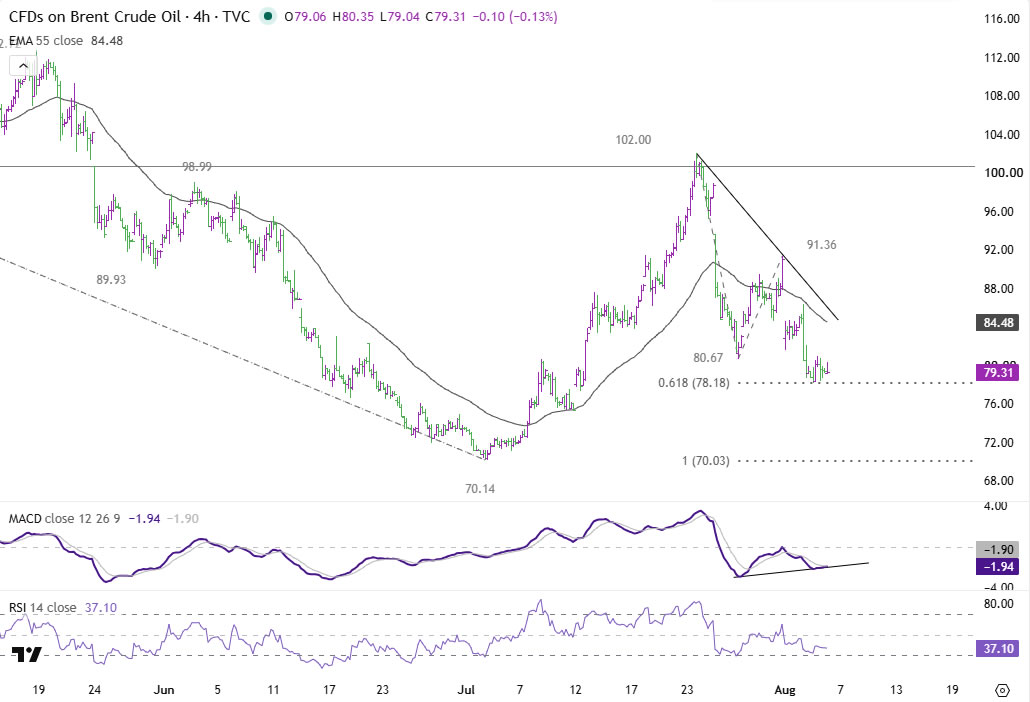
Brent’s decline has already stalled after reaching the 61.8% projection of 102.00 to 80.67 from 91.36, at 78.18, suggesting sellers are becoming more cautious. A decisive break below that level would indicate traders are increasingly convinced a Hormuz agreement is both imminent and sustainable, opening the way toward the 100% projection at 70.03, close to the 70.14 low.
Conversely, a breakdown in talks and a return to conflict could bring a strong rebound in Brent. A decisive break of the 55 4H EMA, now at 84.48, would argue the fall from 102.00 has completed as a correction, setting up another strong rally back toward 102.00.
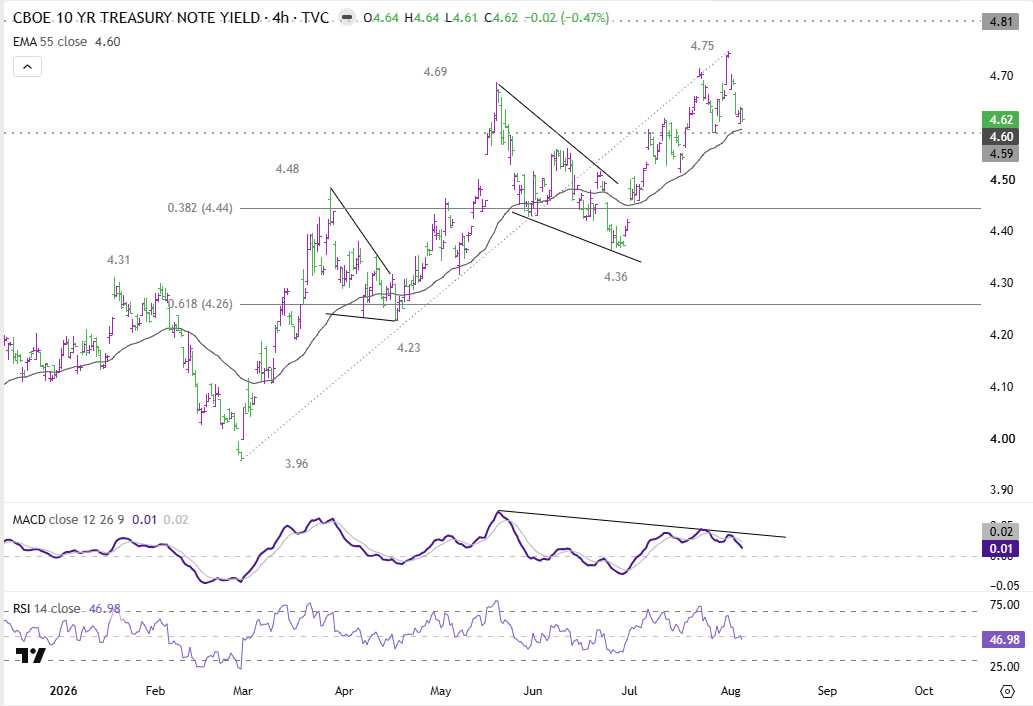
Treasury yields tell a similar story. The US 10-year yield has begun showing bearish divergence on the 4H MACD after topping around 4.75%. A firm break below 4.60%, together with the 55 4H EMA, would confirm markets are becoming increasingly comfortable with the view that lower energy prices will keep the Fed on hold.
Failure to break that support, however, would indicate investors remain unconvinced inflation risks have truly subsided — a strong rebound from 4.60% would keep the near-term rally intact for another rise through 4.75%.
ActionForex’s Technical View on Gold
Gold itself has reached an important technical crossroads. The rally is now close to the 38.2% retracement of 4,889.24 to 3,942.23, at 4,303.98, while the four-hour RSI is already in overbought territory. That combination argues for some consolidation, or even a modest pullback, rather than an immediate continuation higher.
The broader picture, however, has improved substantially. If a credible and durable Hormuz agreement emerges, Brent breaking below 78 and the 10-year Treasury yield falling through 4.60% would provide the macro confirmation Gold bulls have been waiting for. In that environment, the current recovery would likely extend beyond 4,300 toward the medium-term trendline resistance near 4,500, strengthening the case that a genuine trend reversal is underway.
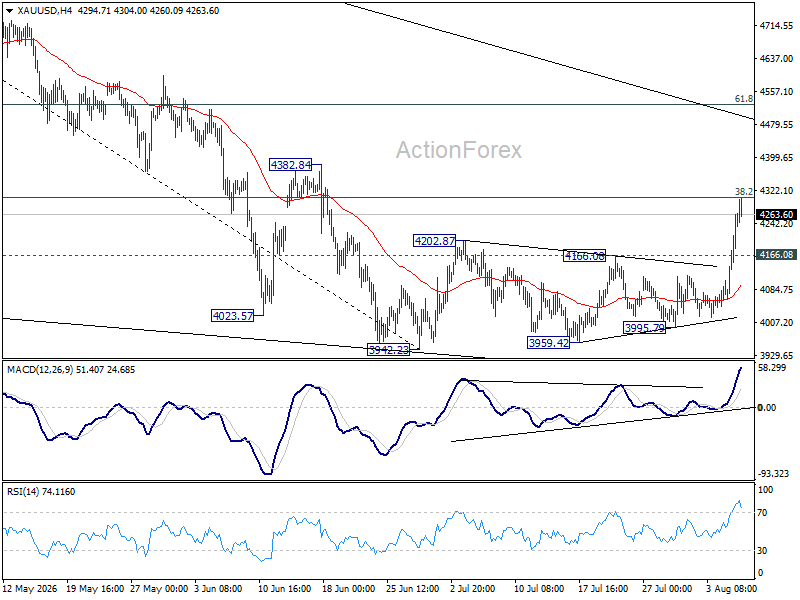
On the other hand, if negotiations falter and geopolitical tensions re-escalate, the recent improvement in Fed expectations could quickly unwind. A break back below 4,166.08, now acting as support, would suggest the latest rally was merely another corrective rebound within the broader downtrend from 4,889.24.
For now, Gold’s technicals are sending an increasingly bullish message — but the final verdict still rests with oil, Treasury yields, and the next chapter of the Hormuz negotiations.
Key Takeaways
- Gold’s rally has both technical confirmation (55-day EMA reclaim, bullish MACD divergence) and macro support (fading September Fed hike odds), distinguishing it from prior failed rebounds.
- Gulf officials assign only a 50-50 probability of a Hormuz agreement by Friday, and Iran’s Revolutionary Guard Corps has yet to endorse any proposal, keeping a geopolitical risk premium intact.
- Brent’s decline has stalled at 78.18; a break below opens 70.03, while a break of 84.48 resistance would instead point to a rebound back toward 102.00.
- The 10-year Treasury yield breaking below 4.60% would confirm markets are comfortable with a Fed on hold; failure to break it risks a rebound toward 4.75%.
- A durable Hormuz deal with Brent below 78 and yields below 4.60% could extend Gold’s rally toward 4,500; a break below 4,166.08 would instead signal the rally was only corrective.





