- The US Treasury is defending bond yields.
- The dovish Fed is weakening the dollar.
The US dollar has plummeted to its lowest level since May following the Treasury’s decision to increase its long-term bond buybacks from $2 billion to $4 billion from 9 September. This has led to a fall in Treasury yields and is reminiscent of Japan’s currency intervention practices. The markets realised that a yield of 5.3% on 30-year bonds is a pain threshold for the Treasury, just as 164 on USDJPY is for Tokyo. The parallels do not end there.
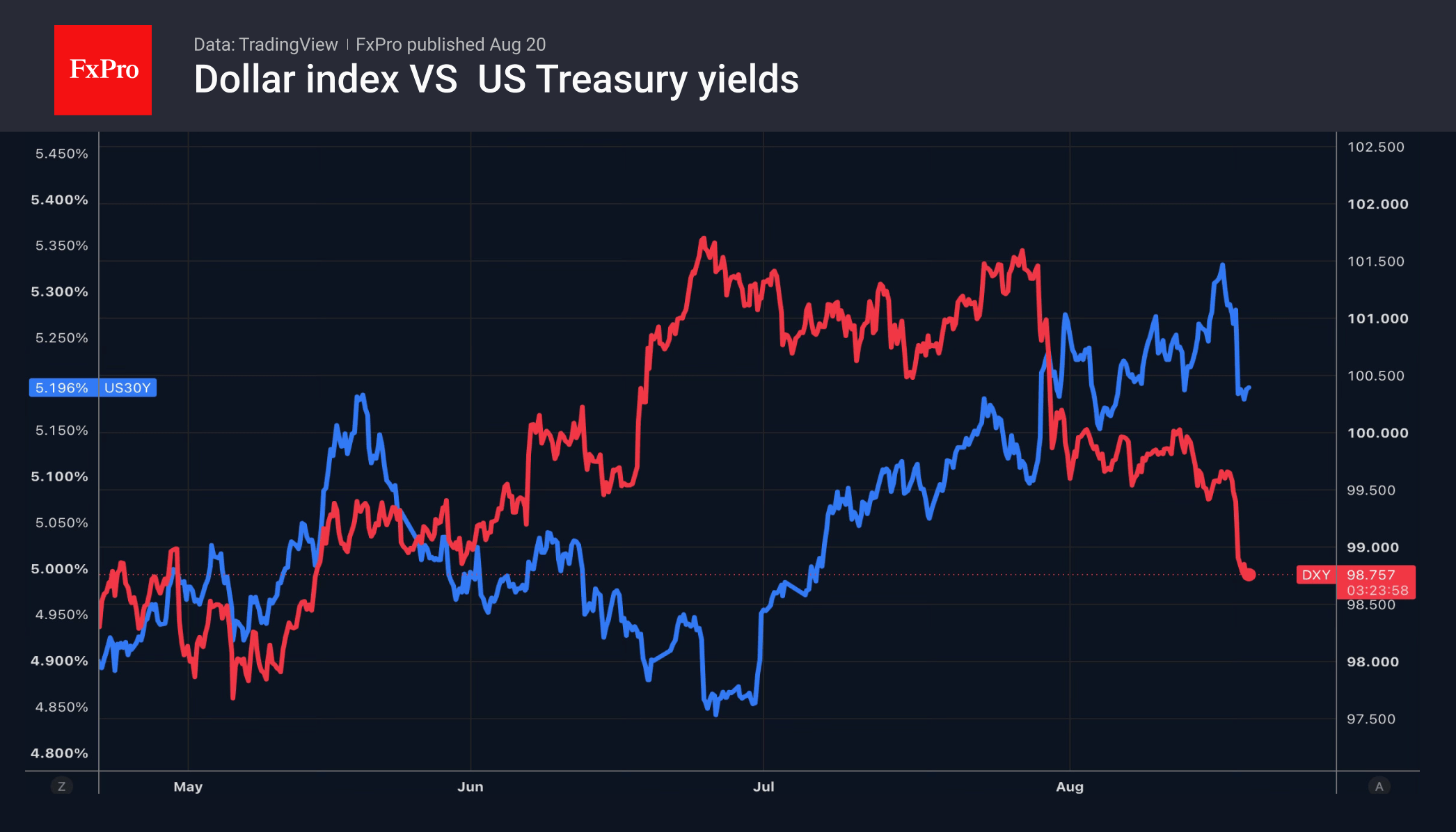
From a fundamental perspective, the US dollar’s fall against the yen is unjustified, as the wide interest rate differential between the Fed and the BoJ means the yen is being actively sold as a funding currency in carry trades. Tokyo is forced to seize the right moment and spend money to dampen the bulls’ enthusiasm for USDJPY. The US Treasury is also having to go against the fundamentals. The rally in Treasury yields is driven not only by fiscal stimulus and a widening budget deficit. Debt yields are also influenced by geopolitics and competition from artificial intelligence.
Hyperscalers are raising funds to finance AI-related projects by issuing corporate bonds. For example, the interest rates on Alphabet’s debt securities maturing in 2075 stand at around 6.8%. The appeal of such assets is drawing money away from the US debt market. Treasuries are being sold off, pushing up their yields.
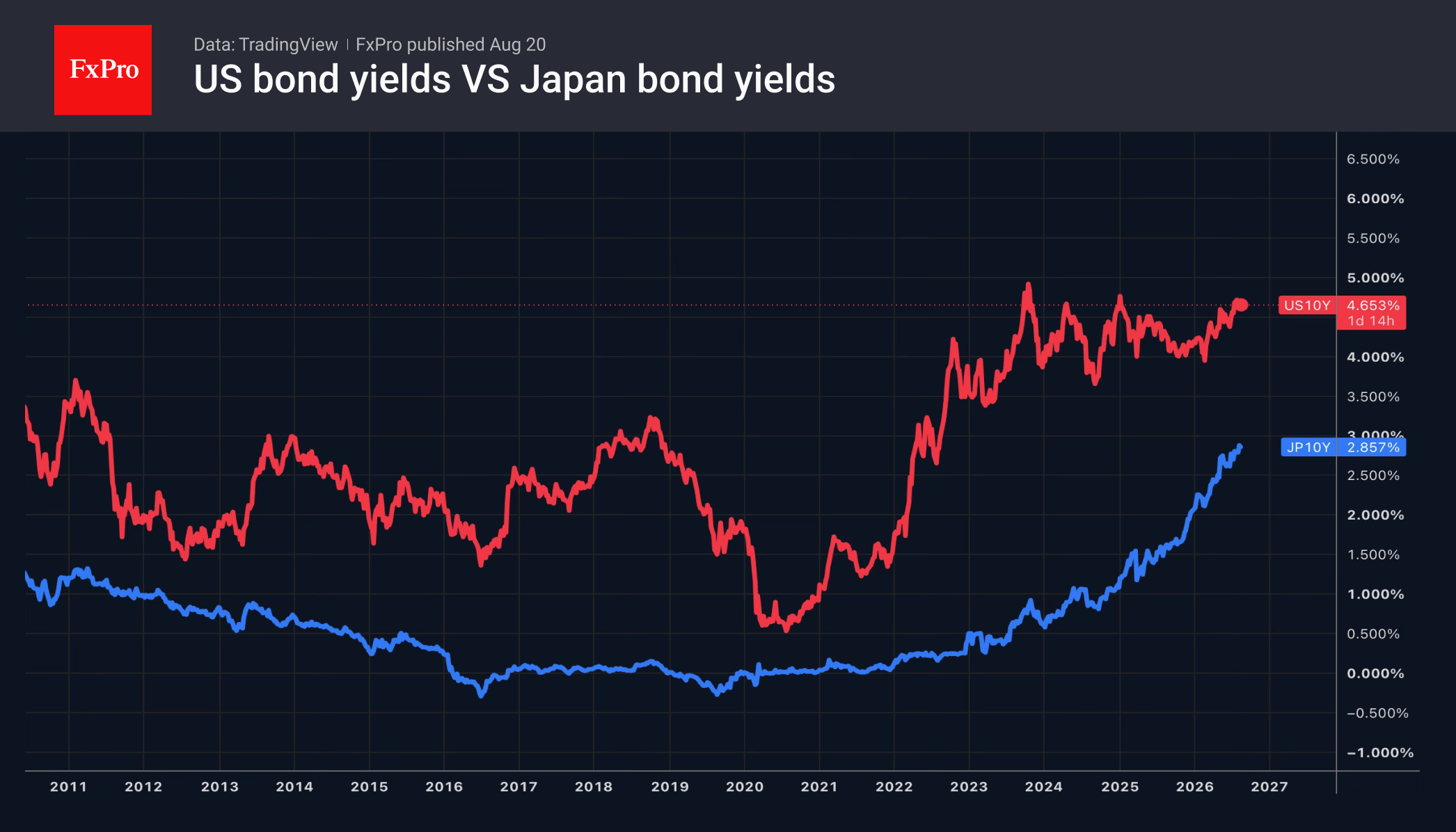
In the forex market, there is a view that, without support from the Bank of Japan, the gains made by bears on USDJPY through coordinated currency intervention cannot be sustained. In other words, the BoJ must accelerate its monetary tightening by raising the overnight rate every three months rather than every six months. Or signal its intention to raise it significantly above current levels, at least to 2.5%.
In the case of the Fed, there is a clear contradiction. The minutes of the July FOMC meeting showed that an increasing number of officials are prepared to vote in favour of tightening monetary policy. The document’s tone can be described as hawkish. Conversely, for the US dollar to weaken, the central bank must be reluctant to raise rates. At the same time, Citigroup believes that the main cost of the Treasury’s attempts to control bond yields is a weaker dollar.
The FxPro Analyst Team