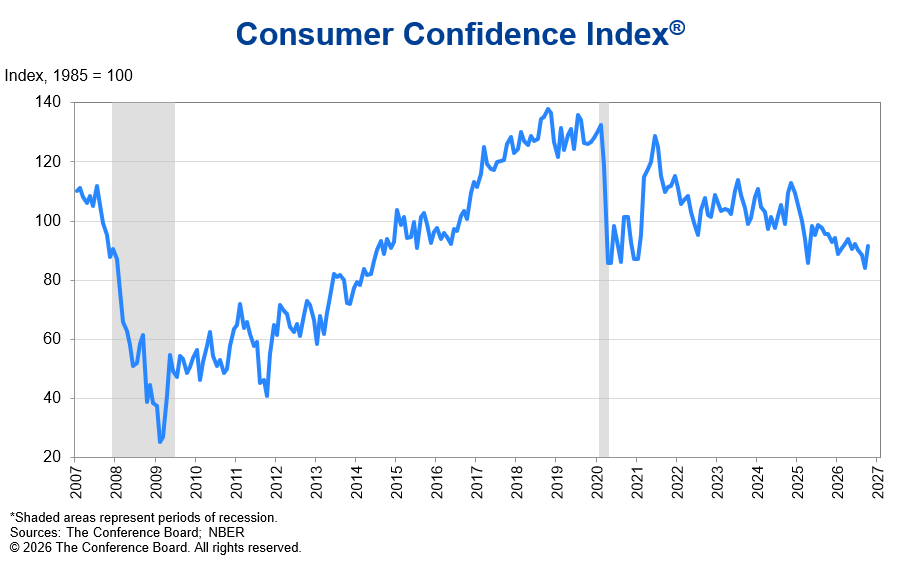
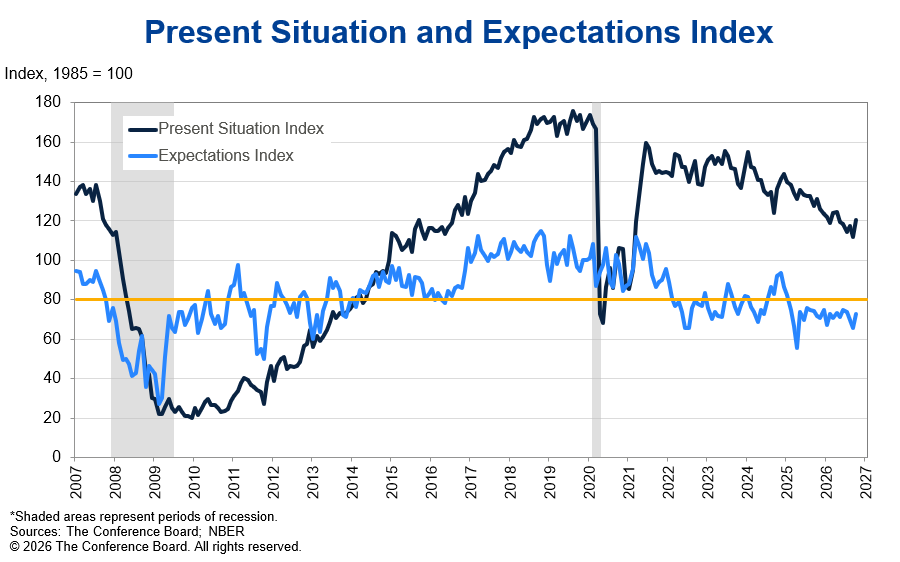
US Conference Board Consumer Confidence Index jumped from 84.2 to 91.7 in October, substantially exceeding market expectations of 81.2 and recovering to its June level. The 7.5-point increase reflected improvements in both current economic assessments and expectations for the coming six months. Present Situation Index climbed from 111.8 to 120.4, while Expectations Index recovered from 65.7 to 72.6, partially reversing three consecutive monthly declines. However, expectations remained subdued despite the strong headline rebound, suggesting that consumers are becoming less pessimistic rather than decisively more optimistic about the economic outlook.
Consumers reported improving business and labour-market conditions. Net assessments of current business conditions rose by 4.8 percentage points to +3.6%, while the labour-market differential, measuring the share reporting jobs as plentiful minus those finding them hard to get, increased from +2.9% to +5.3%. Expectations for future business conditions, employment and household incomes also improved, although the first two remained negative on a net basis. The Conference Board noted that the confidence rebound coincided with easing retail gasoline prices between September and October. Nevertheless, the longer-term downward trend in confidence remained intact, with persistent inflation and elevated living costs continuing to weigh on household sentiment.
Despite the improvement in confidence, consumers became more cautious about future spending. Purchase intentions for durable goods declined across categories, while planned services spending generally weakened, including hotels, airfare and vacations. The share planning a vacation over the next six months fell from 44.2% to 43.3%. Average 12-month inflation expectations eased but remained elevated at 5.8%, with consumers continuing to express frustration over food, energy and other living costs. The divergence between stronger confidence and weaker spending intentions suggests that improving perceptions of the economy have yet to translate into a greater willingness to spend, leaving the outlook for discretionary consumption uncertain.
Data Summary
US Conference Board Consumer Confidence — October 2026
| Indicator | September | October |
|---|---|---|
| Consumer Confidence Index | 84.2 | 91.7 |
| Present Situation Index | 111.8 | 120.4 |
| Expectations Index | 65.7 | 72.6 |
| Labour Market Differential | +2.9% | +5.3% |
| Average 12-Month Inflation Expectations | — | 5.8% |
| Vacation Plans (Next Six Months) | 44.2% | 43.3% |
Headline consensus: 81.2, compared with the actual 91.7, representing a 10.5-point upside surprise.
Key Takeaways
- Consumer confidence rebounds sharply: The headline index surged from 84.2 to 91.7, exceeding expectations of 81.2 and returning to its June level. Both current assessments and future expectations improved.
- Present conditions strengthen: Present Situation Index climbed from 111.8 to 120.4, supported by more favourable business conditions and labour-market perceptions.
- Expectations recover but remain subdued: Expectations Index rose from 65.7 to 72.6, partially reversing three consecutive monthly declines. However, it remained below 80, suggesting persistent concerns about the economic outlook.
- Labour-market perceptions improve: The labour-market differential increased from +2.9% to +5.3%, as the share reporting jobs as plentiful rose from 24.3% to 26.7%.
- Inflation continues to constrain households: Average 12-month inflation expectations eased to 5.8%, but consumers remained concerned about elevated food, energy and other living costs.
- Spending intentions weaken despite stronger confidence: Planned purchases of durable goods and spending on most services categories declined. Vacation intentions slipped from 44.2% to 43.3%, highlighting continued caution over discretionary expenditure.
- Sentiment recovery has yet to translate into spending plans: The divergence between improving confidence and weakening purchase intentions suggests that consumers feel better about economic conditions without becoming more willing to increase discretionary spending.