


TL;DR: A weaker Dollar usually lifts Gold and Silver, but this week’s decline is being driven by fading Fed hike bets and a stock rally rather than falling real yields or safe-haven demand — leaving precious metals without their usual tailwind.
Why the Usual Dollar-Gold Relationship Isn’t Holding
A weaker Dollar is usually regarded as a straightforward bullish signal for Gold and Silver. This week has been a timely reminder that the relationship is far more complicated. The Dollar has fallen broadly, with EUR/USD gaining around 1.3% for the week so far, yet the rebound in precious metals has been comparatively subdued.
Rather than confirming the familiar inverse Dollar-Gold relationship, the latest price action highlights a more important point: Gold and Silver respond not to the Dollar itself, but to the forces driving the Dollar.
What Kind of Dollar Weakness Actually Matters
The key lies in understanding what kind of Dollar weakness the market is experiencing. Gold and Silver typically perform best when the Dollar is pressured by fear — during financial crises, recession fears, or aggressive declines in real interest rates. In those environments, a weaker Dollar and stronger safe-haven demand reinforce each other, often producing powerful rallies in precious metals.
This week’s price action, however, has been driven by almost the opposite set of forces.
Why the Dollar Actually Fell This Week
The Dollar has softened because markets are becoming less convinced the Federal Reserve needs to tighten policy again in the near term. Wednesday’s FOMC meeting was interpreted as patient rather than urgent, despite three policymakers dissenting in favor of an immediate rate hike, and that view was reinforced by Thursday’s weaker-than-expected second-quarter GDP report and another cooling reading on core PCE inflation.
At the same time, risk-on sentiment staged a massive return. Microsoft’s blockbuster earnings and stronger cloud growth triggered a more than 15% rally in the stock, helping propel the NASDAQ up 2.78% and the Dow 1.19% on Thursday. Optimism spilled into Asia, where the KOSPI surged 17.91%. Rather than rotating into defensive assets, investors have been rotating into equities.
Why This Distinction Matters for Precious Metals
That distinction explains why Gold and Silver have struggled to capitalize on the weaker Dollar. Precious metals don’t trade against the Dollar in isolation; they trade primarily off real interest rates and demand for protection. The Dollar often serves as a convenient proxy because it usually moves alongside US real yields.
When real yields fall, the Dollar weakens and the opportunity cost of holding non-yielding assets declines, creating a powerful tailwind for Gold. Likewise, when markets become anxious, both the Dollar and Gold often benefit from safe-haven demand, though Gold can outperform if falling yields dominate. Those overlapping relationships are why the inverse Dollar-Gold correlation has become conventional wisdom.
Why Those Relationships Have Diverged This Week
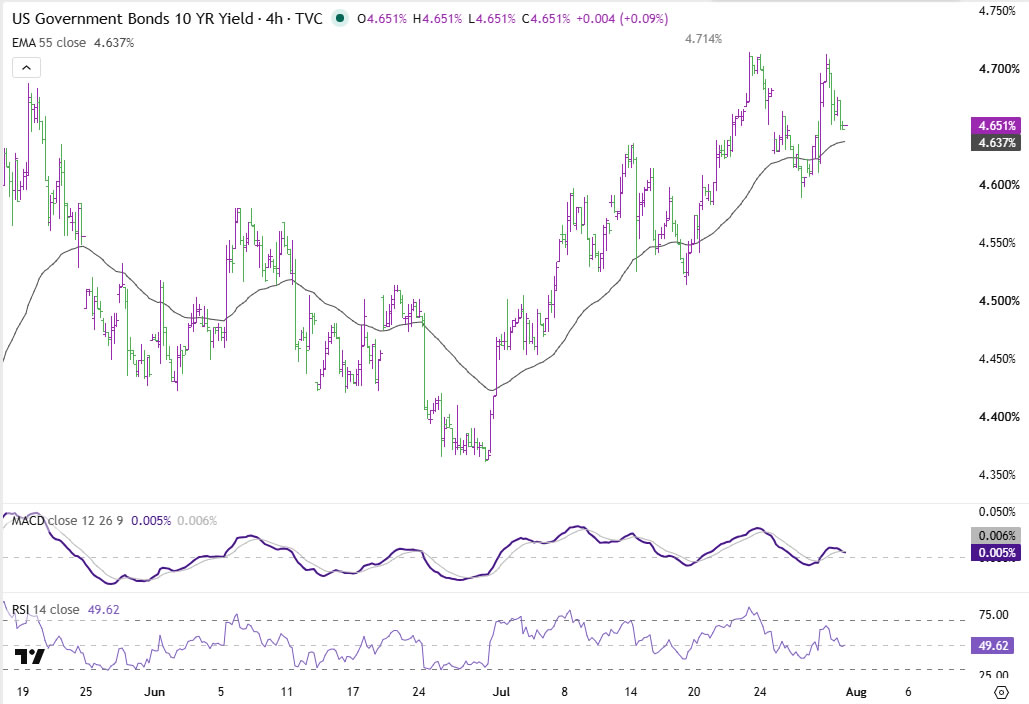
This week, however, those relationships have diverged. Treasury markets have remained remarkably stable, with the 10-year yield holding comfortably within its recent 4.6%–4.7% range instead of falling alongside the Dollar. Without a meaningful decline in real yields, Gold has lost one of its most important fundamental supports.
At the same time, surging equity markets have reduced the need for portfolio hedges, weakening safe-haven demand. As a result, the weaker Dollar has provided only a modest lift, while the absence of lower real yields and the strength of risk appetite have prevented Gold and Silver from mounting the kind of breakout investors often associate with broad Dollar weakness.
ActionForex’s Technical View on Gold and Silver
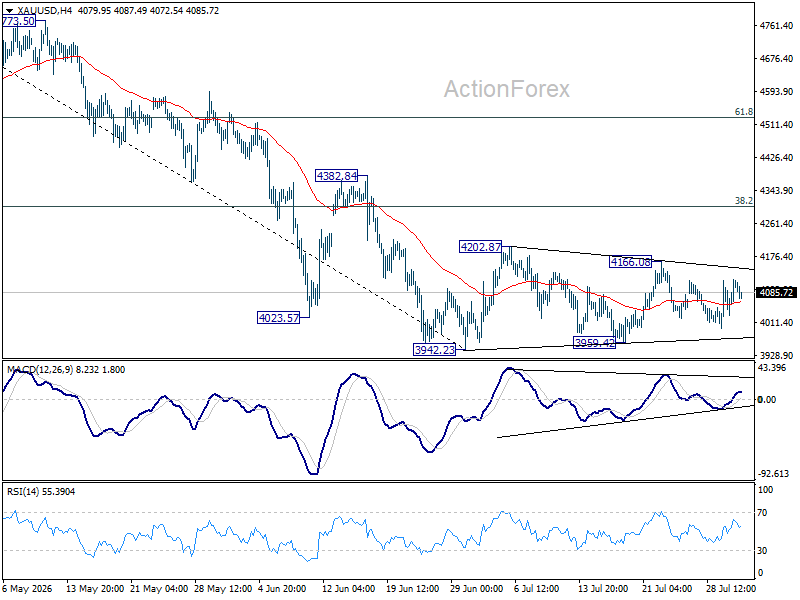
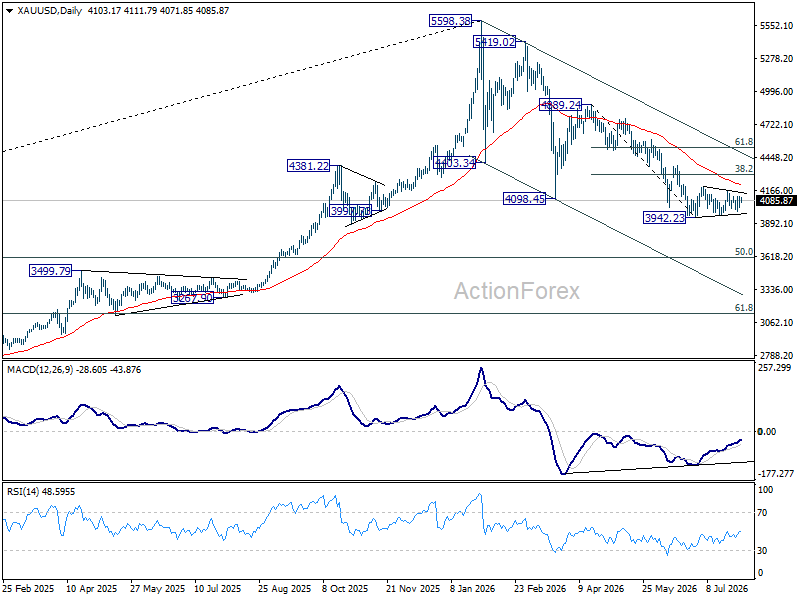
Technically, Gold’s latest rebound delays rather than negates the broader bearish outlook. The consolidation from 3,942.23 appears to be extending into another recovery leg, with a break of 4,116.08 resistance now possible. However, gains should be capped by the falling 55-day EMA, currently at 4,214.50. Once the consolidation completes, a break below 3,942.23 remains the preferred scenario to resume the broader decline from 5,598.38.
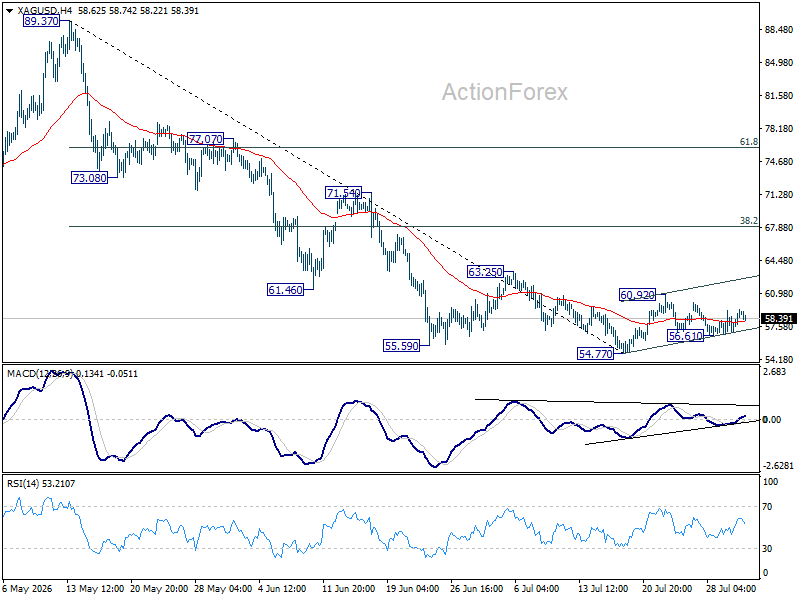
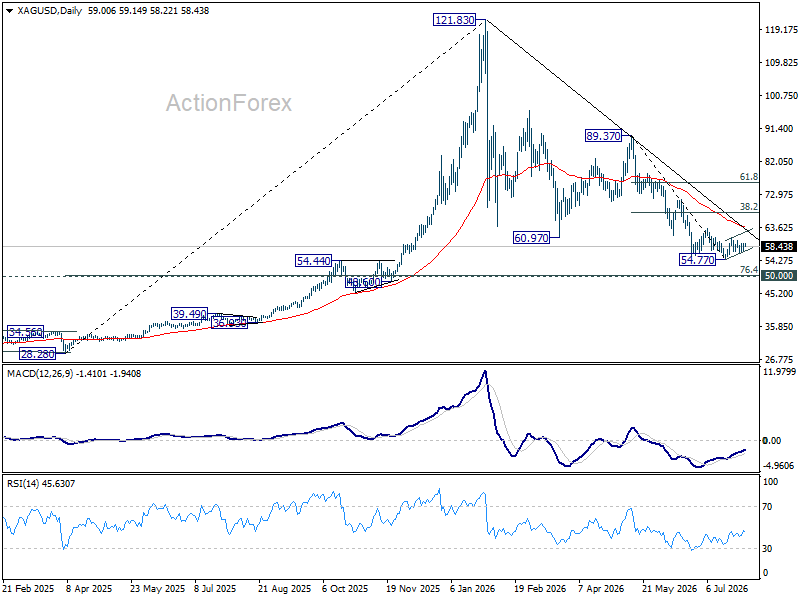
Silver presents a similar technical picture. The corrective rebound from 54.77 could extend toward 60.92, but the falling 55-day EMA, now at 63.67, is expected to limit upside. Once the current consolidation phase runs its course, the broader downtrend is expected to resume with a break below 54.77.
Key Takeaways
- Gold and Silver have lagged this week’s broad Dollar decline because the weakness stems from fading Fed hike bets, not falling real yields or safe-haven demand.
- The 10-year Treasury yield has held steady within 4.6%–4.7%, denying Gold the real-yield tailwind it typically needs to rally alongside a weaker Dollar.
- A risk-on surge — led by Microsoft’s earnings and a 17.91% KOSPI rally — has reduced demand for defensive hedges, further capping precious metals.
- Gold’s consolidation from 3,942.23 may extend toward 4,116.08, but the falling 55-day EMA at 4,214.50 should cap gains ahead of a resumed decline.
- Silver’s rebound from 54.77 faces a similar ceiling near its falling 55-day EMA at 63.67, with the broader downtrend expected to resume below 54.77.





