Why Monday’s break below 155 looks like a genuine rates story rather than another intervention-driven squeeze, and what would make it durable
What’s happening: Yen surged roughly 1% against every major currency on Monday, with USD/JPY breaking through 155, a level that had repeatedly marked the floor after Japan’s earlier intervention episodes this year, extending Yen’s cumulative gain against Dollar to around 3.3% over the first five trading sessions of September.
Why it matters: The obvious assumption is another intervention-driven squeeze, especially given thin Labor Day liquidity and Japan’s record spending this year. But Japan’s 10-year JGB yield rose alongside Yen, something a pure currency operation wouldn’t require but a hawkish BoJ repricing would. That distinction determines whether Monday’s move can hold once normal trading conditions return, or whether it unwinds like previous intervention-driven rallies.
Yen Breaks Through 155 as the Move Broadens Across Majors
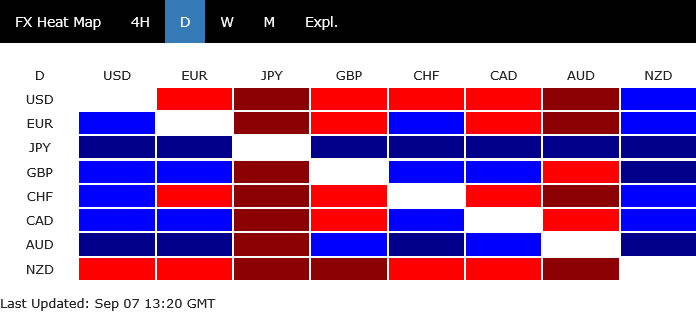
Yen surged broadly on Monday, gaining roughly 1% against every major currency rather than simply strengthening against Dollar. USD/JPY fell through 155, extending Yen’s cumulative gain against Dollar to around 3.3% over the first five trading sessions of September. The speed of the reversal is notable: USD/JPY was trading above 160 only last Tuesday.
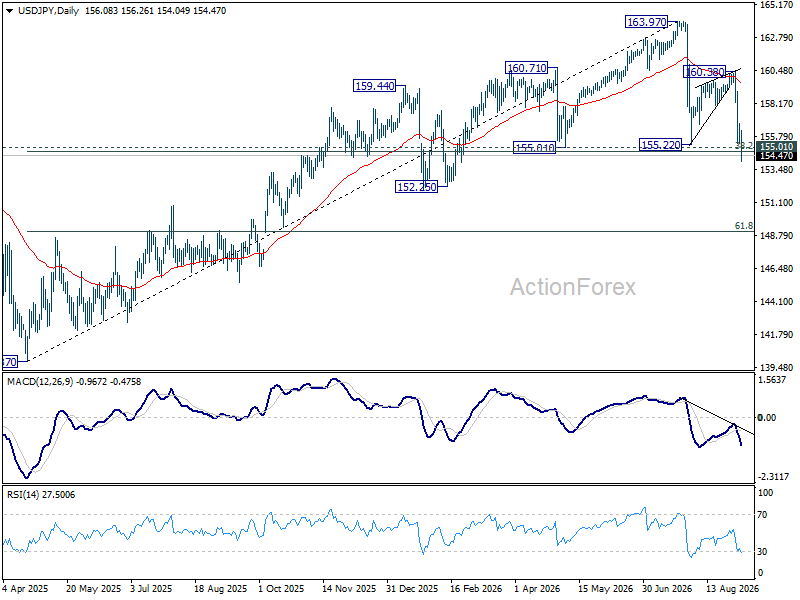
The break below 155 carries additional significance because the area had repeatedly marked the lower boundary for USD/JPY following Japan’s earlier intervention episodes this year. Previous bouts of official support produced sharp Yen rallies but failed to establish a sustained move through that zone. Monday’s break therefore raises the possibility that the latest advance is being driven by something more durable than another intervention-induced squeeze.
The clearest candidate is the BoJ rate path. Markets are no longer debating only whether the central bank delivers another 25bp hike this month. They are increasingly pricing the possibility that September marks the next step in a sustained tightening cycle.
Monday’s Move at a Glance
- Yen gained roughly 1% against every major currency, a broad-based move rather than a Dollar-specific one.
- USD/JPY broke through 155, extending Yen’s cumulative gain against Dollar to around 3.3% over the first five September sessions.
- USD/JPY was trading above 160 as recently as last Tuesday.
- 155 had repeatedly marked the floor after Japan’s earlier 2026 intervention episodes, without a sustained break until Monday.
Markets Are Starting to Price a BoJ Cycle, Not Just One Hike
OIS pricing now assigns around an 82% probability of a 25bp increase to 1.25% at the September 17–18 BoJ meeting, equivalent to roughly 20.5bp of tightening. That is higher than the approximately 75% probability cited in earlier FT and Reuters coverage, suggesting that the curve itself was repricing more hawkishly as Yen strengthened.
The longer-dated path is more important. Markets price roughly 0.82 cumulative hikes by September, 1.36 by October, 1.84 by December, 2.26 by January 2027, 2.73 by March, 3.06 by April, 3.46 by June and 3.70 by July 2027.
That makes the BoJ path unusually aggressive in relative terms. Fed pricing currently struggles to reach two cumulative hikes across most of the curve, while ECB pricing implies roughly three moves over the coming year. The BoJ is therefore being priced for the most sustained tightening sequence of the three.
October also matters. The marginal probability of another BoJ hike at the October meeting stands around 54.4%, somewhat above December’s 47.6%. That gives the curve a modest but meaningful lean toward the possibility of consecutive moves in September and October.
The question is therefore shifting from whether the BoJ hikes once to whether Japan is entering an aggressive tightening cycle.
The BoJ Pricing Curve
- September 17–18 meeting: ~82% probability of a 25bp hike to 1.25%, up from ~75% in earlier FT/Reuters coverage.
- Cumulative hikes priced: 0.82 by September, 1.36 by October, 1.84 by December, 2.26 by January 2027, 2.73 by March, 3.06 by April, 3.46 by June, 3.70 by July 2027.
- October marginal hike probability: ~54.4%, versus December’s 47.6%.
- Relative pace: Fed struggles to reach two cumulative hikes on most of the curve; ECB is priced for roughly three over the coming year.
Political Pressure Adds to the Hawkish Repricing
The shift in market expectations is not taking place in isolation.
US Treasury Secretary Scott Bessent has reportedly been pressing publicly for higher Japanese interest rates, adding an external political dimension to the BoJ debate. Speculation around a back-to-back September and October sequence has also been increasing, with some market participants arguing that fast-money positioning is already being forced to absorb the risk of a more aggressive BoJ.
There is nevertheless a meaningful counterargument. The BoJ may be willing to deliver another hike and accompany it with hawkish communication without following through on the full tightening path that markets are now discounting.
That is the central sustainability risk for Yen.
The curve currently assumes nearly four cumulative hikes by July 2027. If incoming data or BoJ communication begin to challenge that path, the same repricing that is now supporting Yen could reverse quickly. But for the moment, markets are treating the September decision as part of a sequence rather than an isolated move.
Was Monday Intervention or Organic Repricing?
The strength and timing of Monday’s move inevitably revived speculation over official intervention.
Trading conditions were thin around the US Labor Day holiday, while unusually large transactions were seen during the session. Thin liquidity would make any intervention more effective, giving Japanese authorities an obvious tactical reason to operate during such a window.
The flows themselves, however, cannot distinguish between direct official activity and a large speculative repositioning.
Cross-market price action provides some circumstantial support for the latter explanation. Japan’s 10-year government bond yield rose to 2.934% alongside Yen.
A direct operation involving purchases of Yen against Dollar would not, by itself, normally require JGB yields to rise. A more hawkish reassessment of the BoJ rate path would naturally support both higher domestic yields and a stronger currency.
That does not rule out intervention. It suggests that even if official flows contributed to the speed of Monday’s move, the direction is being supported by a genuine rates story.
Record Intervention Has Already Changed the Policy Equation
Japan has already spent heavily to defend its currency this year.
Foreign reserves fell from $1.287tn in July to $1.207tn in August, a record monthly decline of around $80bn and the fourth consecutive decrease. Foreign securities holdings fell by about $87.8bn.
Japan reportedly spent around ¥15.4tn, or roughly $98–99bn, on Yen-supporting intervention in the month through August 26. Total intervention spending in 2026 has reached approximately ¥27.1tn, already exceeding the previous full-year record of ¥20.4tn set in 2003.
The US also participated directly in the July 31 operation, the first coordinated US-Japan intervention to support Yen since 1998.
Those numbers underline why a shift toward BoJ-led support for Yen would matter. Intervention can move the currency sharply, but repeated operations require increasingly large reserve deployment and do not by themselves change the underlying interest-rate differential.
A genuine BoJ tightening cycle does.
2026 Intervention Tally
- Foreign reserves: $1.287tn (July) to $1.207tn (August), a record monthly decline of ~$80bn, fourth consecutive decrease.
- Foreign securities holdings: fell by about $87.8bn.
- August intervention spend (through Aug 26): ~¥15.4tn, roughly $98–99bn.
- 2026 total intervention: ~¥27.1tn, already above the prior full-year record of ¥20.4tn set in 2003.
- July 31 operation: first coordinated US-Japan intervention to support Yen since 1998.
Washington and Tokyo Want the Same Yen — but Not Necessarily the Same Route
That distinction also exposes an unusual tension between Japan and the US.
Bessent has repeatedly argued that Yen had weakened too far and has encouraged tighter Japanese monetary policy. Washington therefore broadly shares Tokyo’s objective of supporting the currency.
But Japan’s intervention strategy may create friction with another US priority.
The sharp fall in Japanese foreign securities holdings has raised the possibility that Tokyo has been selling US Treasuries to finance intervention. If so, repeated reserve-funded operations would work against Bessent’s separate focus on maintaining stability in the Treasury market.
The two governments can therefore agree that Yen should be stronger while having different preferences over how that outcome is achieved.
A stronger Yen generated by higher Japanese rates is considerably easier to reconcile with US Treasury-market priorities than a stronger Yen requiring repeated Japanese sales of Dollar reserves.
That makes the BoJ rate path relevant not only for FX markets, but also for the durability of US-Japan policy alignment.
Sustainability Depends on Whether the BoJ Delivers the Curve
There are two ways to interpret the latest rally.
The bullish case is that Yen is finally acquiring structural support absent from previous intervention-driven rebounds. Higher domestic yields improve the relative appeal of Japanese assets, while expectations of further BoJ tightening could encourage Japanese institutions to bring more capital home.
The skeptical case is that markets have moved ahead of the central bank. Another hike to 1.25% may be achievable, but nearly four cumulative hikes by next summer require a much more persistent tightening campaign than Japan has experienced for decades.
At present, market pricing clearly leans toward the first interpretation.
That does not mean it will prove correct. It does define what needs to be watched.
If the September hike is delivered and the BoJ keeps another near-term move clearly live, Yen strength could gain credibility as a genuine rates-driven trend.
If policymakers push back against expectations for rapid follow-through, the market may discover that the curve has become more hawkish than the BoJ itself.
Bullish Case vs. Skeptical Case
| Bullish Case | Skeptical Case | |
|---|---|---|
| Core view | Yen is finally acquiring structural support absent from prior intervention-driven rebounds | Markets have moved ahead of the central bank |
| Mechanism | Higher domestic yields improve Japanese-asset appeal; tightening expectations encourage capital repatriation | Nearly four cumulative hikes by next summer requires a far more persistent campaign than Japan has run in decades |
| What confirms it | September hike delivered and October kept clearly live | BoJ pushes back on rapid follow-through, exposing the curve as more hawkish than the bank itself |
Carry Trades Turn Yen Strength Into a Wider Market Risk
The implications extend well beyond USD/JPY.
Carry trades have been among the stronger macro strategies this year despite rising global borrowing costs. A sustained Yen appreciation threatens those positions through two separate channels.
First, Japanese funding costs rise as the BoJ tightens.
Second, Yen appreciation itself reduces the return on foreign assets financed with Yen borrowing.
That combination can turn a favorable carry trade into a rapidly deteriorating position even if the underlying asset has not moved materially.
A separate channel comes from Japanese institutional investors. As domestic yields rise, pension funds and other long-term investors may find Japanese assets increasingly competitive with foreign bonds and equities, encouraging repatriation.
These forces should not be conflated. Carry unwinds involve leveraged positions being closed because the funding trade deteriorates. Repatriation reflects longer-term Japanese capital choosing domestic assets over foreign exposure.
If both channels strengthen simultaneously, Yen appreciation can become increasingly self-reinforcing and begin affecting global equities, bonds and high-carry currencies.
What Matters Next
The first test is whether Monday’s thin-liquidity move survives when normal trading conditions return. A substantial reversal would strengthen the case that intervention or short-term positioning exaggerated the move. Continued broad Yen strength alongside elevated JGB yields would reinforce the argument that a more durable BoJ repricing is underway.
The second is the BoJ curve itself. The September 17–18 meeting is now heavily priced for a hike, but the more important question is whether markets continue to assign meaningful probability to another move in October.
And finally, the interaction between Japan’s reserve strategy and Washington deserves attention. Further evidence of large Treasury sales to fund intervention could complicate the current alignment between Bessent and Japanese authorities even if both sides continue to favor a stronger Yen.
The significance of Monday’s surge is therefore not simply that USD/JPY broke 155.
Japan has already demonstrated that intervention can generate sharp Yen rallies. What markets are beginning to test now is whether higher Japanese rates can finally make those gains sustainable without official support doing all the work.
Related Coverage
Gold & CPI Setup
Gold Is Waiting on Something Bigger Than Friday’s US CPI — why Friday’s report matters more for the expected Fed ceiling than for the 4,230–4,697 range itself, with oil and Dollar dynamics still unresolved.
European Currency & Data Watch
EUR/GBP at 0.8610: ECB Projections, Not the Hike, Hold the Key — a technical crossroads where new ECB projections, not the already-priced hike itself, will decide the next move.
Eurozone Sentix Jumps to 5.1, but Germany Still Has to Prove the Turn — sentiment is rebounding sharply, but Germany’s -1.1% industrial production print shows hard data hasn’t caught up yet.
SNB Reserves Edge Higher as Summer Surge Loses Momentum — reserve growth slowed sharply in August, offering little clear evidence of stepped-up SNB intervention.
FAQ
Is Yen’s break below 155 due to intervention or rising Japanese rates?
Cross-market evidence points to a genuine rates story. Japan’s 10-year JGB yield rose to 2.934% alongside Yen, something a pure currency-buying operation wouldn’t require but a hawkish BoJ repricing naturally would. Official flows may still have added to the speed of Monday’s move given thin Labor Day liquidity, but the direction appears rates-driven.
How aggressive is the BoJ tightening cycle markets are now pricing?
OIS pricing implies roughly 0.82 cumulative hikes by September, rising to 1.84 by December, 2.73 by March 2027 and 3.70 by July 2027. That is a considerably steeper path than currently priced for the Fed, which struggles to reach two cumulative hikes on most of the curve, or the ECB, priced for roughly three moves over the coming year.
Why does Japan’s intervention spending matter for US-Japan relations?
Japan’s foreign securities holdings fell by about $87.8bn this year, raising the possibility that Tokyo has been selling US Treasuries to fund intervention. That could work against Treasury Secretary Scott Bessent’s separate priority of Treasury-market stability, even though Washington and Tokyo both want a stronger Yen.
Key Takeaways
- Yen gained roughly 1% against every major currency Monday, breaking USD/JPY through 155 for the first time after several failed intervention-driven attempts this year.
- Japan’s 10-year JGB yield rose to 2.934% alongside Yen, supporting a genuine BoJ rate-repricing story rather than a pure intervention squeeze.
- OIS pricing implies an 82% chance of a September hike to 1.25%, with cumulative hikes rising to 3.70 by July 2027, the most aggressive path among the Fed, ECB and BoJ.
- Japan has already spent a record ~¥27.1tn on intervention in 2026, exceeding the prior full-year record of ¥20.4tn set in 2003.
- A sustained Yen rally threatens carry trades through both rising Japanese funding costs and reduced returns on Yen-financed foreign assets.
What to Watch Next
Whether Monday’s move holds once normal trading conditions return after the thin Labor Day session; the September 17–18 BoJ decision and whether October stays live at around 54.4% probability; and any further evidence of Japanese Treasury sales funding intervention, which could complicate the Bessent-Tokyo alignment even as both sides favor a stronger Yen.