Global markets are entering the new week facing an important question: did US President Donald Trump just announce the beginning of real peace in the Middle East, or merely a ceasefire extension in a still-dangerous conflict?
Trump said on Saturday that a major agreement with Iran had been “largely negotiated” and that a formal Memorandum of Understanding would soon be announced. Iranian officials also confirmed that discussions are moving toward a first-stage framework. Optimism centered on the possibility of easing tensions around the Strait of Hormuz, the vital artery for global energy trade that has remained at the center of market anxiety for months.
Yet the deeper details suggest investors may remain cautious about fully embracing the breakthrough narrative. Both Washington and Tehran have indicated that the proposed framework would mainly function as a 30-to-60-day ceasefire extension designed to keep negotiations alive rather than permanently settle the conflict.
More importantly, some of the most explosive disputes remain unresolved. Iran-linked media insist Tehran will retain effective control over transit rules and security management in the Strait of Hormuz, while there still appears to be no meaningful agreement on Iran’s highly enriched uranium stockpile or the broader nuclear issue.
That is why oil prices, Treasury yields, and Dollar may become the real lie detectors for the market this week. If traders truly believe the agreement represents lasting normalization and free reopening of global energy flows, Brent crude should break sharply lower while inflation fears and global yields retreat. But if oil remains elevated and yields continue holding firm, markets would effectively be signaling that they still see the agreement as just another temporary truce rather than a durable peace settlement.
Ceasefire Extension Buys Time, but Permanent Peace Still Far Away
The framework currently under discussion between Washington and Tehran appears designed first and foremost to stop the conflict from reigniting immediately rather than permanently resolve the crisis. While Trump described the agreement as “largely negotiated,” officials on both sides have clarified that the proposed Memorandum of Understanding would effectively function as a 30-to-60-day ceasefire extension intended to create diplomatic space for broader negotiations later this summer.
That distinction is critical for markets. The war that erupted following the February 28 US-Israeli strikes has fundamentally reshaped global energy pricing, inflation expectations, and central bank outlooks. A temporary pause in hostilities may help reduce immediate fears of re-escalation, but it does not automatically remove the structural geopolitical premium embedded in oil prices unless investors believe a durable settlement is genuinely emerging.
In reality, the current framework appears closer to a diplomatic bridge agreement than a comprehensive peace accord. The proposed arrangement would reportedly include limited sanctions relief, partial unfreezing of Iranian overseas assets, and some form of gradual easing of tensions around the Strait of Hormuz. In exchange, Tehran may offer limited concessions, potentially including provisional cooperation on shipping access and a commitment to enter broader nuclear discussions during the next phase of talks.
But the hardest negotiations have effectively been postponed rather than completed. Iranian officials continue signaling that meaningful discussions over the nuclear program and highly enriched uranium stockpile will only begin after hostilities are formally suspended and confidence-building measures are implemented. That means the next 30 to 60 days may prove even more important than the current announcement itself.
For markets, this creates a very different dynamic from a clean peace settlement. Traders are not yet being asked to price a fully normalized Middle East. Instead, they are being asked to price a fragile diplomatic holding pattern where the probability of renewed confrontation has decreased, but where the fundamental drivers of the conflict remain unresolved beneath the surface.
The Real Question Is Not Just Whether Hormuz Reopens — But Who Controls It
Financial markets may ultimately judge Trump’s Iran breakthrough based on one issue above all others: the future of the Strait of Hormuz.
While headlines initially focused on the possibility of reopening the critical energy corridor, the deeper dispute quickly became clear over the weekend. Iranian-linked media strongly pushed back against suggestions that Tehran would surrender operational control over the Strait as part of the proposed agreement. Instead, officials tied to the IRGC emphasized that management of shipping routes, transit procedures, and passage permits would remain entirely under Iranian authority.
That creates a major problem for markets attempting to price a genuine return to normal global energy flows. Washington’s position has consistently centered around restoring unrestricted international access through Hormuz, while Tehran increasingly appears determined to preserve the leverage it gained during the conflict. Iran’s proposed transit system — including vetting mechanisms, controlled routing, and “security fees” for shipping — effectively turns Hormuz into a managed geopolitical pressure point rather than a fully normalized commercial corridor.
For oil traders, this distinction is enormous. As long as Tehran retains the ability to control shipping conditions inside Hormuz, a meaningful geopolitical premium is likely to remain embedded in oil prices. The implications extend far beyond energy markets. Persistently elevated oil prices would continue feeding inflation concerns globally, complicating the outlook for major central banks already struggling with the economic fallout from the conflict.
Iran’s Uranium Stockpile Remains the Unresolved Core of the Conflict
One of the most striking aspects of Trump’s Iran announcement was not what it included — but what it left out.
Despite months of US rhetoric emphasizing Iran’s nuclear program as a central threat, the proposed framework appears to contain little immediate progress on Tehran’s highly enriched uranium stockpile or the broader nuclear dispute. Instead, Iranian officials and hardline media suggest those negotiations are effectively being deferred into the next stage of diplomacy, potentially weeks or months away.
That sequencing matters enormously. Tehran is reportedly insisting that sanctions relief, asset unfreezing, and stabilization measures must come first before it considers substantive concessions on enrichment or international oversight. In effect, Iran appears to be treating the current framework as a mechanism to reduce immediate economic and military pressure while postponing the most politically sensitive elements of the negotiations.
For markets, this reinforces the idea that the current agreement may function more as a diplomatic bridge than a final settlement. The ceasefire framework may reduce the immediate risk of renewed strikes or energy disruptions, but it does not yet resolve the deeper strategic confrontation surrounding Iran’s nuclear capabilities. As long as the uranium issue remains unresolved, traders are unlikely to fully embrace the narrative of lasting geopolitical normalization in the Middle East.
Oil Will Be the First and Most Important Market Verdict
If markets are going to deliver a real-time verdict on Trump’s Iran breakthrough, Brent crude will almost certainly be the most important gauge to watch this week. Oil has been the central transmission channel through which the entire conflict has affected global markets — driving inflation fears, bond yields, central bank expectations, and broad risk sentiment. That means the credibility of the agreement will ultimately be tested first through energy pricing.
Brent crude already retreated sharply from last week’s spike high at 112.72 to close near 104.24 after diplomacy headlines emerged. But importantly, oil has not collapsed. Instead, price action remains trapped firmly inside the large converging triangle pattern that has dominated the market since the March peak at 119.50.
In many ways, that technical structure reflects the evolution of the crisis itself: the initial phase was pure geopolitical panic, while the current phase has transitioned into a slower-moving inventory depletion and supply-risk cycle.
As long as Brent remains elevated above key technical support levels, markets are effectively signaling that geopolitical risk premiums remain intact. Traders may believe the probability of immediate military escalation has decreased, but they are not yet convinced that physical oil flows through the Strait of Hormuz are genuinely returning to normal conditions.
Technically, Brent oil might gyrate lower to 96.03 support and possibly below in the next few days. But the most critical level sits at 100% projection of 115.30 to 96.03 from 112.71 at 93.45. Until Brent decisively breaks below that level on a daily closing basis, current fall is just one of the legs inside the mentioned triangle pattern. That is, the market is likely treating Trump’s announcement as a temporary de-escalation rather than a structural peace settlement.
However, if Brent breaks firmly below 93.45, the market narrative could shift rapidly. That would likely signal growing confidence that physical supply normalization is genuinely underway and that the geopolitical premium embedded since March is finally beginning to unwind. In that scenario, downside acceleration toward 86.09 and even 161.8% projection at 81.54 could become realistic targets.

Bond Markets Still Need Convincing Before Inflation Fears Truly Fade
While oil prices will likely deliver the first verdict on Trump’s Iran breakthrough, Treasury yields may ultimately determine whether markets genuinely believe the inflation shock tied to the conflict is starting to reverse. The global bond selloff accelerated sharply over the past two months as investors increasingly priced the risk that elevated energy prices would feed into broader inflation pressures and force central banks back toward tightening.
That concern remains very much alive. US 10-year Treasury yield surged as high as 4.69% last week before pulling back modestly to close near 4.56. Importantly, yields remain comfortably above the critical 4.48 resistance-turned-support zone. As long as that level holds, markets are effectively signaling that inflation fears tied to oil, shipping disruptions, and second-round price effects have not meaningfully disappeared.
The timing issue is becoming increasingly important for central banks. Institutions such as ECB have largely spent recent weeks in wait-and-see mode, hoping that tensions surrounding the Strait of Hormuz would ease quickly enough to prevent a broader inflation spiral. But with oil prices still elevated and uncertainty surrounding Hormuz unresolved, policymakers are running out of time to simply “look through” the shock. Markets are now increasingly leaning toward another ECB hike in June, while fed fund futures are pricing roughly a 68% chance of a Fed hike by December back to 3.75–4.00%.

That shift also complicates the transition inside the Federal Reserve itself. Kevin Warsh may now be formally installed as Trump’s successor as Fed Chair, but elevated oil prices and sticky inflation risks could sharply limit his room to steer policy toward easier conditions. In fact, Jerome Powell’s decision to remain on the Board of Governors after leaving the Chair role may prove one of the most important underappreciated developments for markets.
Powell staying on the Board is highly unusual historically and creates a powerful hawkish counterweight inside the Fed. As Chair, Powell had to constantly balance internal factions and maintain consensus. But as a regular Governor, he no longer carries the burden of diplomacy. Instead, he becomes a single but extremely influential voting member capable of openly resisting premature easing if inflation risks remain elevated.
Technically, 10-year yields remain one of the clearest market confirmation gauges. A decisive break below 4.48 would suggest investors are beginning to genuinely price disinflation and fading energy risks again, opening room for 38.2% retracement of 3.96 to 4.69 at 4.41 and providing relief for equities.
But if yields remain firmly above that zone, the bond market may effectively be signaling that Trump’s Iran deal has not yet solved the underlying inflation problem at all.

Dollar the Final Confidence Gauge for Global Markets
In many ways, Dollar may become the final and most comprehensive test of whether markets truly trust Trump’s Iran breakthrough.
The greenback has benefited throughout the conflict from a powerful combination of safe-haven demand, elevated Treasury yields, and rising expectations that Fed may need to stay tighter for longer due to oil-driven inflation pressures. For Dollar to reverse meaningfully now, markets would need confidence not only that geopolitical tensions are easing, but also that energy prices and inflation risks are genuinely starting to normalize.
That has not happened yet. Dollar Index’s extended rebound from 97.62 and subsequent break above 99.31 last week indicate that the pullback from 100.64 may already have completed. More importantly, the recovery came after firm defense of 61.8% retracement of 95.55 to 100.64 at 97.49 — a technical development suggesting underlying bullish momentum in Dollar remains intact for now.

If oil prices stay elevated and Treasury yields remain firm, Dollar is unlikely to weaken meaningfully even if diplomatic headlines continue improving. Markets would effectively continue treating the geopolitical shock as unresolved, maintaining demand for Dollar through both safe-haven flows and rising US yield support.
Under that scenario, Dollar Index could extend higher toward 100.64 again and potentially even 38.2% retracement of 110.17 to 95.5 at 101.13. Nevertheless, barring an actual escalation (e.g., direct kinetic actions), Dollar Index will likely struggle to breach 101.13 purely on headline momentum.
However, the opposite scenario is equally important to monitor. If Brent crude breaks decisively lower and US 10-year yields fall through key support levels, Dollar could quickly lose momentum as markets aggressively unwind geopolitical and inflation positioning.
Sustained break below 55 D EMA (now at 98.72) would strongly suggest the fall from 100.64 is resuming through 97.62 towards 95.55 low. That would likely signal investors are finally becoming convinced the Iran agreement represents more than just another temporary ceasefire extension.
EUR/USD Weekly Outlook
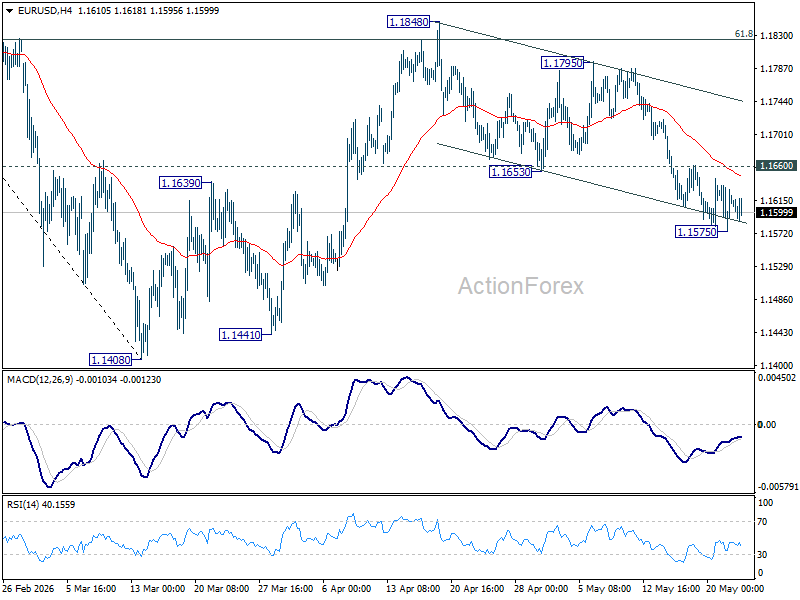
EUR/USD’s extended decline suggests that corrective rebound from 1.1408 has completed at 1.1848. But as a temporary low was formed at 1.1575, initial bias remains neutral this week first. On the downside, below 1.1575 will bring deeper fall back to retest 1.1408 low. However, firm break of 1.1660 resistance will dampen this bearish view, and bring stronger rise back to 1.1795 resistance first.
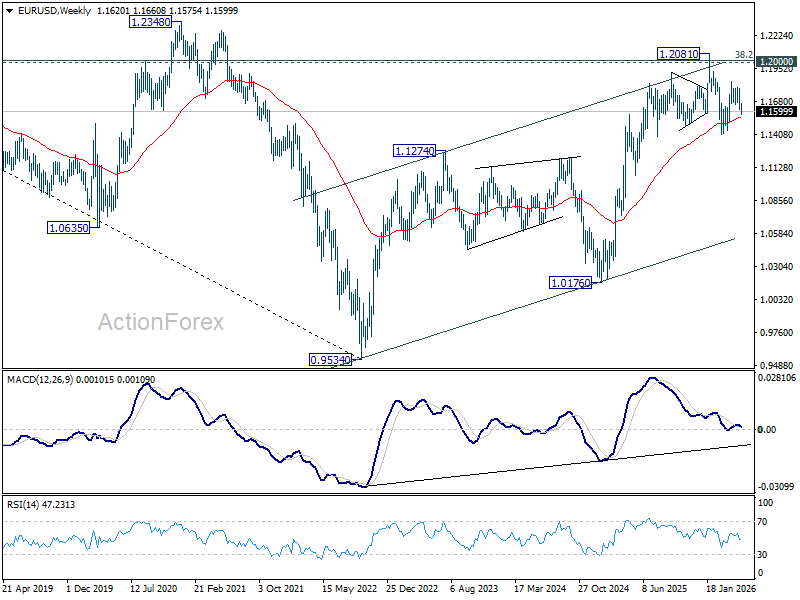
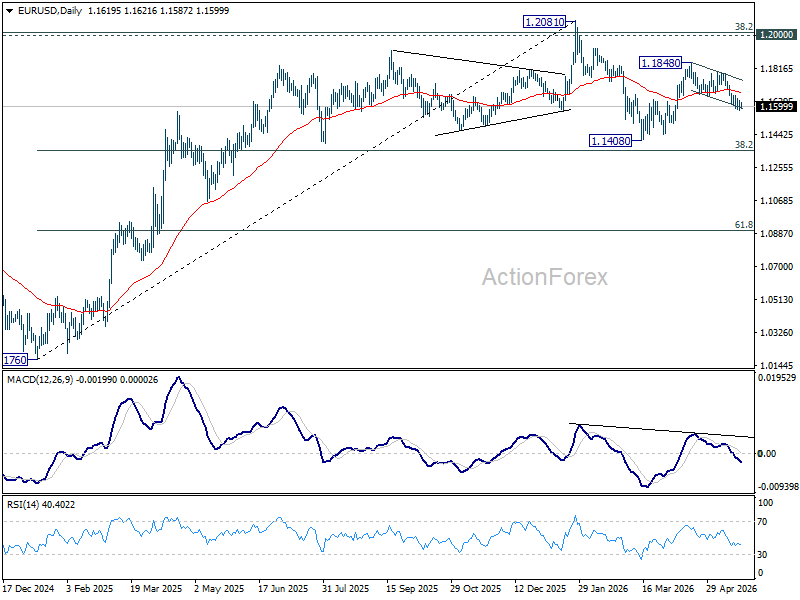
In the bigger picture, the strong support from 38.2% retracement of 1.0176 to 1.2081 at 1.1353 suggests that the pullback from 1.2081 is more likely a corrective move. Strong support was also found in 55 W EMA (now at 1.1542). Focus is back on 1.2 key cluster resistance level. Decisive break there will carry long term bullish implications. Nevertheless, break of 1.1408 support will revive the case of medium term bearish trend reversal.
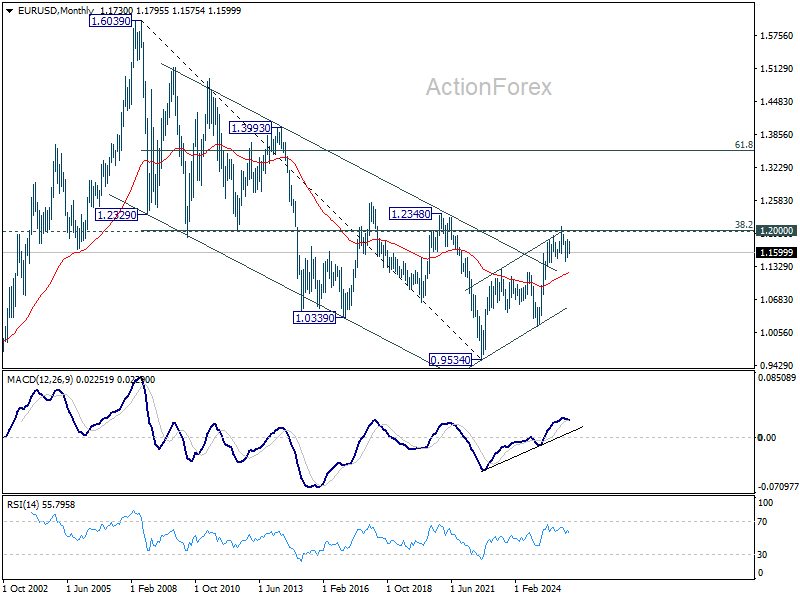
In the long term picture, 38.2% retracement of 1.6039 to 0.9534 at 1.2019, which is close to 1.2000 psychological level is the key for the outlook. Rejection by this level will keep the multi decade down trend from 1.6039 (2008 high) intact, and keep outlook neutral at best. However, decisive break of 1.2000/19, will suggest long term bullish trend reversal, and target 61.8% retracement at 1.3554.