


- Following the tariffs, investors were also expecting the US dollar to strengthen.
- The Bank of England has not ruled out a rise in the repo rate.
The US dollar has recorded its best two-day rally since the start of the armed conflict in the Middle East. At that time, it rose on strong demand for safe-haven assets and its role as the currency of a net energy exporter. The DXY briefly exceeded 101, touching its highest level in the past 13 months. This time, the market is not being driven by a shock but by a gradual reassessment of the outlook for monetary policy over the past month. This reassessment, stemming from a shift in market views on the future of the federal funds rate, has gained fresh momentum following hawkish comments from Fed chair Kevin Warsh.
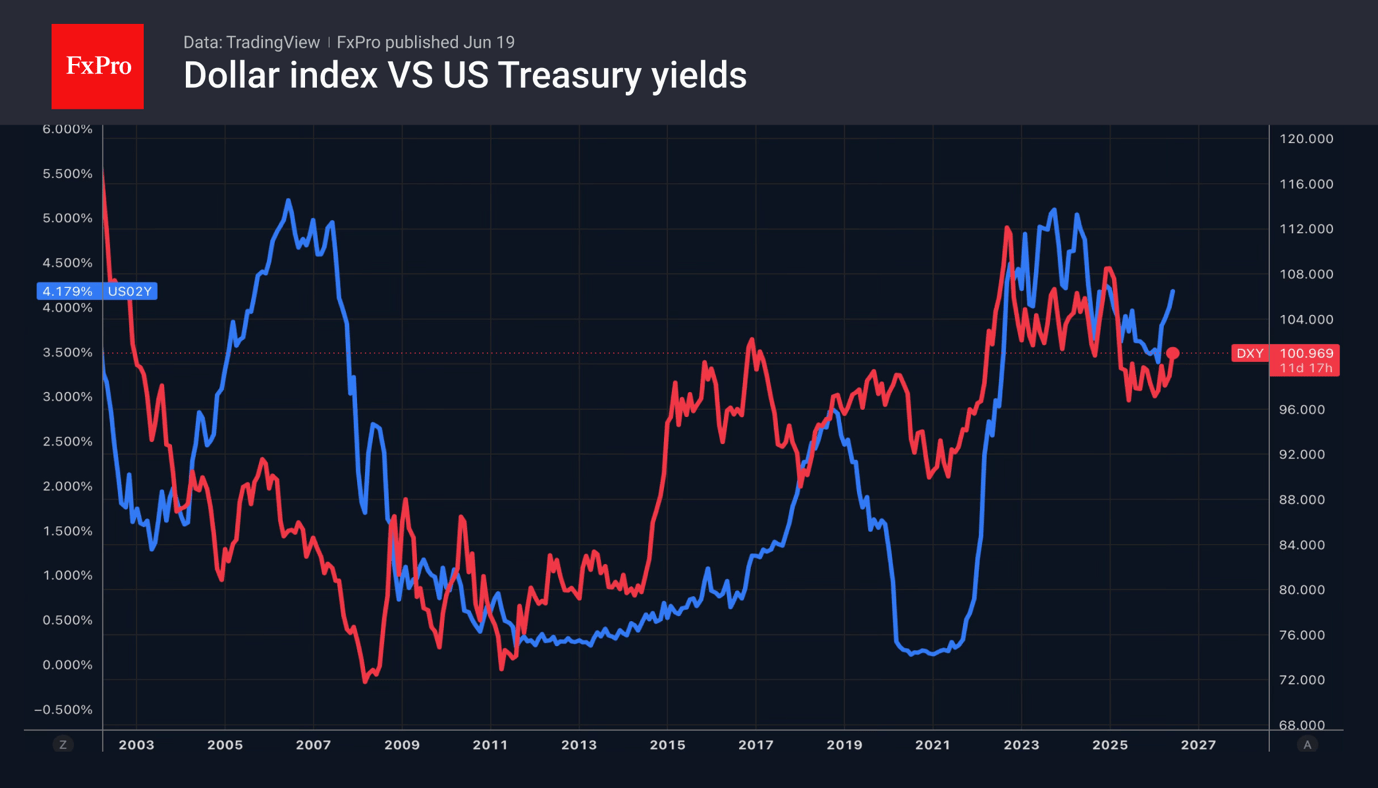
Just a week ago, the probability of at least two rate rises in 2026 stood at 17%; it has now risen to 53%. This has pushed yields on 2-year Treasuries to their highest levels since February 2025, lifting the dollar index to its highest level since May 2025.
At that time, a month after the tariffs were announced, it was believed they would have a significant pro-inflationary effect, forcing the Federal Reserve to raise rates. In fact, the central bank cut rates in September, October and December last year, triggering a decline in the dollar. Expectations that this cycle would continue this year triggered a sell-off in December and January.
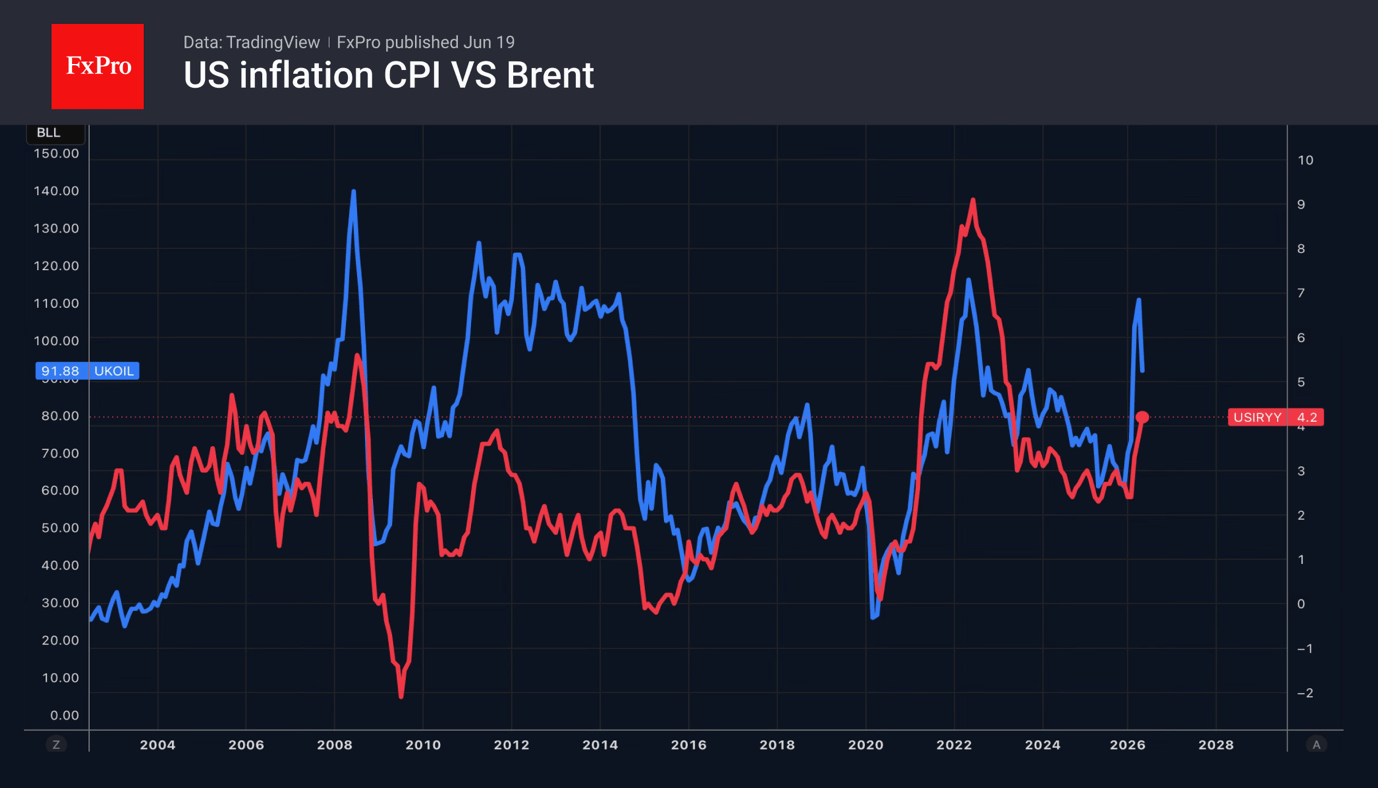
There is also a current narrative that the Fed’s intention to bring inflation back to its 2% target will force it to raise rates. However, Capital Economics believes that US consumer prices already peaked in May at 4.2% year-on-year. As oil and petrol prices fall, the CPI will slow. Therefore, the likelihood of monetary policy tightening is probably overestimated by the futures market, and a reversal of this assessment will weaken the US currency.
Meanwhile, as expected, the Bank of England kept the repo rate at 3.75%. Forecasts for peak inflation were revised down from 3.6% to 3.25%. For the BoE, the end of the conflict in the Middle East has reduced the risk of consumer price inflation accelerating but not eliminated it. This prevents the central bank from ruling out a tightening of monetary policy.
The US dollar’s strength has pushed USDJPY towards 40-year highs. The market has ignored comments by Japan’s Finance Minister Satsuki Katayama that the government is prepared to take bold and decisive action. It is clear that this is currently partly a story of a strong dollar rather than a weak yen, but USDJPY is trading near or above several of the last 40 years’ peaks. Interventions have occurred at these levels on numerous occasions. Will Japan intervene now?
The FxPro Analyst Team





