


Why confirmed US-Japan intervention pushed Yen strength into the crosses instead of breaking USD/JPY below 155
Why it matters: The pattern suggests traders don’t yet believe intervention was designed to force USD/JPY meaningfully below 155, just to prevent a rapid return above 160. Whether that adjustment mechanism, squeezing carry trades in the crosses, continues, or USD/JPY eventually breaks 155 outright, is one of the more important themes to watch this week.
Also today:
- Oil gapped lower again to as low as $81.55 as the US cancelled planned strikes and Trump signaled talks with Iran, though Tehran says no direct negotiations are planned yet.
- A week of top-tier US data begins today with ISM Manufacturing, building toward Friday’s non-farm payrolls, which will shape the Fed’s flexibility heading into next week’s CPI report rather than settle September policy on its own.
Confirmed Intervention Marks a Break From Japan’s Usual Playbook
The week’s opening session was dominated by an unusually explicit display of currency cooperation between Washington and Tokyo. Both governments confirmed they had jointly intervened to support the Yen last week, marking the first coordinated operation since 2011. More striking than the intervention itself was the speed of the confirmation. Rather than adhering to Japan’s long-standing strategy of refusing to comment on intervention, officials on both sides moved quickly to acknowledge the operation, reinforcing the message that they stand ready to act again if necessary. The shift suggests policymakers are placing greater value on intervention credibility than on strategic ambiguity.
USD/JPY Stalls at 155 as Yen Strength Squeezes Into the Crosses
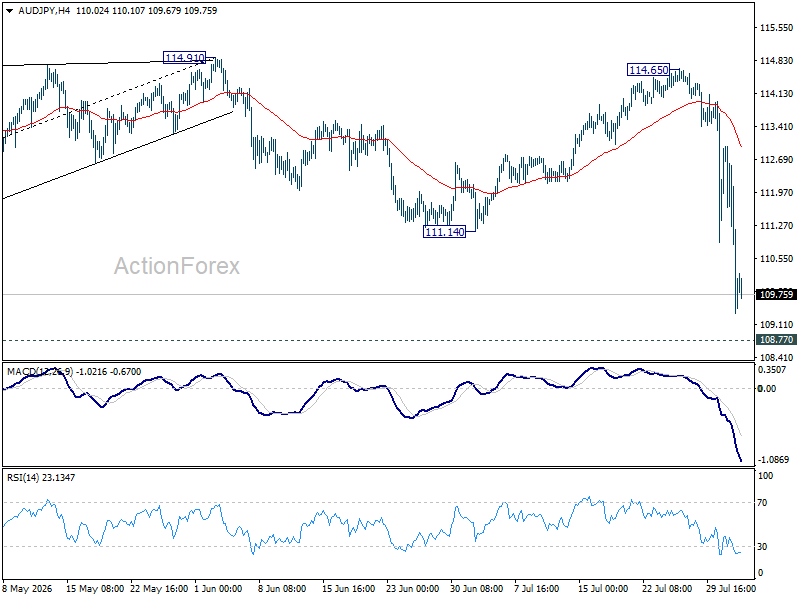
That message initially extended last week’s Yen rally, pushing USD/JPY lower in early trading. Yet the decline stalled just ahead of the key 155 support area, where buyers emerged before the pair could test the level decisively. The price action is notable because it suggests traders remain reluctant to challenge what has become an important technical level. For now, the market still appears to believe the objective of last week’s intervention was to prevent another rapid return above 160 rather than engineer a sustained move below 155.
Instead of forcing USD/JPY through support, demand for the Japanese currency found another outlet. Yen strength was effectively squeezed into the crosses, with high-yielding currencies bearing the brunt of the adjustment. AUD/JPY led losses, followed by NZD/JPY, while GBP/JPY, CAD/JPY and CHF/JPY also declined sharply. The pattern points to a broader reduction in Yen-funded carry trades rather than outright Dollar weakness. Whether this remains the preferred adjustment mechanism, or whether USD/JPY eventually breaks below 155, will be one of the more interesting themes to watch in the days ahead.
Crosses Under Pressure
- AUD/JPY: led losses among Yen crosses
- NZD/JPY: second-sharpest decline
- GBP/JPY, CAD/JPY, CHF/JPY: also declined sharply
Oil Gaps Lower Again as Diplomatic Signals Conflict
Oil markets also began the week with another sharp gap lower. Brent crude, which closed above $90 last week, briefly fell to as low as $81.55 before stabilizing around the $83 area. As in recent weeks, the move reflected hopes of easing tensions in the Middle East after the US cancelled planned military strikes over the weekend. President Donald Trump said negotiations with Iran would begin on Monday, again raising expectations of a diplomatic breakthrough.
Tehran, however, continued to offer a far more cautious assessment. Iranian Foreign Ministry spokesperson Esmail Baghaei said there were no immediate plans for direct negotiations with Washington, reiterating that discussions remain limited to Omani mediation over the Strait of Hormuz. The conflicting narratives have become a familiar feature of this crisis. Markets appear reluctant to react aggressively to political statements alone, preferring to wait for tangible evidence of changes in shipping conditions or energy flows before reassessing geopolitical risk.
A Week Packed With Top-Tier US Data
Attention now shifts firmly to a week packed with top-tier US economic data. ISM Manufacturing kicks things off today, followed by ISM Services, ADP employment and Friday’s non-farm payrolls. Fed funds futures continue to price a little over a 60% probability of a September rate hike, indicating markets still lean toward further tightening but without strong conviction.
That makes this week’s data particularly important, not because they are likely to determine September policy on their own, but because they will shape how much flexibility the Federal Reserve has heading into next week’s CPI report. A strong run of data would reinforce confidence in the economy and leave policymakers well positioned to tighten again should inflation remain sticky. Conversely, softer readings would raise the bar for another hike.
This Week’s US Data Calendar
- Today: ISM Manufacturing
- This week: ISM Services, ADP employment
- Friday: Non-farm payrolls
- Fed funds futures: a little over 60% probability of a September hike
Currency Performance Today
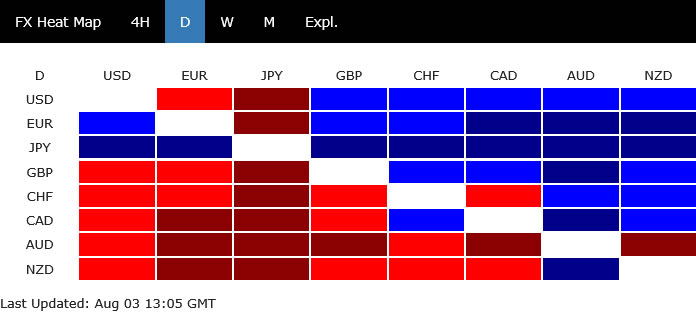
For the day so far, Yen is currently the strongest, followed by Euro, and then Dollar. Aussie is the worst, followed by Kiwi, and the Swiss Franc. Sterling and Loonie are positioning in the middle.
Related Coverage
Yen & Precious Metals Deep Dives
- Read the deeper dive into why Japan and the US broke decades of strategic ambiguity to confirm intervention this fast, and what holding above 155 would signal: Why Did Japan and the US Confirm Intervention So Fast? Can USD/JPY Hold 155?.
- See why Gold has stopped reacting to oil, yields and the Dollar, and what could finally break its trading range: Why Gold Ignores Oil, Yields and Dollar, and What Could Finally Break the Range.
Global Manufacturing PMI Roundup
- Read why the UK’s softer PMI headline masks the fastest factory output growth in almost two years: UK PMI Manufacturing at Four-Month Low, but Faster Output Growth Points to Resilient Recovery.
- See why Eurozone factory output hit a 52-month high, and why the recovery still isn’t being driven by fresh demand: Eurozone PMI Manufacturing at Three-Month High, but Recovery Still Lacks Fresh Demand.
- Read how AI and semiconductor demand are offsetting Middle East-related cost pressures in Japan’s factory sector: Japan PMI Manufacturing Finalized at 54.5, AI Demand Offsets Middle East Headwinds.
- See why Australia’s manufacturing rebound to a six-month high still comes with a fragility warning: Australia Manufacturing PMI Finalizes at Six-Month High, Yet Inflation and Supply Risks Limit Confidence.
- Read the three encouraging trends inside China’s slower manufacturing expansion: China’s Manufacturing Expansion Slowed, but Three Trends Offer Encouragement.
Inflation Data
- See why Swiss inflation’s slip to 0.4% is concentrated in imported goods, not domestic price pressures: Swiss CPI Slips to 0.4% in July on Lower Fuel and Airfare Costs.
Frequently Asked Questions
Q: Why did USD/JPY stall at 155 instead of continuing lower after confirmed intervention?
A: Buyers emerged just ahead of the 155 support area before the pair could test it decisively, suggesting traders remain reluctant to challenge what has become an important technical level. The market still appears to believe last week’s intervention was aimed at preventing a rapid return above 160, not at engineering a sustained move below 155.
Q: Why is Yen strength showing up in crosses like AUD/JPY instead of pushing USD/JPY lower?
A: Instead of forcing USD/JPY through support, demand for the Japanese currency found another outlet in the crosses. AUD/JPY led losses, followed by NZD/JPY, GBP/JPY, CAD/JPY and CHF/JPY, a pattern that points to a broader reduction in Yen-funded carry trades rather than outright Dollar weakness.
Q: Why did Brent gap lower again despite Iran signaling no immediate direct talks with the US?
A: The gap reflected hopes of easing tensions after the US cancelled planned military strikes over the weekend and President Trump said negotiations with Iran would begin Monday. Iran, however, offered a more cautious assessment, with its Foreign Ministry saying discussions remain limited to Omani mediation over the Strait of Hormuz. Markets have grown reluctant to react aggressively to political statements alone, preferring tangible evidence of changes in shipping conditions or energy flows.
Key Takeaways
- Confirmed intervention marks a real shift in strategy: Japan and the US jointly confirmed last week’s coordinated Yen-buying operation, the first since 2011, and did so far faster than Japan’s usual practice of strategic ambiguity.
- USD/JPY is defending 155, not breaking it: The pair stalled just ahead of the support zone as buyers emerged, suggesting markets see intervention’s goal as capping a return above 160, not forcing a sustained move below 155.
- Yen strength got squeezed into the crosses instead: AUD/JPY, NZD/JPY, GBP/JPY, CAD/JPY and CHF/JPY all fell sharply, pointing to a broader unwind of Yen-funded carry trades rather than Dollar weakness.
- Oil’s gap lower reflects hope, not confirmation: Brent fell as low as $81.55 on prospects of US-Iran talks, but Iran’s Foreign Ministry says no direct negotiations are planned yet, just Omani mediation, keeping the conflicting-narrative pattern intact.
- This week’s US data matters more for Fed flexibility than for a September verdict: ISM Manufacturing, ISM Services, ADP and Friday’s payrolls will shape how much room the Fed has heading into next week’s CPI report, with Fed funds futures currently pricing just over 60% odds of a September hike.
What to Watch Next
Whether USD/JPY eventually breaks below 155 or continues bleeding out through the Yen crosses is one of the week’s key technical questions. On the data side, today’s ISM Manufacturing kicks off a run of releases culminating in Friday’s non-farm payrolls, all of which will help determine how much flexibility the Fed has heading into next week’s CPI report.





